Polaris Q3 sales rise 7% to $1.8 billion
Polaris Inc. reported third-quarter 2025 sales of $1.84 billion, up 7% from a year ago, driven by strong off-road vehicle (ORV) performance, a favorable mix of higher-value models, and improved retail demand.
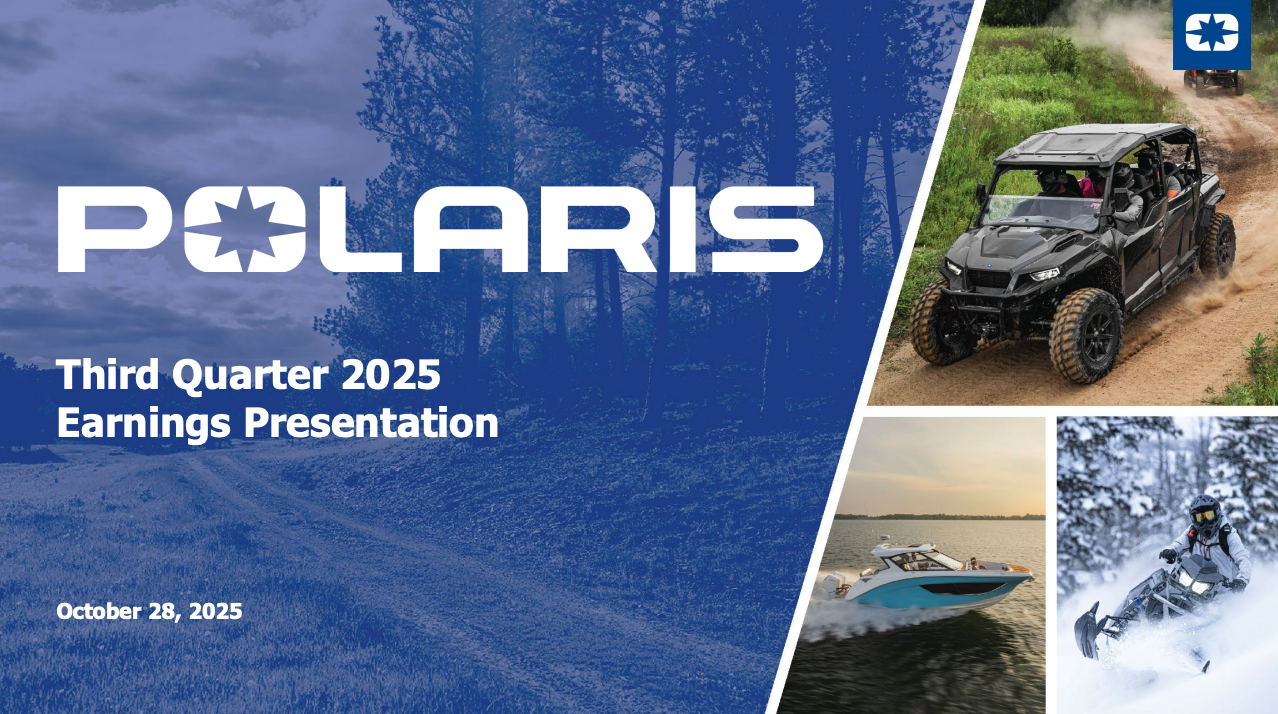
While Polaris posted a net loss of $16 million due to a one-time impairment in the On Road segment, with the planned majority sale of Indian Motorcycle to Carolwood Capital. Adjusted earnings came in at $23 million.
Speetzen: “We’re Winning Where It Matters Most — at the Dealerships”
Polaris CEO Michael Speetzen said the company’s performance reflects disciplined execution and a return to strength in its core businesses.

“Sales in the quarter were $1.8 billion, driven by stronger-than-anticipated shipments to meet improved retail and a solid mix of Off Road vehicles, especially Ranger side-by-sides,” Speetzen says. “We gained roughly three points of market share in ORV, led by Ranger and Xpedition.”
Speetzen emphasized in the earnings call that Polaris’ inventory strategy is paying off for both the company and its dealer network.
“Dealer inventory is now down 21% year-over-year, and flooring expenses are materially lower—down over 50% in some cases,” he notes. “This quarter marked a turning point. Dealers are healthier, with aged inventory down about 60% compared to six months ago.”
The CEO also pointed to Polaris’ Factory Authorized Clearance (FAC) program — its first since 2019 — as a key traffic driver.
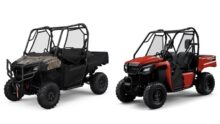

“FAC was a powerful marketing tool that successfully reengaged customers and drove increased dealership visits without significantly increasing promotional spend,” Speetzen notes.
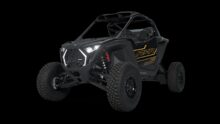
Polaris’ ORV lineup continues to dominate the utility and crossover categories, with the Ranger 1500 XD and Xpedition helping the brand capture significant share.
“Despite new launches from competitors, the Polaris 1500 XD remains the highest-performing utility side-by-side in the market,” Speetzen shares. “We took over five points of market share in utility side-by-sides and about 10 points in crossovers this quarter.”
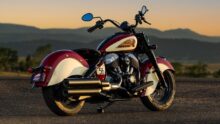
Speetzen also highlighted the sale of a majority stake in Indian Motorcycle to private equity firm Carolwood, expected to close in Q1 2026, as a move that will sharpen Polaris’ focus on higher-margin growth opportunities.

“This allows us to focus on our most promising businesses in ORV, Snow, Marine, and Slingshot,” he said. “Post-separation, we expect the transaction to be accretive to adjusted EBITDA by approximately $50 million and to adjusted EPS by about $1.”
CFO Mack: “Lean Operations and Working Capital Discipline Are Driving Cash Flow”
CFO Robert Mack said Q3 adjusted sales and margins were better than expected, helped by strong ORV shipments and operational efficiency gains.
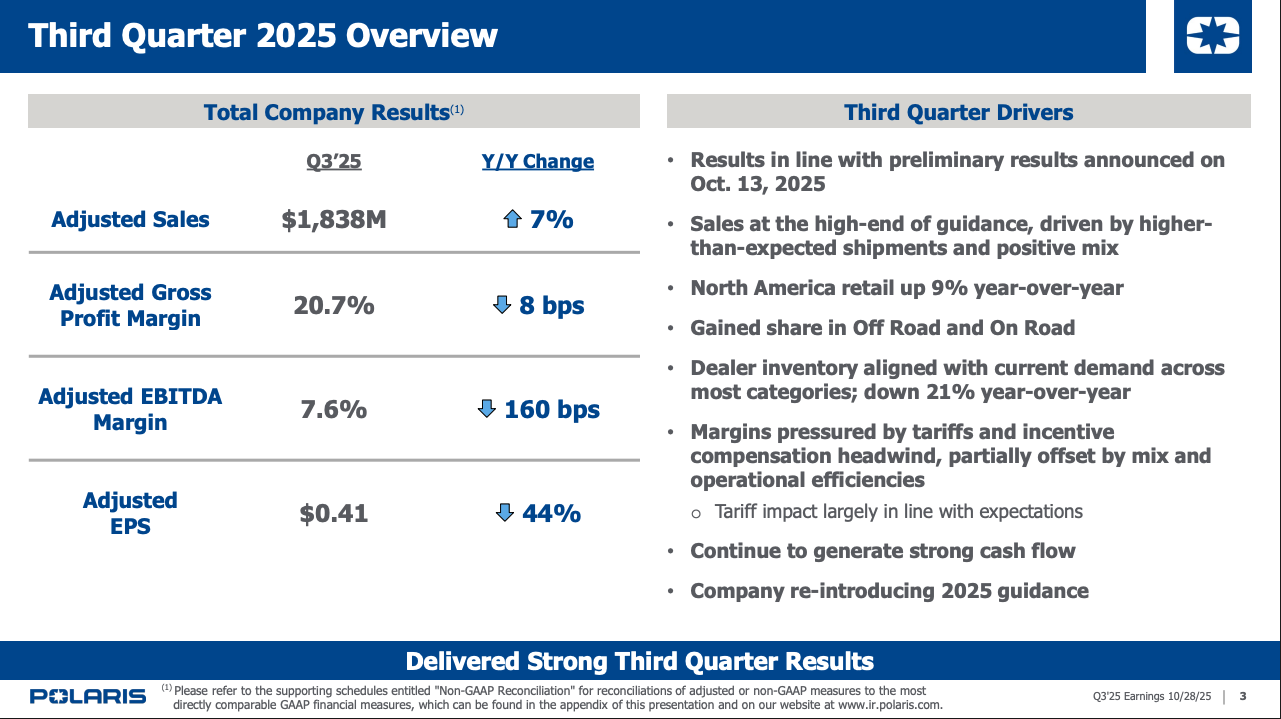
“Adjusted sales for the quarter were up 7%, driven by higher shipments and a richer mix of Off Road vehicles,” Mack says. “PG&A sales were up 20%, led by record performance in parts, especially oil, which tells us customers are using their vehicles more.”
He noted that Polaris generated $159 million in operating cash flow in the quarter and $562 million year-to-date, reflecting tighter working capital control.
“We’ve turned the corner in our core ORV business and now plan to ship in line with retail demand,” Mack said in the earnings call. “Dealer inventory is in a healthy position heading into 2026.”
Mack acknowledged continued tariff headwinds, which rose by $35 million in Q3, but said mitigation efforts are underway.
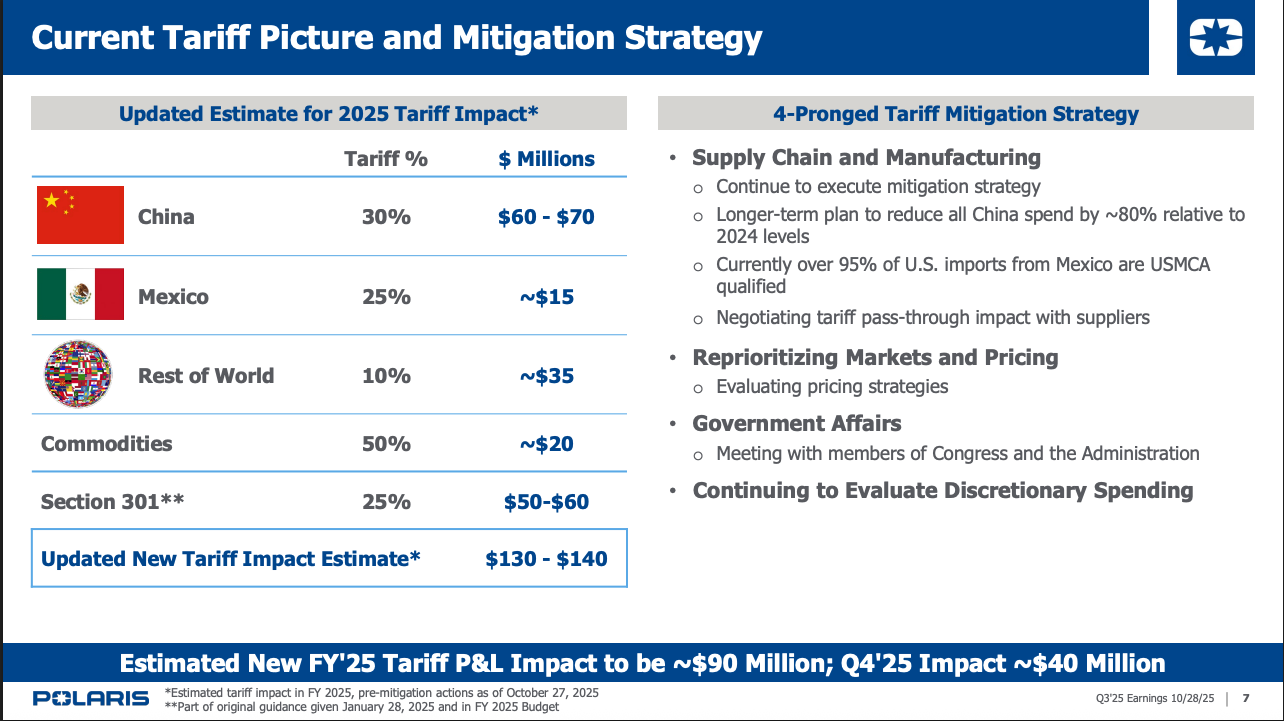
“Despite higher tariffs and incentive compensation, we’re maintaining strong cash generation and a solid balance sheet,” Mack says. “We’re investing in high-return opportunities to widen our competitive moat in powersports.”
Segment Highlights
- Off Road: Sales rose 8% to $1.51 billion; PG&A up 22%; ORV retail up 9%.
- On Road: Sales declined 3%, reflecting softer motorcycle demand; PG&A up 6%.
- Marine: Sales up 20% on new entry-level pontoons, offset by negative mix.
2025 Outlook
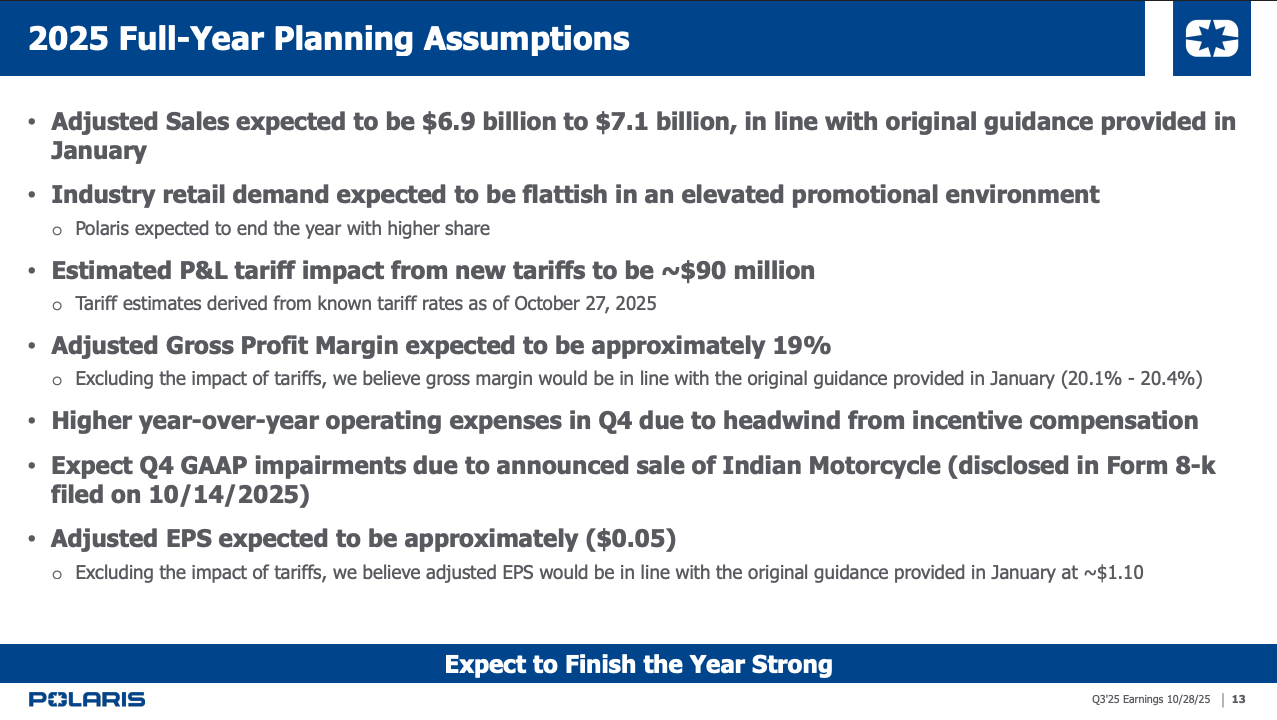
Polaris reinstated full-year guidance, projecting adjusted sales of $6.9–$7.1 billion.
Dealer Takeaway
Polaris’ focus on inventory health and innovation is positioning dealers for more profitable turns as market conditions stabilize. With retail up 9% and dealer flooring costs cut dramatically, the company’s lean execution and product strength in ORV are clear advantages heading into 2026.

As for Indian Motorcycle, dealers should monitor how the transition to private equity ownership affects brand direction, product cadence, and retail programs. The sale could bring renewed investment and focus, or signal a period of realignment in the heavyweight cruiser and touring segment.