Data analysis: UTV market sales fall 7.2% in 2024
Editor’s note: This article is from the 2025 Market Data Book — which is currently available for pre-order — and originally appeared in the January issue of Powersports Business.
The North American side-by-side, or UTV, market in 2024 dropped in volume just over 7% to nearly 520,000 units following plus-2% growth in 2023 and a combined downturn of 18% in the two prior years, according to research performed by Minneapolis‑based research firm Power Products Marketing (PPM), which keeps an eye on the market, producing an annual database and associated report that define trends.
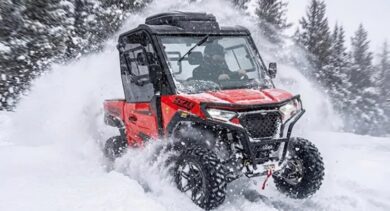
Initially a vehicle delegated to commercial uses — such as industrial, construction, and turf maintenance — UTVs found favor with consumer users as it was realized manufacturers were bringing vehicles to market that could offer off‑road adventure in relative comfort with golf car‑like operational ease. Offerings like the Kawasaki Mule were certainly capable for light trail duty, but their designs proved overtly industrial when compared with the first major sport‑oriented models to make an impact on consumer purchase decisions — the Yamaha Rhino and, later, the Polaris RZR.
Based upon PPM analysis, Polaris continued to lead the market last year, followed distantly by Can‑Am, Kawasaki, Honda and Deere. The remaining top‑ten purveyors of UTVs included Kubota, CFMOTO, Yamaha, Club Car and EZGO/Cushman.
Of the 10 best-selling UTVs in 2024, five were Polaris models that together accounted for 9.5% of the total market volume. Those five Polaris machines were joined in the top‑10 by the best‑selling Can‑Am Defender MAX Ltd. HD10 w/Cab, Deere XUV 835 series, Can‑Am Defender Ltd. HD10 w/Cab, Kubota RTV‑X1140 W and Kubota RTV‑X1100 C/CW. All 10 vehicles together accounted for over 106,500 units, or approx. 20.5% of the total market volume.
Product categories
PPM splits UTVs into six distinct product categories, including Electric Utility Vehicles (EUV), Pure Utility Vehicles (PUV), Recreational Utility Vehicles (RUV), Sport Recreational Vehicles (SRV), Super Sport Vehicles (SSV), and Utility Crossover Vehicles (UCV).
EUVs are speed‑governed at 25 mph and under, offer a large cargo area, two- and four‑passenger seating, can be either 2WD or 4WD, and are very popular at golf courses, estates and gated communities, hunting trips, and in industrial plants and warehouses.
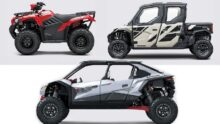



PUVs are speed‑governed at 35 mph and under, offer a large cargo area, often lack independent rear suspension, feature 2WD or 4WD, feature bench or bucket seats for two or four passengers, carb as well as FI and EFI, and include all diesels.
RUVs feature speeds of 4255 mph, sportier styling, and a smaller cargo area than UCVs. They feature independent rear suspension, FI and EFI, two- and four‑passenger options, bucket seats, and 4WD.
SRVs feature speeds of 52‑70 mph, sporty styling yet more cargo area than an SSV, typically with large displacement engines 800cc and over, independent rear suspension, EFI, two- and four‑passengers, bucket seats and 4WD.
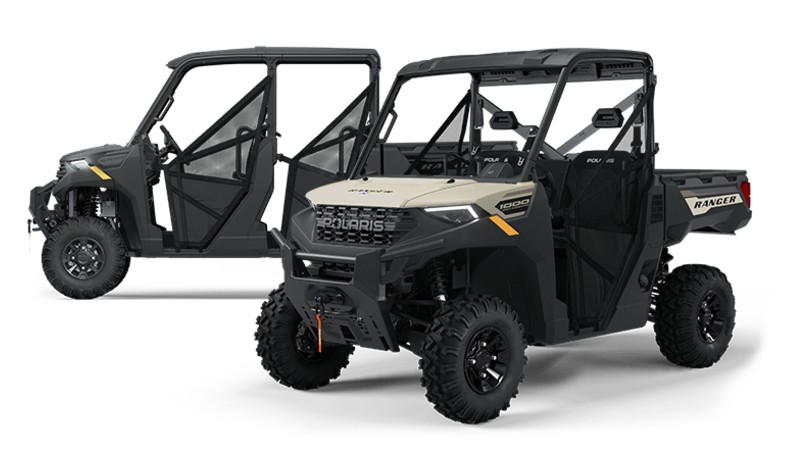
SSVs exceed 70mph, offer performance styling with a limited cargo area, and typically feature large displacement engines 800cc and over, independent rear suspension, EFI, two- and four‑passengers, bucket seats, superior handling and suspension and 4WD.
According to PPM research, UCVs are responsible for 48% of the North American UTV market, PUVs account for 15.5%, SSVs hold 14.5% of the market and RUVs maintain a 10% share. SRVs slide in with 5.5% of the market while EUVs hold a 4.5% share.
Consumer Vs. Commercial
PPM also splits its findings between consumer applications, commercial applications and — to a much smaller extent — government applications.
Whereas in 2000 the ratio between consumer and commercial applications was approximately 40/60, respectively, there has since been a significant shift to consumer models, accounting for the majority of units moved. Of the nearly 520,000 UTVs retailed in North America in 2024, PPM found consumer applications likely accounted for over 85% of sales while commercial applications looked to be responsible for just over 10% of the total, with government applications accounting for nearly 1%.
Each year, as part of PPM’s dealer survey, retailers are asked to segment their sales into 10 different categories within each of the three applications — consumer, commercial, and government.
Consumer uses include recreational, farming/ranching, estate, residential/homestead, and hunting; commercial uses include industrial, golf, other turf, and commercial non-turf; and government uses represent more than 60 different federal agencies in the U.S.
Within consumer applications, survey results show recreational use was the largest category in 2024, accounting for 31% of the total market. This was followed by farmers/ranchers (29% market share), estate use (10.5%), hunters (9%) and residential/homestead use (8.5%).
Within the commercial application, results show Industrial use accounted for 5.5% of the total market, followed by other turf (3%), golf (nearly 2%), and commercial non‑turf (less than 1%).
Non-traditional brands
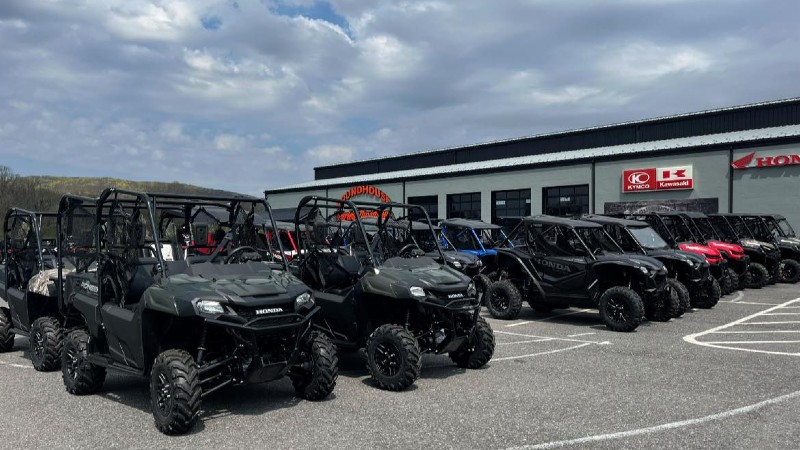
When you think of the UTV market, you’re likely to visualize models supplied by big‑name brands and sold by a brand‑dedicated network of brick‑and‑mortar dealers.
However, there is another layer to the market that’s often overlooked — the non‑traditional‑brand powersports vehicle market. These include units mostly sourced from China and sold not only by brick and motor dealers, but also via big‑box outlets, the online marketplace and independent retailers.
And guess what? PPM finds sales have also been strong for many of these second‑tier brands.
While COVID‑associated supply‑chain issues haunted numerous established brands, manufacturing and shipping woes didn’t seem to impact many of the offshore brands that had them surge in sales, as container after container filled with vehicles continued to arrive unabated at U.S. ports, mostly from Chinese importers.
In 2021, for the first time, the top 10 purveyors of UTVs — brands like Polaris, Can‑Am, Kawasaki, and Honda — were joined by lesser‑known names, including Hisun and CFMOTO. Also experiencing remarkable growth were importers/distributors like BMS Motorsports, Coleman, and Massimo.
For 2024, CFMOTO was the lone second‑tier brand within the top 10 most‑sold brands.
How, and why?
While CFMOTO has focused on growing a traditional dealer network, PPM believes past growth in a few of the other brands correlates with their availability at big‑box retailers, which have in recent years become a major outlet for lower‑cost vehicles that couldn’t be found at traditional multi‑line powersports dealerships.
Mass retailers
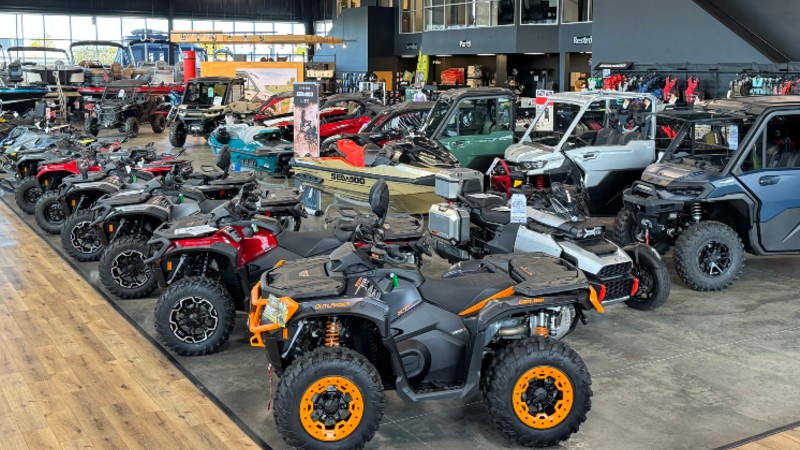
An often overlooked segment of the market is that supplied by big‑box retailers, the top three being Lowe’s, Home Depot, and Tractor Supply. But others, such as Rural King, Atwoods, Walmart, Cabela’s, Tracker Off‑Road (Bass Pro), and other on‑line retailers are also notable suppliers.
According to PPM analysis, UTV retail sales from non‑traditional‑brand suppliers through big‑box retail locations have grown substantially, from what had been an average of 5‑10,000 units 10 years ago to 20,000 units in 2020, 43,000 units in 2021, and 42,000 units in 2022. In 2023, sales dropped significantly back to 25,500 as the post-COVID bubble seemed to have subsided, and in 2024, sales slid further to 19,040 units or 3.5% of total market volume. As with the customers of leading brands, the price‑conscious consumers of these second‑tier brands were also ultimately impacted by both persistent high interest rates and inflation.
Home Depot retails multiple models sourced from Hisun; Lowe’s retails products from Hisun, Kandi America, and Massimo; Tractor Supply stocks multiple models of BMS Motorsports, Bighorn Powersports, and Massimo; and Rural King offers products from Hisun and Kandi America.
Neighborhood electric vehicles
The neighborhood electric vehicle (NEV) market, which includes street‑legal electric golf cars modified to serve as personal transport vehicles (PTVs) limited to between 15 and 19 mph, and low‑speed Vehicles (LSVs) limited to 20 to 24 mph, is another segment that has grown in recent years, although a separate market altogether from UTVs.
Demand for UTVs was high during the height of the COVID‑19 pandemic, and with inventories low, PPM reported that some consumers searching for hard‑to‑find lower‑cost UTV models instead opted for the purchase of NEVs, outfitting them with lift kits and off‑road wheel/tire sets. The segment has also benefited from an aging population seeking an alternative form of transportation within their communities.
NEV sales for 2024 totaled an estimated 262,000 new units, down -5.2% from 276,500 units in 2023, which was down -5.4% from an all‑time high of 292,000 units sold in 2022. Also important to note is that another 60,000-70,000 used golf carts on average are reconditioned and upgraded to PTV and LSV speed ratings each year and sold into the consumer market, mostly to retirement communities but also local areas where these vehicles are sanctioned on 35 mph roads, according to certain state regulations.
While leading companies in the golf car market — EZGo, Club Car, and Yamaha — play a key role in NEV production, here too we find non‑traditional brands marketed by importers/distributors making waves in the market with products sourced from China. Among the leading newcomers are brands like EVolution Electric Vehicles, ICON EV, Denago, Bintelli, and newcomer Kandi America, each of which has been making great strides in market share.
Up until 2021, nearly all the NEV volume was going through Golf/Golf Accessory dealerships. With the rapid growth of the market in the last four years, PPM estimates that perhaps 20%‑30% of the NEV sales increase went through powersports dealerships and other independents like marine and RV retailers.
What’s next for UTVs
Dealer inventories have become more manageable, though higher interest rates and inflation are raising purchase costs. With consumer confidence teetering, what’s next?
Given the external forces shaping the economy, PPM projects 2025 North American retail UTV sales to be essentially flat with 2024, based on the research firm’s Monthly Tracking report for U.S. UTV retail sales. Whereas the 2025 calendar year started slow versus 2024 through April, down -6%, sales picked up between May and August (5%), and it appeared that the market might end up in the plus-3% range for the year. However, September and October were disappointing months, both slumping about flat compared to 2024, with year-to-date October 2025 slightly down, less than -1%, versus the 10-month 2024 retail.
We project November and December to offset each other, with November down and December up, and 2025 to end the year at about flat to perhaps up less than 1%.
Power Products Marketing (PPM), a Minneapolis‑based research firm, has curated its powersports retail sales data for more than 20 years. PPM provides detailed market share data and research services to the global power equipment industry. Markets covered include powersports, diesel pleasure boats and commercial vessels, farm (AG) machinery, construction machinery, lawn and garden equipment, generator sets, and underground mining equipment.