Power Hour: Mike Martinez’s 32-year career anchored by Rhino’s industry impact
After more than three decades with Yamaha Motor Corporation, U.S.A., Motorsports President Mike Martinez is retiring — closing a 32-year run that helped reshape the modern powersports dealership.
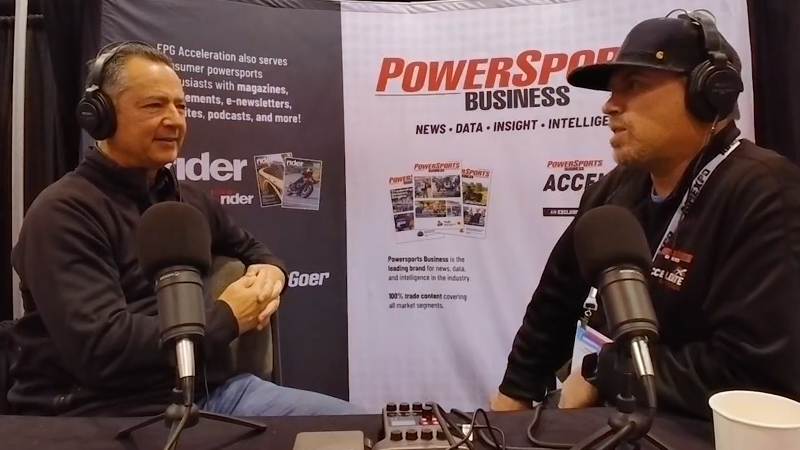
In a wide-ranging conversation with Powersports Business at AIMExpo, Martinez reflected on his career, the evolution of Yamaha’s motorsports division and the product he says he’s most proud of: the Rhino side-by-side.
“I’d say it was still the Rhino,” Martinez says. “It did spawn a new industry.”
The birth of a category
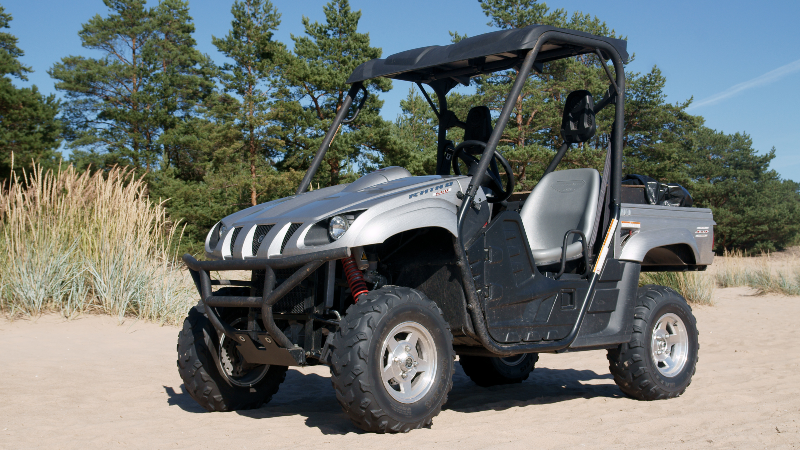
When the Rhino debuted in 2006, the market was dominated by pure utility vehicles like the Kawasaki Mule and John Deere Gator. Customers were modifying those units — lifting them, adding bigger tires and heading to the trails.
Yamaha saw something others didn’t.
As a product planner at the time, Martinez helped push forward a simple but game-changing concept: a sit-in, side-by-side vehicle with a dump bed and the trail capability of a Grizzly ATV.
No one was asking for it, he admitted — because it didn’t exist.



But once it hit the market, the Rhino effectively created the recreational side-by-side segment. Within a few years, competitors followed, and the UTV category exploded.
Today, side-by-sides are widely considered the largest revenue and profit center for many dealerships — not just from unit sales, but from accessories, service, parts and financing.
“The dollar volume trumps everything,” Martinez notes. “It’s the number one profit center for most of our dealers.”
A dealership game-changer
For industry stakeholders, the Rhino’s impact can’t be overstated. It expanded the customer base beyond traditional ATV riders, and allowed families and mixed-skill groups to ride together. It also drove accessory attachment rates higher than almost any previous segment, however, it forced dealerships to rethink showroom space, service bays and floorplans.
The modern multi-passenger, high-horsepower UTV market — now featuring automotive-style features and price tags — traces back to that original Rhino concept.
In less than two decades, the category has grown from a niche idea into a cornerstone of dealership profitability.
Leadership through transition
Martinez joined Yamaha in 1994, at a time when the U.S. organization was much smaller. Over the years, he moved through product planning, ATV and side-by-side development, and eventually into senior leadership.
He also helped guide Yamaha through a major operational shift, consolidating and strengthening its motorsports identity during the company’s transition from California to Georgia and reinforcing unified branding across business units.
Another milestone during his tenure: Yamaha’s commitment to four-stroke motocross development — once a controversial move that ultimately changed the racing landscape.
Still, the Rhino remains his defining achievement.
“It completely changed the landscape of off-roading,” Martinez says.
What’s next
Martinez, who set a personal goal in his 20s to retire at 60, said the transition has been planned for two years — very much in Yamaha fashion.
In retirement, he plans to ride more, particularly Backcountry Discovery Route (BDR) adventures aboard his Tenere models, along with golfing and fishing.
He also emphasized the importance of bringing new riders into the industry — through internships, rentals and exposure opportunities — something Yamaha has invested in through dealer partnerships and access initiatives.
“There’s a natural desire to ride,” he says. “People just need the opportunity.”
Why it matters
For dealers and OEMs alike, Martinez’s retirement marks the departure of one of the architects of the modern UTV era.
The Rhino didn’t just launch a product. It launched a profit engine — one that continues to define dealership strategy, showroom layout, accessory programs and long-term customer lifecycle planning.
As the industry navigates market normalization, electrification discussions and shifting consumer behavior, the Rhino story serves as a reminder: transformative growth often starts with recognizing how customers are already using products — and having the conviction to build what doesn’t yet exist.
Martinez leaves the industry he helped reshape in a position few executives achieve: having created a segment that continues to power it.