
Harley’s Q1 results show retail strength, as ‘Back to the Bricks’ strategy revealed
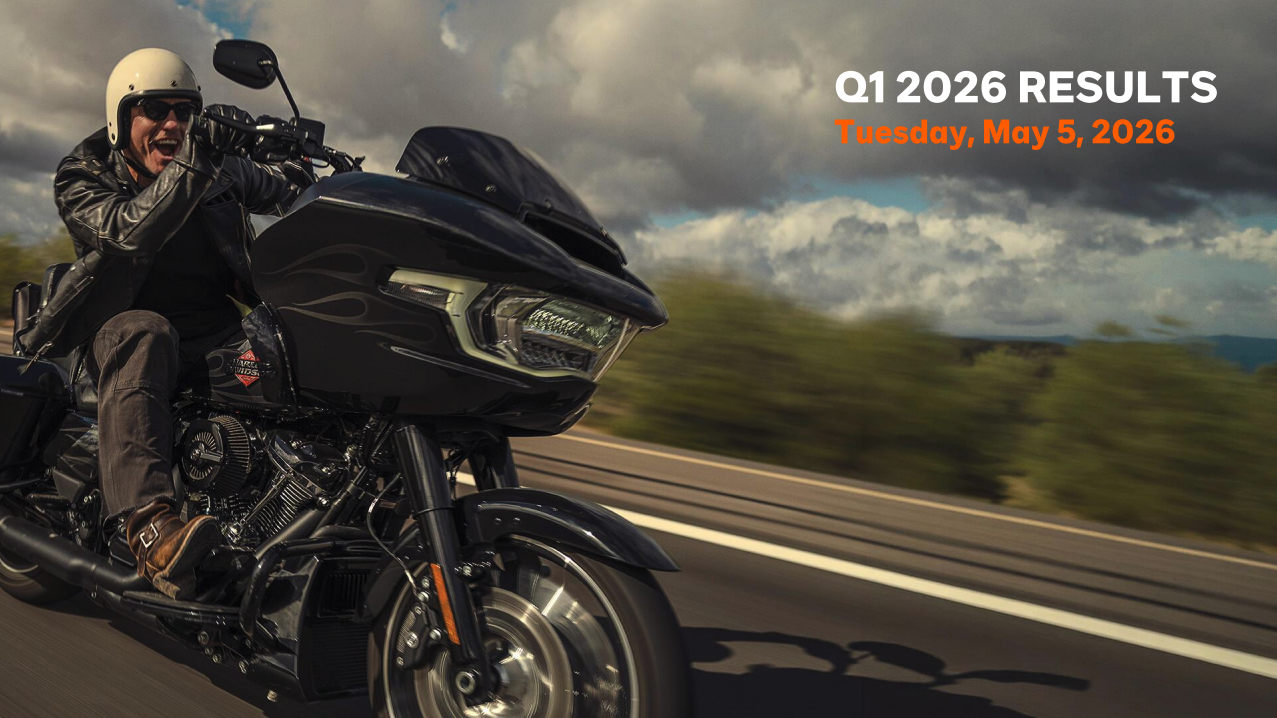
Harley-Davidson reported mixed first-quarter 2026 results, with strong retail growth in North America offset by lower wholesale shipments, margin pressure, and restructuring costs, as the company simultaneously outlined its multi-year turnaround strategy, “Back to the Bricks,” aimed at restoring volume, improving dealer economics, and rebuilding entry points into the brand.
Key to that strategy are new and returning models, including the upcoming Sprint lightweight motorcycle and the return of the Sportster in 2027, alongside a broader shift toward a more flexible, platform-driven product and promotional approach.
Retail growth
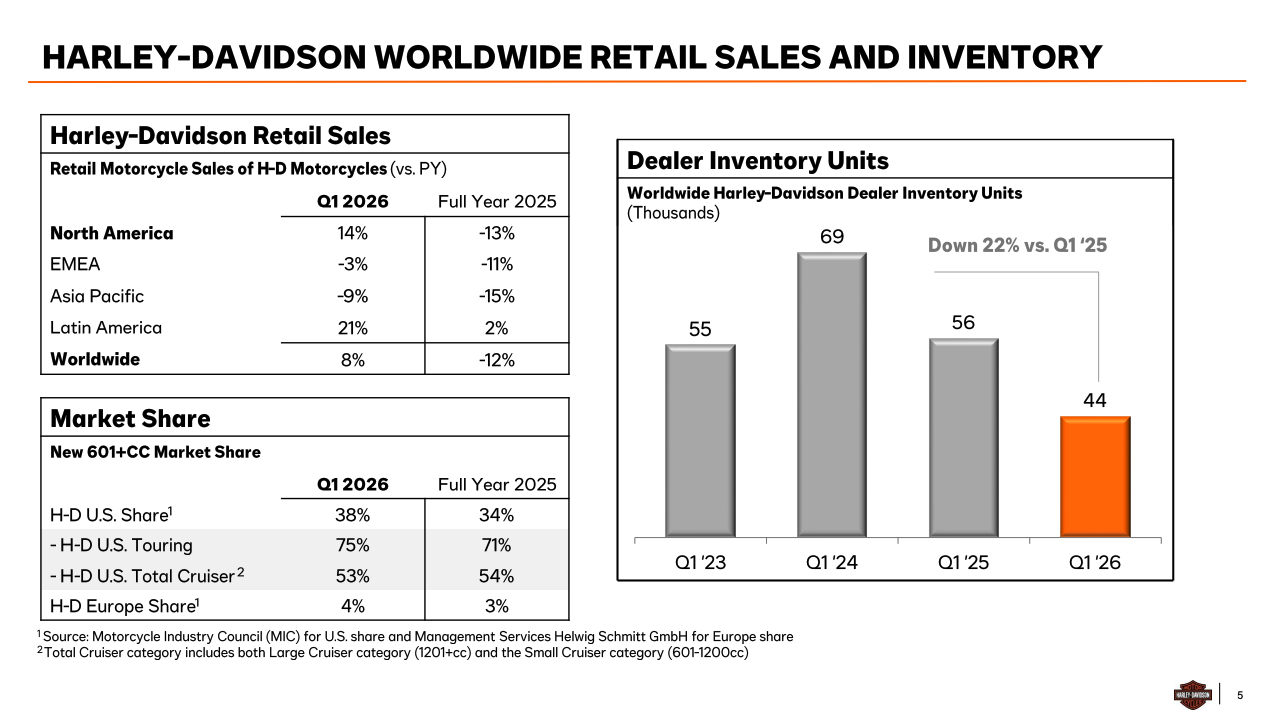
The good news from Harley’s Q1 was that global retail motorcycle sales rose 8% year-over-year to 33,507 units, led by a 14% increase in North America and 16% growth in the U.S., driven by Touring strength and improved response to the 2026 lineup.
CEO Artie Starrs said the quarter reflects early progress in stabilizing execution and improving dealer alignment.
“We’re pleased with our performance this quarter,” Starrs says. “North America delivered a 14% increase versus prior year… reflecting actions we’ve taken to drive demand and improve execution.”
Dealer inventories fell 22% globally, including a 21% decline in North America, which management said leaves the network in a healthier position heading into peak season.
Earnings decline, and restructuring
Despite retail momentum, profitability came under pressure. Consolidated revenue fell 12% to $1.17 billion, while operating income dropped 85% to $23 million, reflecting tariff costs, pricing and incentive pressure, and restructuring actions.




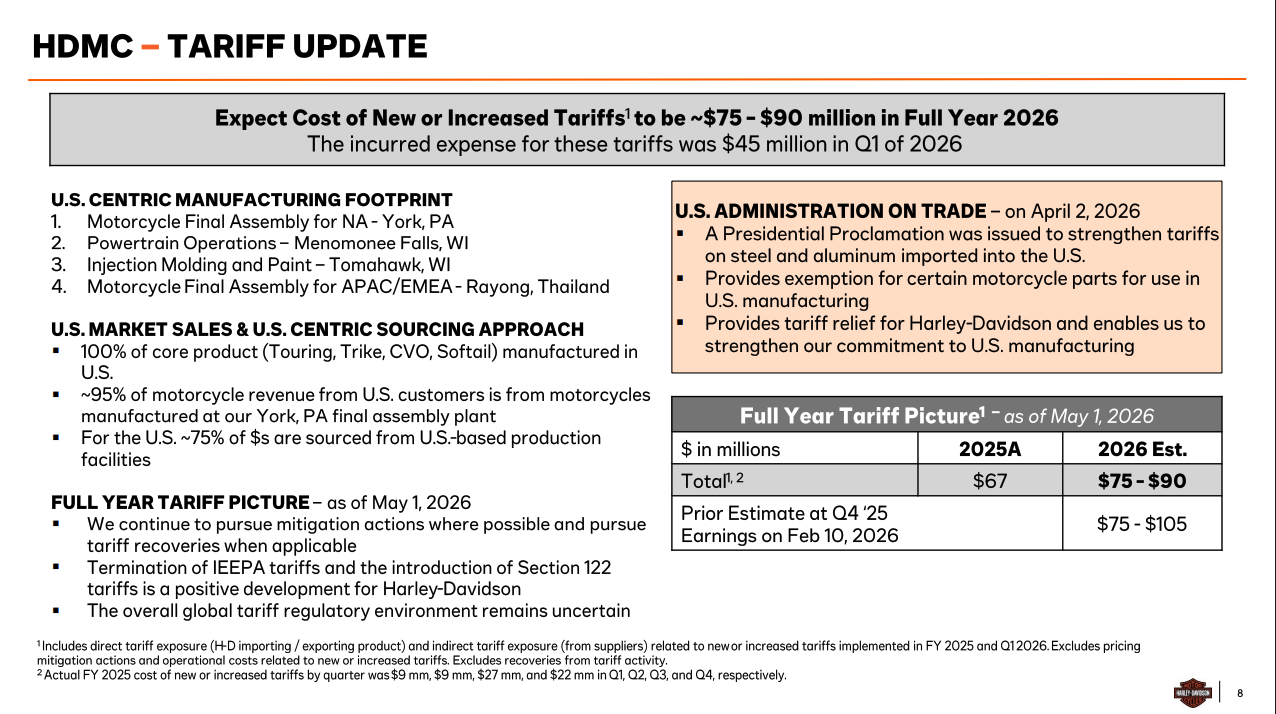
HDMC operating margin declined to 1.8% from 10.8%, with headwinds from:
- $45 million in tariff impacts
- Product mix and incentive spend tied to inventory normalization
- Higher warranty and restructuring expenses
- Supply chain-related cost pressures
“Back to the Bricks” strategy
According to Harley-Davidson’s earnings call, its Back to the Bricks strategy targets $350+ million in HDMC EBITDA by 2027, supported by mid-single-digit retail growth, margin expansion, and cost reductions.
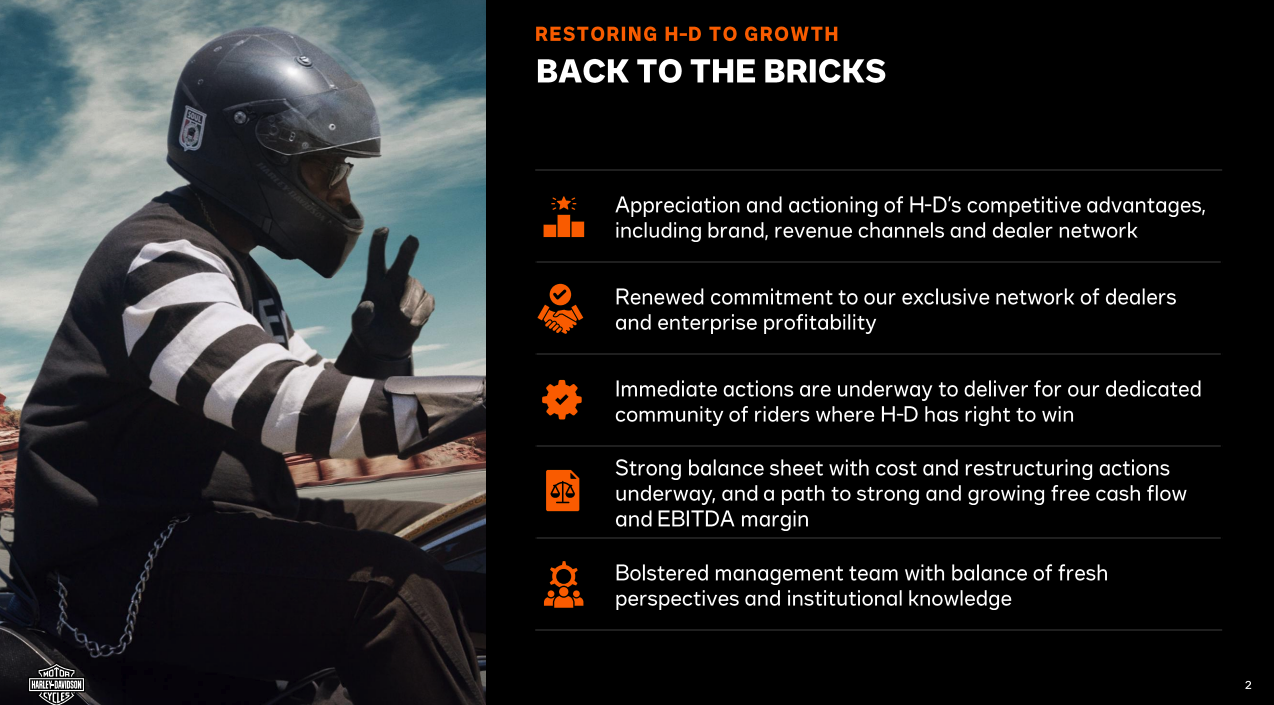
The plan centers on rebuilding volume through:
- Expanded, more accessible product portfolio
- Lifecycle monetization across Parts & Accessories, finance, and used bikes
- More targeted promotions and pricing discipline
- Stronger alignment between wholesale and retail demand
- Dealer profitability improvement as a core objective
Starrs emphasized that execution will be rooted in leveraging existing platforms rather than entirely new development cycles.
“By using and leveraging existing powertrain, existing platforms, we can have a much broader assortment of motorcycles,” Starrs explains. “Sprint and Sportster are good examples, but even within legacy cruising and Touring.”
Platform strategy to drive broader lineup and sharper promotions
A key shift outlined on the call is Harley-Davidson’s move toward greater modularity in its product strategy, enabling a wider assortment of motorcycles while improving promotional precision and margin protection.

Starrs said this will directly address prior challenges in promotional execution, particularly within Touring.
“What excites me about this is we’re going to be more nimble as it relates to promotional activity,” he says. “If you think about Q1, we had a challenge. We actioned it on model year 2025 Touring.”
He added that future Touring lineups will be more segmented, allowing Harley-Davidson to be more targeted with incentives rather than broad discounting.
“Going forward, we will have more diversity within the Touring lineup where we can be a bit more surgical and segmented on which motorcycles we may have to promote… and maintain healthier margins,” Starrs adds. “It’s something dealers have asked for, and we’re going to be delivering on that.”
Sportster returns, Sprint targets new riders
Harley-Davidson confirmed two key portfolio moves designed to rebuild entry-level access and expand the rider base.
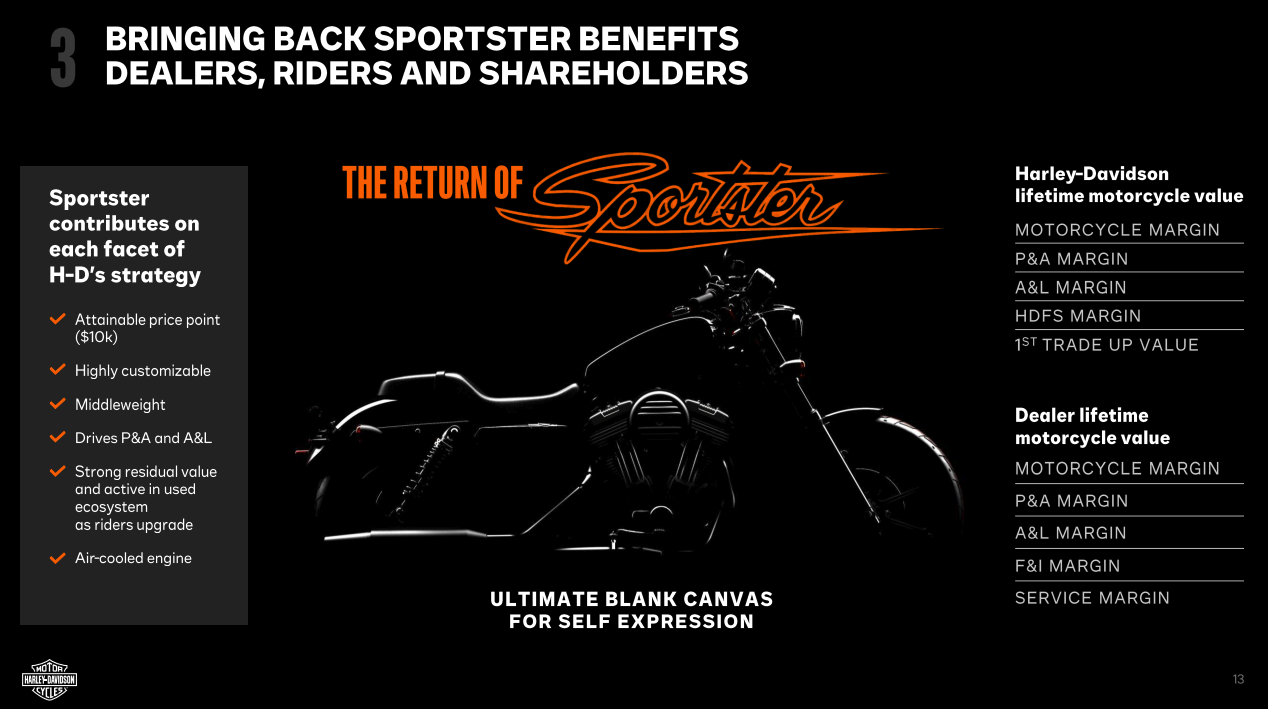
The Sportster will return in 2027, positioned as:
- A core entry motorcycle into the Harley-Davidson brand
- A highly customizable platform with strong Parts & Accessories attachment
- A historically resilient used-bike value leader
- A key lifecycle revenue driver across apparel, licensing, and service
The company also announced the Sprint model launching in late 2026, marking its return to the lightweight segment for the first time since the 1960s.
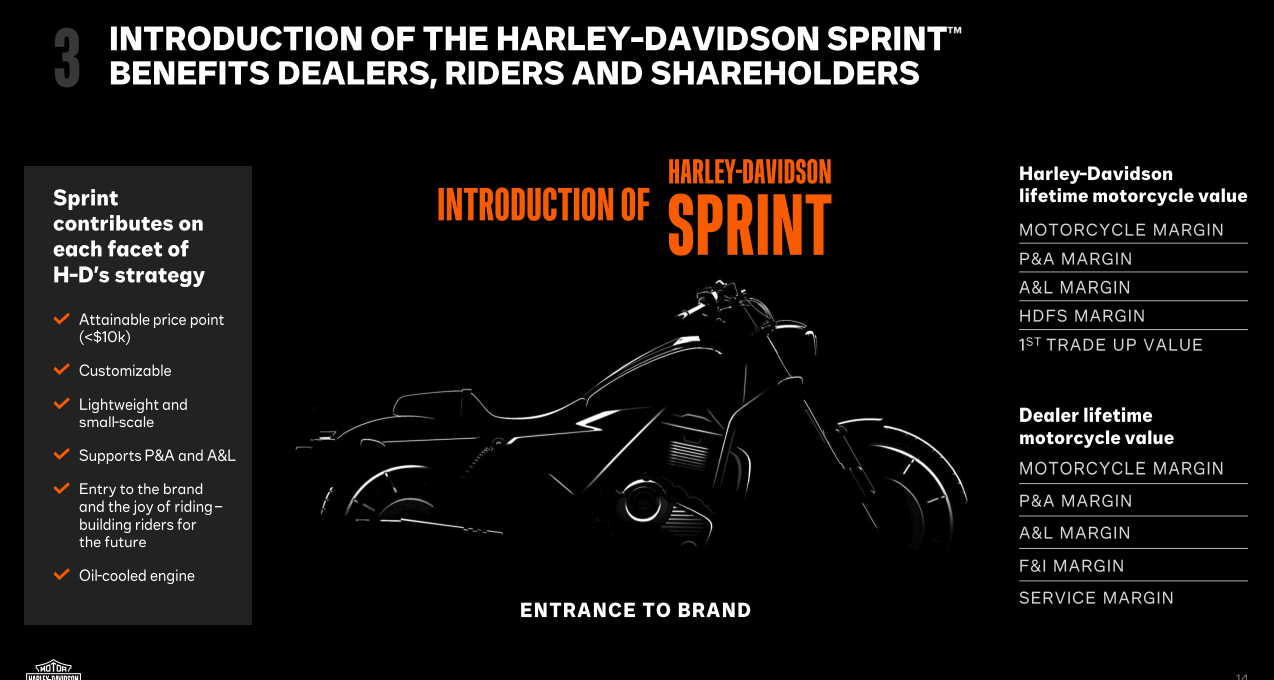
Sprint is expected to serve as:
- A lower-cost entry point into the Harley-Davidson ecosystem
- A volume driver aimed at new riders
- A customization platform tied to Parts & Accessories growth
- A foundational step in expanding the brand funnel
Industry view: strategy strong, execution remains the test
Industry observers described the quarter as stable but transitional, with stronger retail offset by continued margin compression.
Mark Sheffield, NPDA board member and advisor for Woods Cycle Country, said the results reflect ongoing pressure but also meaningful strategic repositioning.
“Better than feared, still plenty of work ahead,” Sheffield says, pointing to strong U.S. retail and improving inventory balance.
He emphasized that success will depend on execution inside the dealership network.
“At the end of the day, this comes back to whether it helps move motorcycles, protect margin, support service and P&A, and work in the real world of dealerships.”
BMO: retail strength offsets earnings headwinds
BMO Capital Markets highlighted stronger-than-expected U.S. retail performance and improving inventory discipline.
Key points included:
- U.S. retail up 16% vs. expectations closer to 10%
- Dealer inventories down 24% year-over-year in U.S. channels
- EPS of $0.22 in line with consensus
- EBITDA target of $350M+ in 2027 above Street expectations (~$335M)
BMO noted that while margins remain under pressure, retail momentum and new product cadence support a more constructive outlook heading into 2026.
Outlook: rebuilding entry points while stabilizing profitability
Harley-Davidson reaffirmed full-year 2026 guidance, calling for between 130,000 and 135,000 retail and wholesale units sold; HDMC operating income between a $40M loss and a $10M profit; and continued progress in inventory normalization and cost reduction.
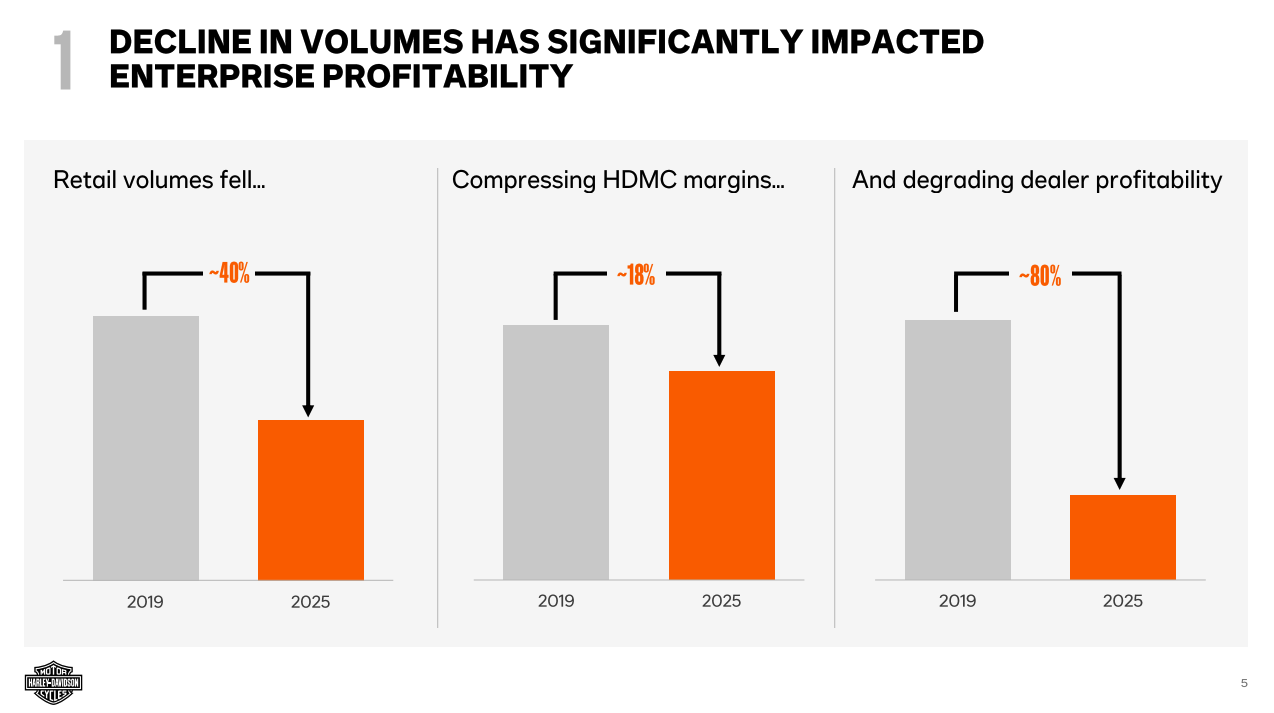
While near-term profitability remains challenged, the company is leaning heavily on Sprint and Sportster as cornerstone products in a broader effort to rebuild volume, expand the rider base, and strengthen lifecycle economics across the dealer network.
As Starrs summarized in the earnings call:
“This strategy is about restoring Harley-Davidson by leaning into what has always made us strong — and executing with greater clarity and discipline.”

Tell me, is H-D going to make the “Sportster” out of outsourced components after the company quietly sold Sportster line tooling to China? If I may be allowed to explain: you see, people who want a Harley-Davidson are frequently doing so (at least in part) because it is made in the USA. The company was doing FAR better during those years when they were. Don’t forget it.