
Marine industry down double digits in November, smaller boats show resilience: Report
A new report from Statistical Surveys, covered by Boating Industry, shows the U.S. marine market declined 12.36% year-over-year in November 2025, a steeper drop than November 2024’s 6.53% decline. The data signals a softer finish to the boating season and continued normalization after pandemic-era highs.

Category Performance
Outperforming the overall market (but still down):
- Aluminum fishing boats (8–24 ft): -5.19%
- Aluminum fishing boats (16–24 ft): -4.14%
- Saltwater outboards (13–55 ft): -5.46%
- Bass boats: -6.69%
In line with the market:
- Aluminum fishing boats (8–15 ft): -9.82%
Underperforming categories:
- Pontoons: -18.12%
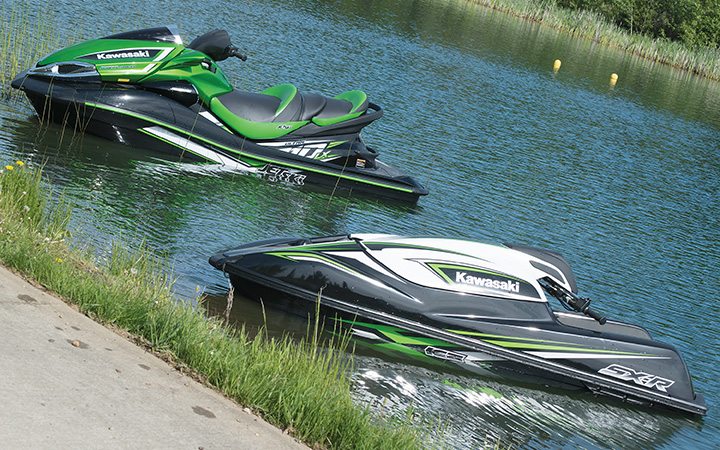
- Personal watercraft (PWCs): -23.64%
The standout trend within the data: smaller boats are holding up best. Registrations for 15-, 16- and 17-foot boats actually increased year over year, with 15-foot models up nearly 20%.
Regional Standouts
Despite the national decline, some regional markets posted significant growth, including:
- Albany-Tifton, GA (+250%)
- Cleveland-Akron, OH (+175%)
- Des Moines, IA (+171%)
- Columbus, GA (+114%)
- Gainesville, GA (+113%)
Meanwhile, sharp declines were reported in:


- Salt Lake City-Ogden, UT (-58%)
- Spokane, WA (-56%)
- Kalispell, MT (-54%)
- Milwaukee, WI (-49%)
- Greenville-Spartanburg, SC (-46%)
Why this matters to powersports dealers
Even though this is marine data, there are several clear crossover implications for powersports dealers and industry stakeholders:
1. The discretionary slowdown
A double-digit marine decline mirrors trends many powersports dealers have experienced in motorcycles, side-by-sides and PWCs. Big-ticket discretionary purchases remain under pressure from higher interest rates and cautious consumer spending.
The 23.64% drop in PWCs is particularly relevant for multi-line dealers carrying Sea-Doo or Yamaha watercraft. It reinforces that inventory discipline and pricing strategy remain critical heading into spring.
2. Entry-level and smaller units are winning
The growth in 15–17-foot boats parallels what many powersports dealers are seeing in:
- Smaller displacement motorcycles
- Entry-level ATVs
- Compact UTVs
- Affordable fishing-focused units
Consumers appear to be trading down in price point and complexity. For dealers, this underscores the importance of stocking entry-level, value-oriented products and tightening F&I strategies to maintain margin.
3. Regional variance
Some markets are booming while others are contracting sharply. That variability suggests dealers need to lean harder into localized inventory planning, rather than relying on national averages.
For OEMs and distributors, it reinforces the need for flexible allocation and better real-time registration data to avoid over-shipping into soft regions.
4. The market is normalizing
While the headline -12% decline looks alarming, outperforming categories are down mid-single digits, and smaller boats are growing. That’s not collapse — it’s correction.
For powersports stakeholders, this suggests 2026 planning should focus less on pandemic-level volume expectations and more on:
- Margin protection
- Used inventory turns
- Floorplan management
- Right-sizing staffing
- Data-driven marketing
Bottom line
The marine industry’s November performance is another data point confirming that discretionary vehicle markets are still recalibrating. But the resilience of smaller, more affordable products shows consumers are still participating — just at different price points.
For powersports dealers, the takeaway is clear: prioritize value, manage inventory tightly, and pay close attention to regional trends. The demand is there — but it’s selective.