
Yamaha to end U.S. side-by-side production as it posts record first-half earnings
Even as Yamaha Motor Co. posted record first-half financial results, the company is making one of its most significant manufacturing changes in the U.S. powersports market, announcing it will cease in-house side-by-side production at its Georgia manufacturing facility following the 2026 model year.
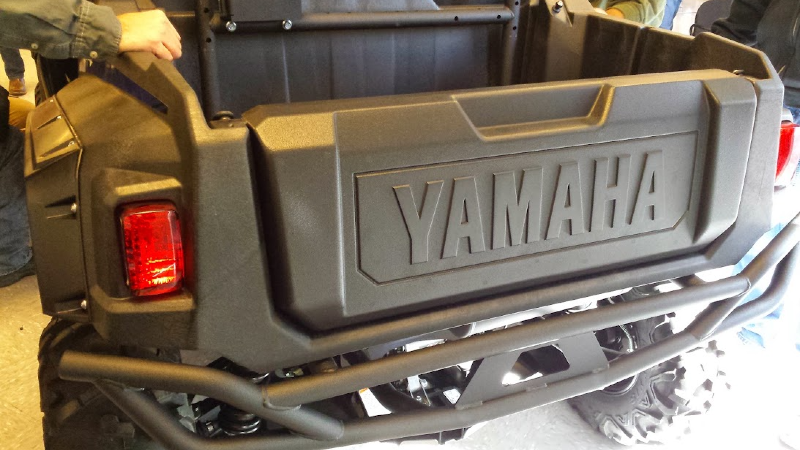
The move is part of a broader restructuring plan aimed at improving profitability and capital efficiency after the company’s Outdoor Land Vehicle (OLV) business continued to post operating losses despite modest sales gains.
Yamaha Motor Corp., USA (YMUS) said Aug. 4 it will stop producing side-by-side vehicles at Yamaha Motor Manufacturing Corp. (YMMC) in Newnan, Georgia, while emphasizing it is not exiting the segment. Instead, the company plans to focus future product development on growing multipurpose side-by-side categories while reallocating manufacturing resources toward ATVs, golf cars and personal watercraft.
“Market conditions dictate it is in the best interest of the business to adjust and find ways to optimally serve our customers, dealers and the overall powersports community,” says Dean Burnett, president of Yamaha Motorsports USA. “Yamaha remains committed to the Side-by-Side category and to creating opportunities that deliver value for our dealers and customers alike.”
The restructuring will affect approximately 300 positions globally, including about 200 full-time jobs, along with changes to temporary staffing and employee reassignments across manufacturing, engineering and sales operations.
Newnan facility
Yamaha said the Newnan facility will instead focus resources on ATV production while improving procurement efficiency and expanding production of golf cars and personal watercraft to better respond to changing market demand.
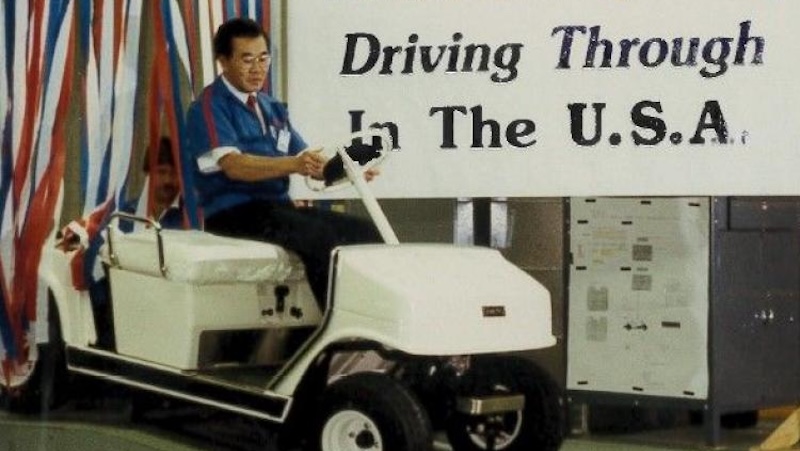
Yamaha Motor Manufacturing Corporation of America (YMMC) was established in Newnan, Georgia, in 1986 and began production in 1988 with golf cars. The facility expanded to assemble WaveRunners in 1989, ATVs in 1998 and side-by-side ROVs in 2002, growing into Yamaha’s primary North American manufacturing hub. Today, every Yamaha WaveRunner, golf car and side-by-side ROV sold globally is built in Newnan, along with most of the company’s worldwide ATV production. The plant surpassed its 4 millionth unit in 2021 and has continued to expand, including the addition of its automated SMART (Sequenced Materials And Reduced Transportation) warehouse to improve production efficiency and reduce delivery times.
Side-by-side business remains a financial drag
The production announcement came alongside Yamaha Motor Co.’s first-half financial report, which showed the Outdoor Land Vehicles segment continues to struggle despite improving results. OLV revenue increased 3.3% year over year to 80.3 billion yen (~$505 million USD), but the business still posted an operating loss of 12.0 billion yen (~$75.5 million USD), an improvement from the 13.7 billion yen loss recorded a year earlier.
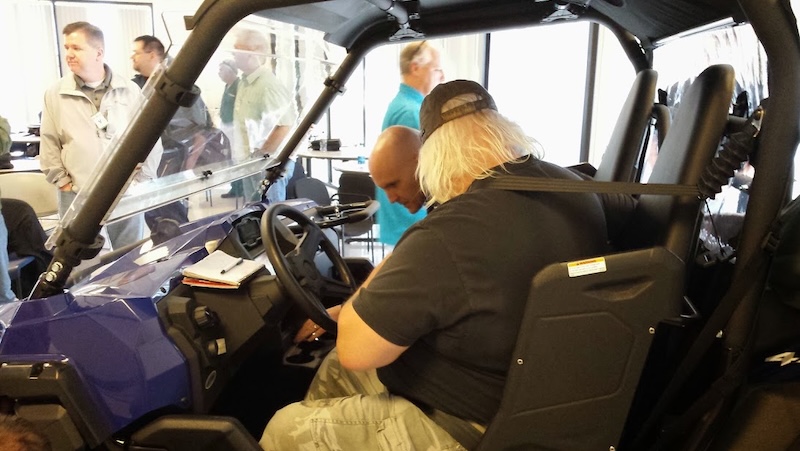
Within the segment, Yamaha said recreational off-highway vehicle (ROV) sales continue to underperform despite improving ATV demand.
“While the company continues to struggle with its ROVs, ATVs performed well and the business as a whole took in higher revenues,” Yamaha said in its earnings report.
The company also cited declining demand in portions of the side-by-side market, along with increasing supply chain and production costs, as key factors behind its decision to end in-house manufacturing.
Record financial performance elsewhere
Despite challenges in the OLV business, Yamaha Motor reported its strongest six-month financial performance on record. First-half consolidated revenue rose 17.2% to 1.498 trillion yen (~$9.42 billion USD), while operating profit jumped 88.6% to 158.5 billion yen (~$ 997 million USD). Net profit more than doubled to 113.9 billion yen (~$716 million USD).
The gains were fueled primarily by strong global motorcycle sales, particularly in India, ASEAN markets, Europe and the United States, along with favorable foreign exchange rates and lower selling, general and administrative expenses.
Marine products also posted solid growth, with revenue climbing to 300.7 billion yen (~$1.89 billion USD) despite softer demand for outboard motors and personal watercraft in North America.
Tariffs and costs remain headwinds
Although Yamaha raised its full-year financial outlook, management acknowledged several challenges remain. The company continues to face higher procurement costs and rising raw material prices linked to instability in the Middle East, while U.S. tariffs continue to pressure profitability across several business units.
However, Yamaha said the overall tariff impact is expected to be less severe than previously forecast due to refunds of certain U.S. tariffs, continued depreciation of the Japanese yen and ongoing cost-reduction initiatives.
President and CEO Motofumi Shitara said the company’s U.S. structural reforms are progressing according to plan and acknowledged that one-time restructuring costs associated with the OLV business will weigh on results in the second half of the year. Even so, Yamaha increased its full-year earnings outlook, citing stronger-than-expected motorcycle demand, favorable exchange rates and continued cost-cutting efforts.
For Yamaha dealers, the company said support for existing side-by-side owners will continue through parts availability, service and customer support while it develops future products for the category. Additional details on future side-by-side offerings are expected to be announced at a later date.
On a final note: Yamaha Motor’s corporate announcement about the restructuring from Japan, which was not mentioned in the YMUS announcement, states that future SxS production will include a transition to a collaborative business model premised on OEM supply through partner companies. However, no companies have been named at this time.
Wait, Yamaha builds side-by-sides?
Not surprising. Yamaha has been tone deaf for years. You can’t ride the same design for 10+ years, you have to innovate beyond bold new graphics.
YXZ, give it a turbo and fix the suspension and rebrand it, with the new tranny it should be a hit. Market it to show it can go low and slow if it needs to.
No e-starts on your two-stroke models, Kawasaki has entered the chat.
And can somebody please email the C-Suite pictures of 20-year-old banshees going for $10,000+.
You’re right, market conditions changing and you’re not listening!