
Polaris Q1 shows tighter inventory and continued utility demand
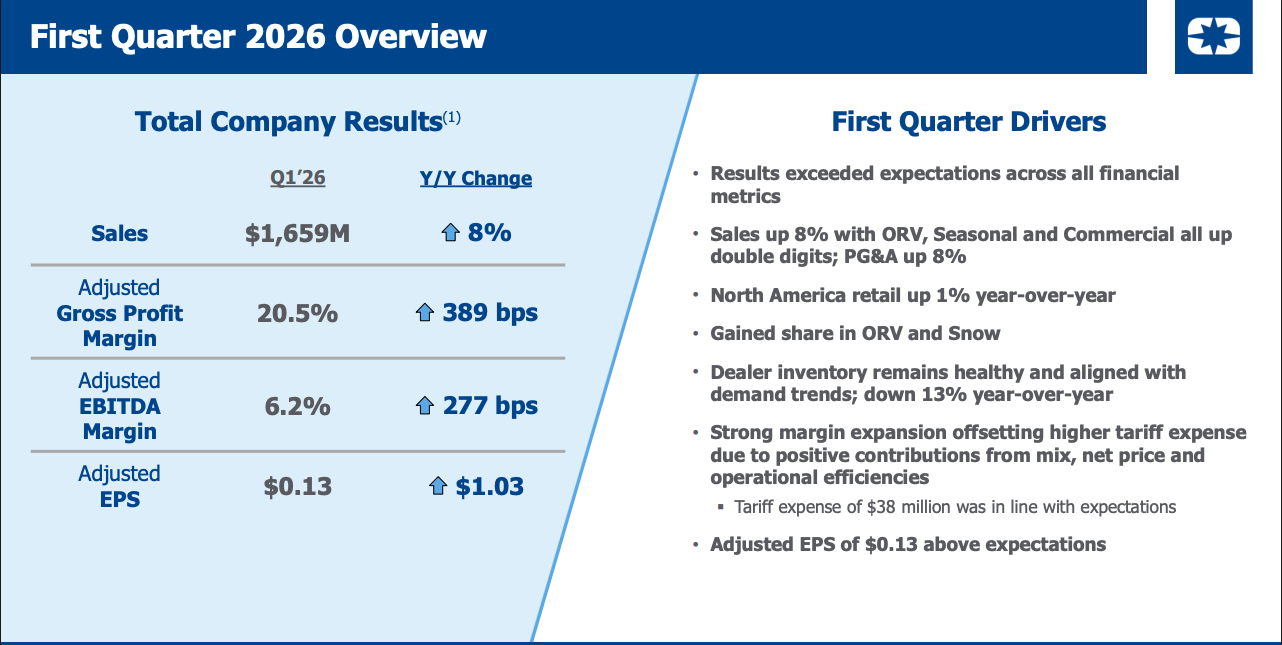
Polaris Inc. opened 2026 with first-quarter results that point to improving dealer inventory balance, stronger margins, and continued demand in utility segments, even as recreational sales remain uneven.

The company reported Q1 sales of $1.66 billion, up 8% year-over-year, coming in ahead of expectations.
“We delivered a strong start to 2026… continued share gains in ORV and Snow, and meaningful margin expansion despite a dynamic macro environment,” says CEO Michael Speetzen.
Inventory alignment improves
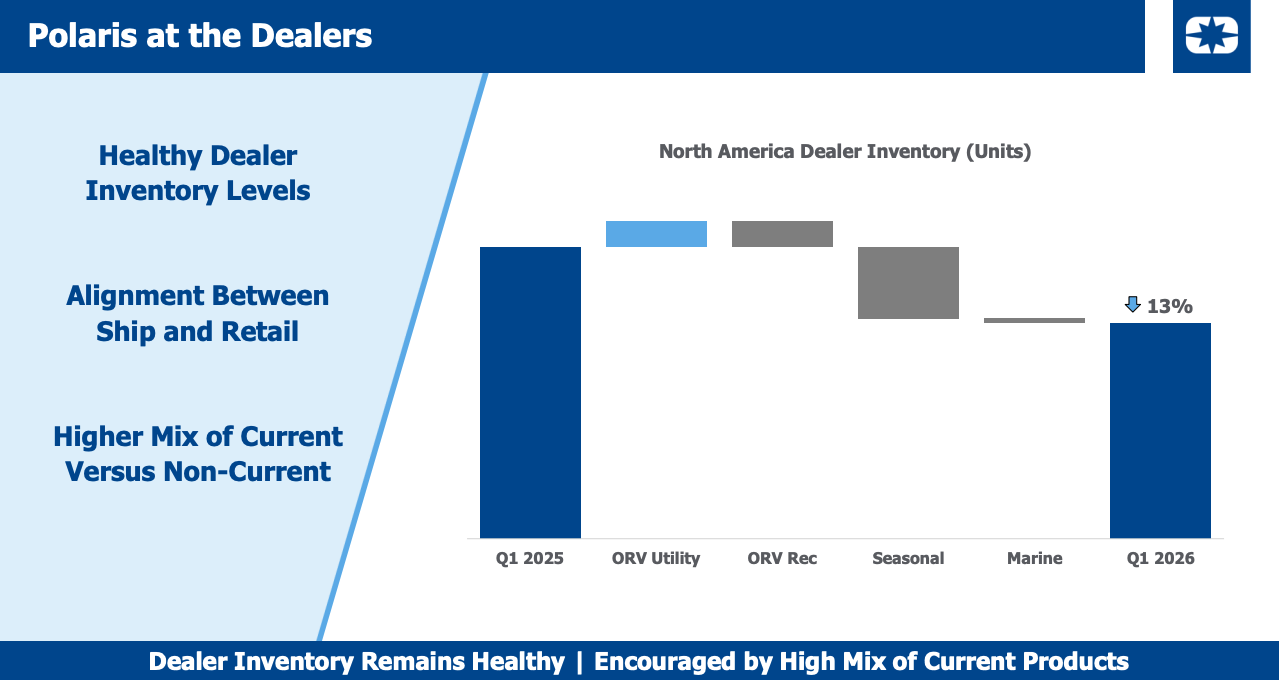
Polaris said its efforts to better match production with retail demand are showing results at the dealer level. Dealer inventory levels are “healthy,” with improved balance between current and non-current units. Snowmobile inventory, in particular, is down more than 50% from a year ago.
“We remain committed to the alignment of build, ship and retail,” Speetzen said in the April 28 earnings call. “Our inventory at dealers is in a good spot.”
Lower inventory pressure also reduced the need for aggressive promotions during the quarter.
Utility continues to outperform
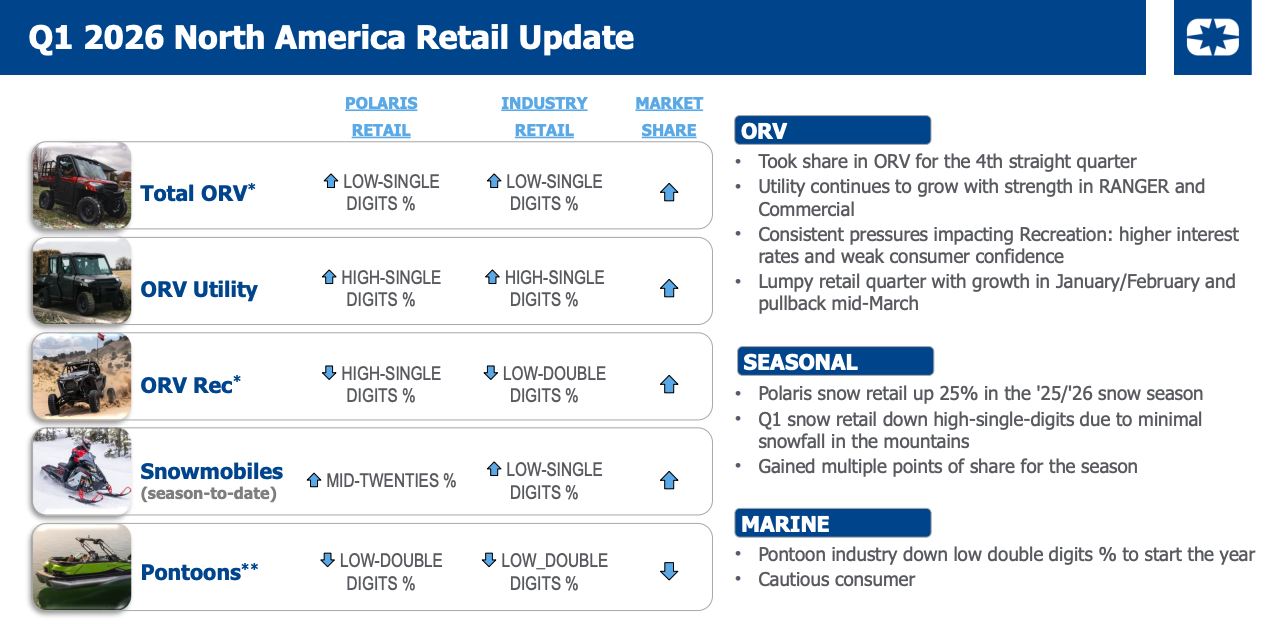
North American ORV retail sales increased 3% (excluding youth), with Polaris gaining market share for the fourth straight quarter.



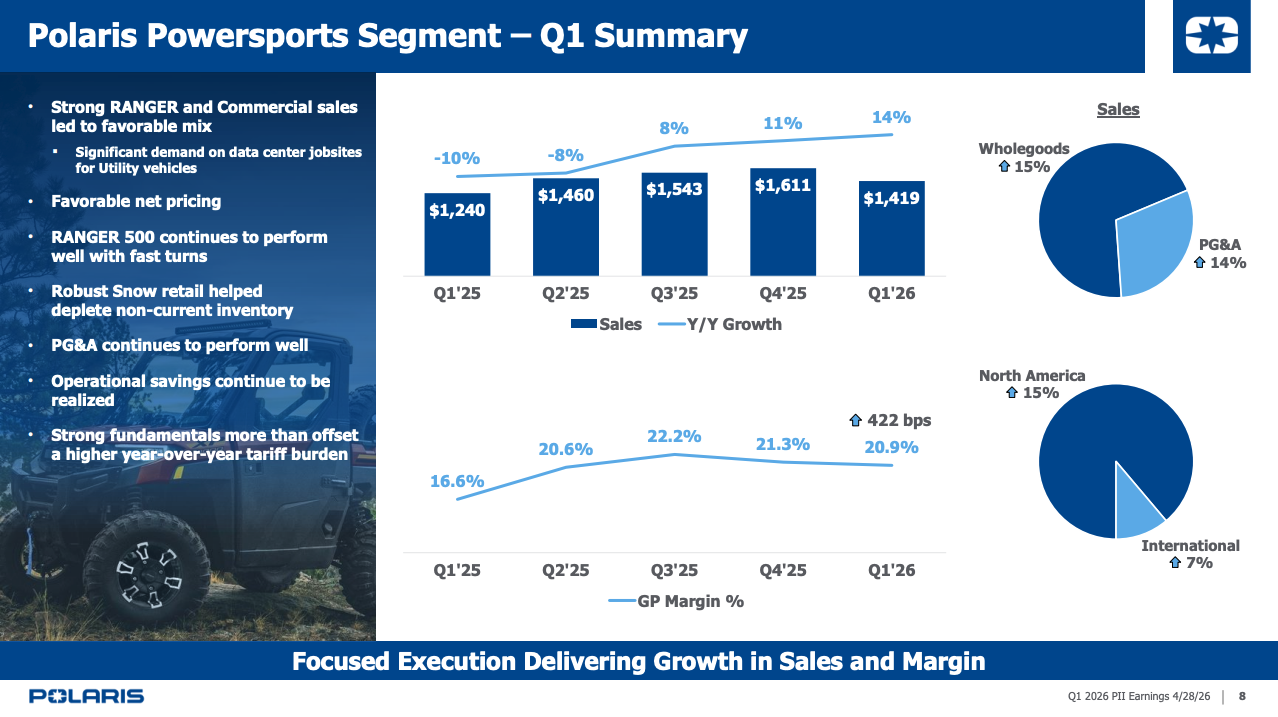
“Utility remains strong… recreational continues to be challenged,” Speetzen confirms.
Utility vehicles now account for about 70% of the company’s ORV revenue. Polaris also pointed to growing demand tied to large-scale job sites such as data center construction.
“We’re seeing an uptick in demand… across large data center construction projects… a secular tailwind,” he adds.
Retail dips, then rebounds
Retail trends shifted during the quarter. Sales were strong early in the year before slowing in March, which the company tied to higher fuel prices and geopolitical uncertainty.
“We saw a decline starting in mid-March… [but] retail performance returned to growth in April,” Speetzen noted in the earnings call.
Recreational categories remain more sensitive to those pressures. “It’s a ‘want’ vehicle, not a need… customers are waiting for stability,” he adds.
Margin expansion continues
Adjusted gross margin increased 389 basis points to 20.5%, driven by product mix, pricing and operational improvements. “Even with 240 basis points of headwind from tariffs, we improved gross margins,” Speetzen says.
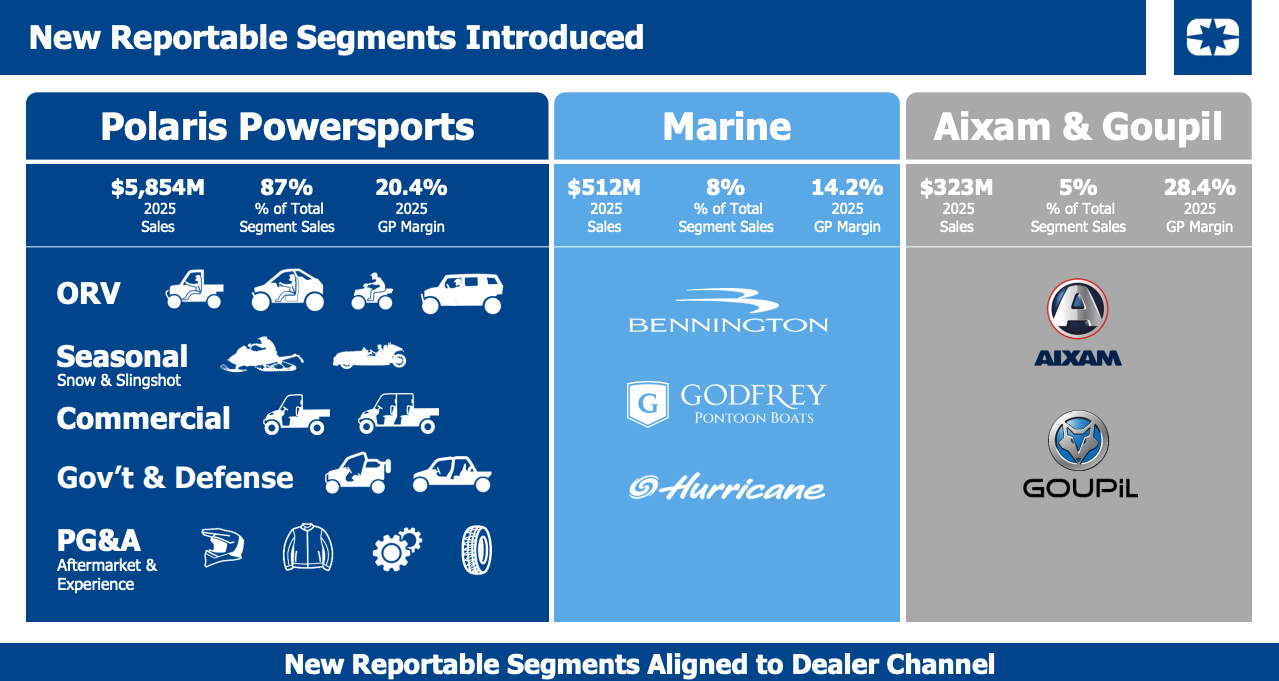
CFO Robert Mack said lower promotional activity and a favorable mix helped offset tariff impacts.
Tariffs and costs remain factors
Polaris expects about $215 million in tariff-related costs in 2026, with additional pressure from higher steel and diesel prices. “There’s a tremendous amount of uncertainty… we’re being conservative,” Speetzen says.
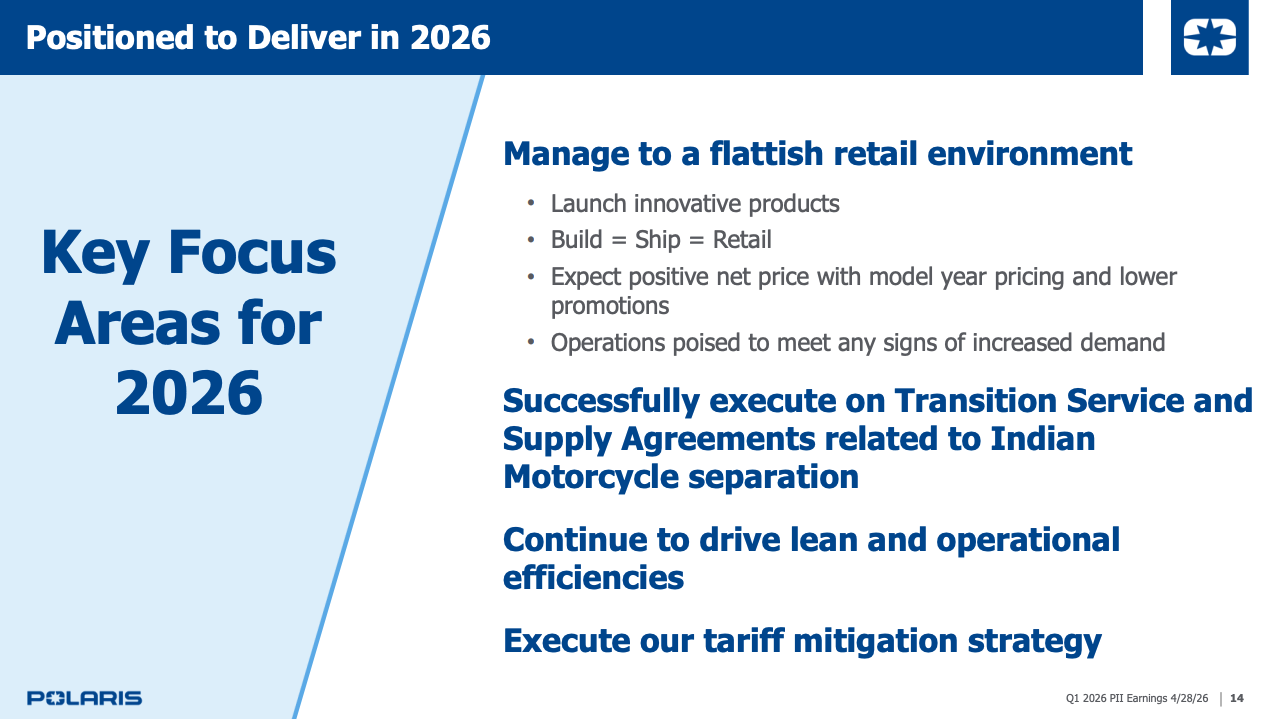
The company continues working to reduce China-sourced components and adjust its supply chain.
Outlook
Polaris reaffirmed its full-year guidance, calling for a relatively flat retail environment. “We are more aligned, more focused and more disciplined than we have been in many years,” Mack said in the earnings call.
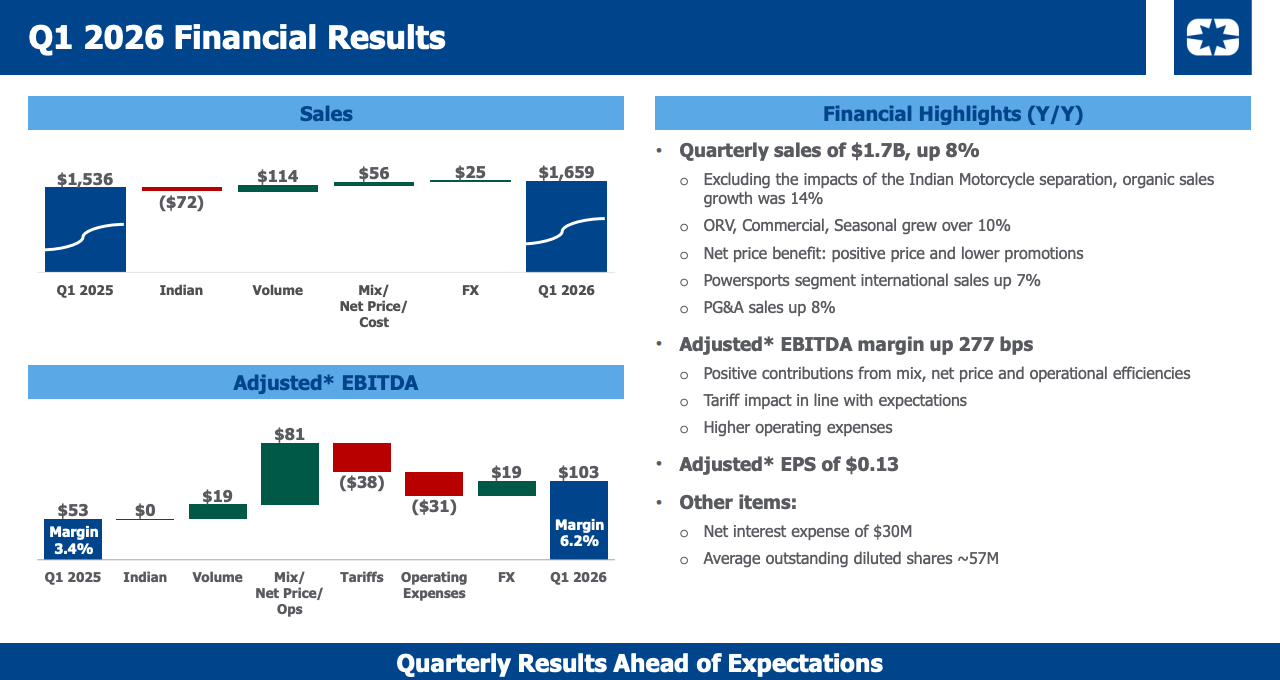
For dealers, the quarter reflects better inventory control, improving margins and steady demand in utility segments, while recreational sales continue to depend on broader economic conditions.