
Harley details capital-light overhaul of finance arm, dealer support unchanged
As reported earlier, Harley-Davidson, Inc. is reshaping its finance division with a new capital-light model. While the plan will include changes on the corporate side, the company emphasizes that dealer and customer financing operations will remain largely unchanged.

During an investor presentation, executives outlined how the company’s partnership with KKR and PIMCO is transforming Harley-Davidson Financial Services (HDFS) into a less capital-intensive business while maintaining its strategic role in supporting motorcycle sales.
Model reshapes HDFS
The transaction, completed in late 2025, included the sale of roughly $6 billion in retail loan assets and a 9.8% equity stake in HDFS, generating approximately $50 million in proceeds and about $1 billion in dividends to the parent company.
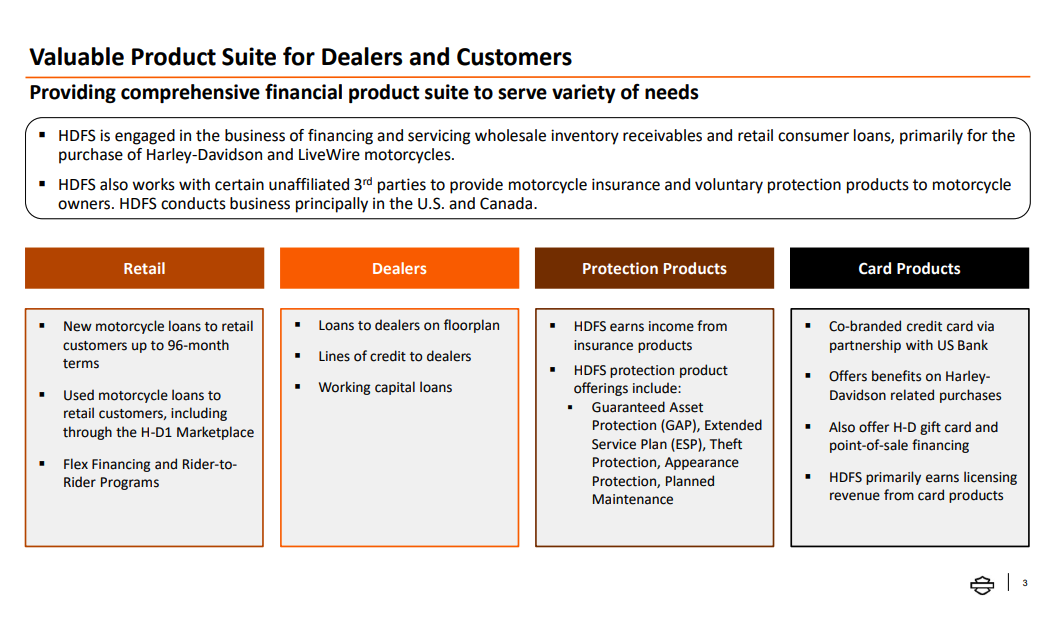
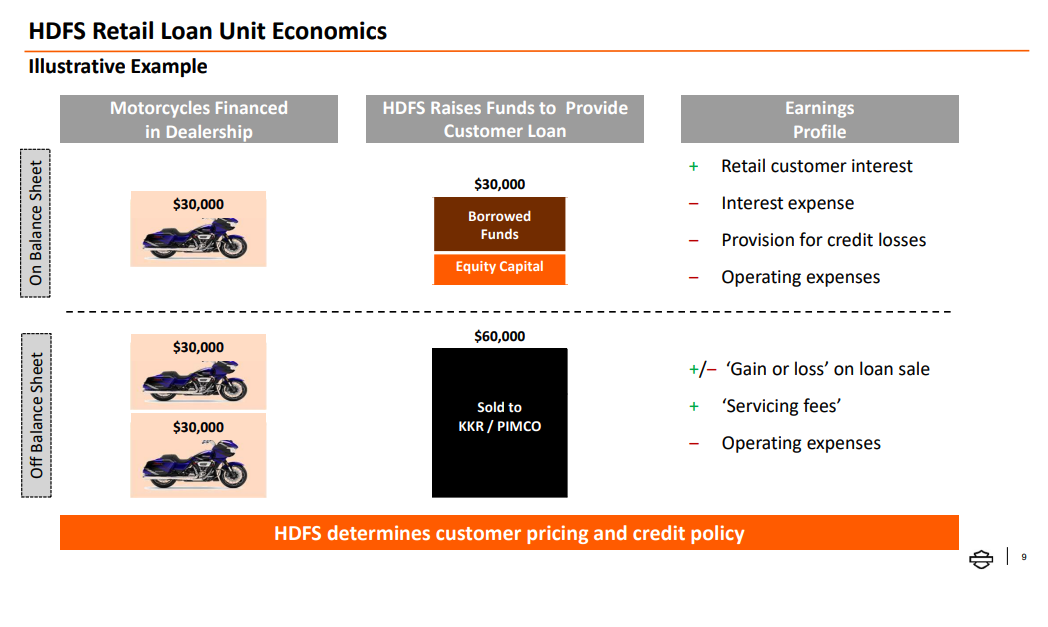
Going forward, HDFS expects to sell about two-thirds of new retail loans to its partners, while retaining the remaining one-third. The company will continue to originate and service all loans, earning servicing fees in the process.
“We anticipate the transaction will transform Harley-Davidson Financial Services into a less capital-intensive and derisked business model,” comments CFO and Chief Commercial Officer Jonathan Root.
Root added that the new structure “affords a high degree of optionality in how we fund and run that business and an opportunity to grow the loan assets over time.”
Dealer financing
Harley-Davidson emphasized that dealer-facing operations — including floorplan financing and working capital support — are unchanged.




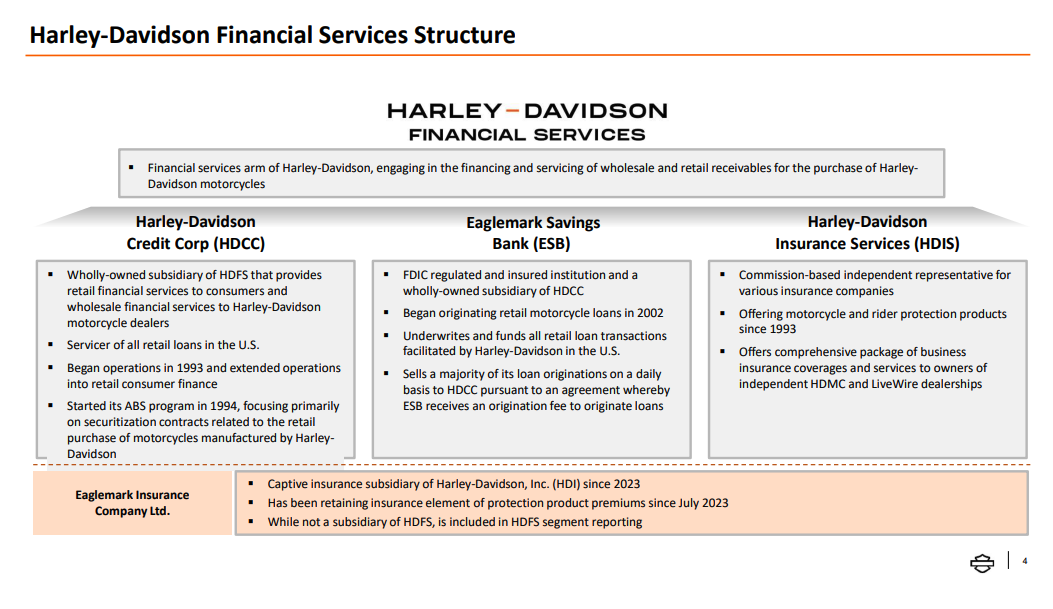
HDFS continues to provide approximately $1 billion in wholesale financing annually to its North American dealer network, which includes around 600 dealerships.
“Dealers view HDFS as an important equation to their business success and as a stable and dependable financial source,” Root says, noting that traditional lenders are often seen as less committed to the powersports sector.
Executives also stressed that the new funding structure will be largely invisible to dealers and customers.
“Motorcycles will continue to get financed in the dealership,” adds Charles Do, senior vice president at HDFS. “Much of this happens behind the scenes, so our dealers and end customers won’t notice a change.”
Strong historical performance
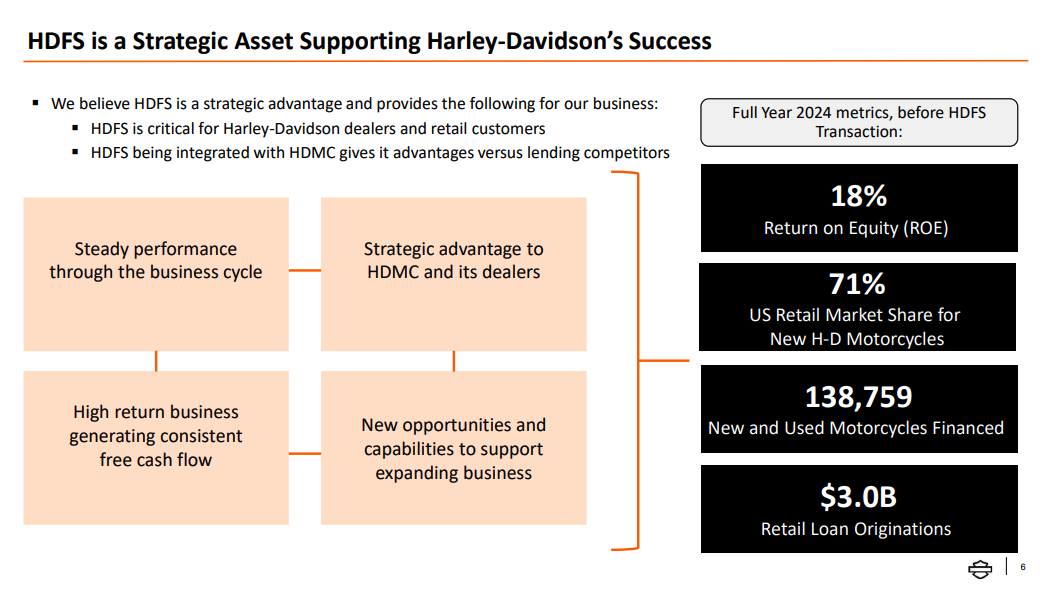
HDFS has been a high-return business for Harley-Davidson, generating an 18% return on equity in 2024 and averaging 21% over the past five years. The division financed about 139,000 motorcycles in 2024, totaling roughly $3 billion in originations.
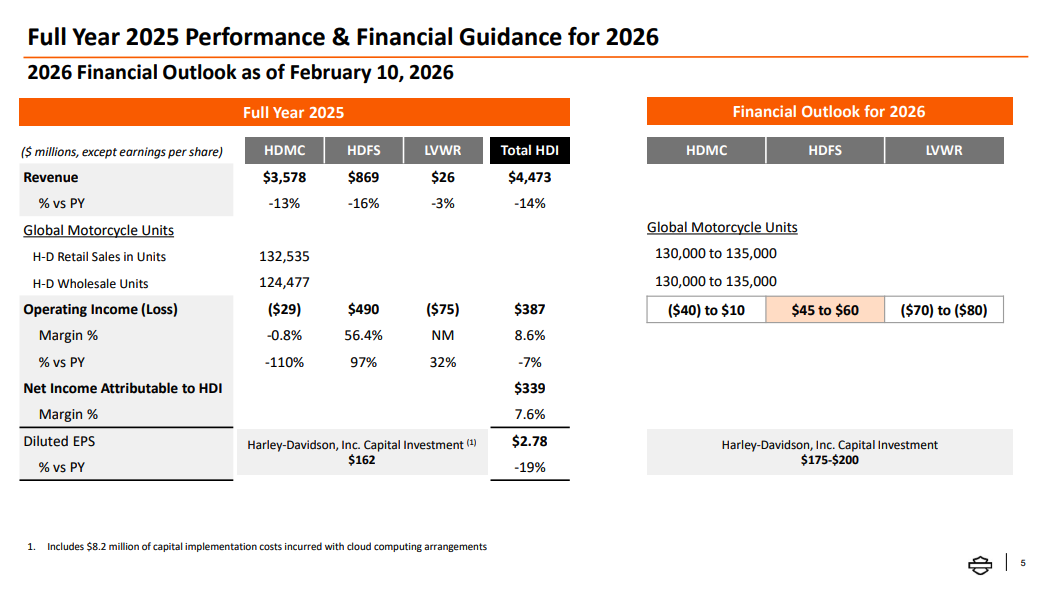
For 2026, the company expects HDFS operating income between $45 million and $60 million, reflecting the smaller balance sheet following the asset sale.
However, Harley-Davidson sees a path to significant growth over time.
“We see a path to growing operating income over time,” Root says, adding that earnings could reach roughly three times 2026 levels by around 2029.
Balance sheet improved
The restructuring also strengthened Harley-Davidson’s overall financial position. Consolidated net debt declined from $5.9 billion at the end of 2024 to approximately $400 million at the end of 2025.
Company leadership highlighted the improved flexibility and reduced risk profile resulting from the transaction.
“This is another way to view the derisked and less capital-intensive post-transaction balance sheet,” says Shawn Collins, director of investor relations.
Strategic role
Despite the structural changes, executives reiterated that HDFS remains a core component of Harley-Davidson’s business model, supporting both retail customers and dealers.
“HDFS is a key part of the overall consolidated Harley-Davidson business,” Root says.
For dealers, the takeaway is continuity: financing programs, dealer support and customer access to credit are expected to continue without disruption, even as the company shifts more risk and capital requirements to external partners.