Dealer Inventory Coverage explained
By Zach Materne
This article originally appeared in the March issue of Powersports Business.
For a powersports dealership, floored and non-floored inventory, along with company-owned vehicles, represent far more than what sits on the showroom floor. These assets are both financed and owned, and they drive cash flow, lender relationships, and day-to-day operations.
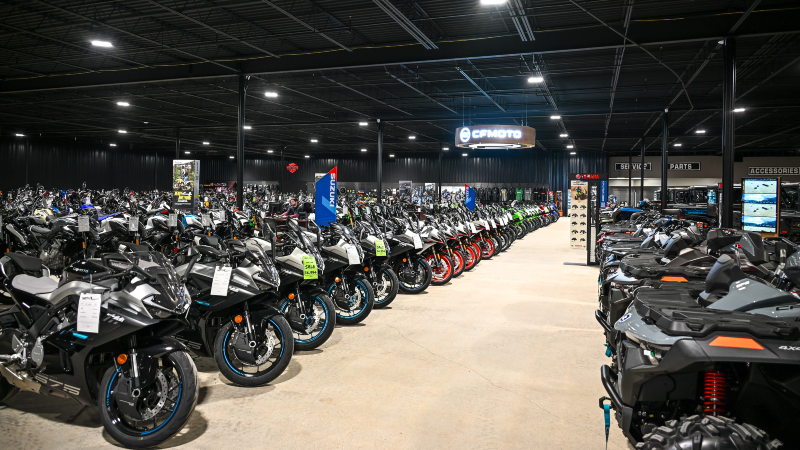
Dealer Inventory Coverage is designed to protect total inventory exposure, not just satisfy a floor plan lender. When structured correctly, it protects inventory and company-owned vehicles, supports lender confidence, and allows the dealership to recover quickly after a loss.
The key takeaway from the start: this coverage is about protecting assets first. Lender requirements are secondary.
The role of floor plan insurance
Many dealers first encounter Dealer Inventory Coverage through what is commonly referred to as floor plan insurance. Floor plan companies typically require only a portion of the total credit line to be insured, often around 70%.
That minimum requirement protects the lender, not the dealer. If limits are built solely around this percentage, the dealership may be materially underinsured.
Dealer Inventory Coverage must be structured around total exposure, including floored inventory, dealer-owned inventory, and company-owned vehicles. Anything less can create serious gaps.


Understanding Dealer Inventory Coverage in practice
Dealer Inventory Coverage is also known as Dealer Open Lot or Dealer Physical Damage coverage. Regardless of the label, the intent is the same: protect the dealership’s inventory and vehicle assets while meeting lender requirements.
This coverage applies to floored inventory, non-floored (dealer-owned) inventory, and in many policies, scheduled company-owned vehicles. It also includes physical damage to inventory and, in many policies, company-owned units involved in accidents.
There are two goals when structuring this coverage. The first is ensuring inventory and company-owned vehicles are properly insured against physical loss. The second is satisfying floor plan lender requirements. Meeting the second goal without addressing the first is where dealers get into trouble.
What Dealer Industry Coverage typically covers
Dealer Inventory Coverage is designed to address real-world dealership risks, including fire and smoke damage, theft and vandalism, wind, hail, and severe weather, transit damage while inventory is being transported between dealership locations, physical damage to inventory and company-owned units involved in accidents, and false pretense or fraudulent sales.
Coverage applies to both on-lot and off-site inventory. Off-site coverage is often limited by distance or radius from the primary location, and trade shows, demo days, and temporary displays frequently require advance notice to underwriting for coverage to apply.
Inventory limits and co-insurance risk
It is important to note that Dealer Inventory Coverage typically responds based on invoice value for new units and fair market value for used units. Claim settlements are tied to these valuation methods rather than retail pricing.
When determining limits, this needs to be taken into account. Limits should reflect minimum inventory levels, peak inventory levels, and average inventory throughout the year.
If coverage limits are understated, a co-insurance penalty may apply following a total or near-total inventory loss, even if the dealership technically complied with the floor plan lender’s insurance requirement.
How Dealer Inventory Coverage works with your lender
Floor plan lenders require Dealer Inventory Coverage policies to name them as a loss payee so claim proceeds are applied to outstanding loan balances.
Dealers are responsible for ensuring inventory values are accurate and coverage remains aligned with actual exposure, especially during growth periods or seasonal inventory increases. When structured correctly, Dealer Inventory Coverage protects the lender’s collateral and preserves the dealership’s balance sheet.
Purchasing Dealer Inventory Coverage: Structural Considerations
Dealer Inventory Coverage can sometimes be purchased directly through a floor plan company. These programs typically cover only inventory that remains on the floor plan, often carry higher deductibles, and frequently exclude important coverage such as false pretense or fraudulent sales. Dealer-owned inventory and company-owned vehicles may also be excluded.
For many dealerships, integrating Dealer Inventory Coverage into a broader garage policy provides lower overall rates, broader coverage terms, higher limits, better deductibles, and more flexible structures aligned with how dealerships actually operate.
Common dealer inventory coverage mistakes
Common mistakes include insuring only to floor plan minimums, failing to adjust limits as inventory grows, overlooking off-site and event-related exposures, assuming standard property or auto policies fill the gaps, and ignoring flood or earthquake exclusions in high-risk areas.
Conclusion
Dealer Inventory Coverage is not just an insurance requirement. It is a core component of dealership risk management. When coverage is structured around total exposure rather than lender minimums, dealers are better positioned to protect their inventory, preserve lender relationships, and avoid surprises after a loss.
Zach Materne is a Commercial Property & Casualty Risk Consultant specializing in Powersports Dealers for Apiar Commercial Risk Management / Cell Brokerage Risk Management Group. LA Resident License #871096 | Cell Brokerage CA LIC. #0G83985 | NPN #14775635