Denago eyes breakout 2026 with value strategy, rapid dealer growth
This article originally appeared in the May edition of Powersports Business.
In just a few short years, Denago Powersports has gone from having no dealers to building a network of more than 160 across the United States — and the company isn’t slowing down.
According to GM David Garibyan, that kind of growth has been intentional from the start. Rather than chasing volume at any cost, Denago has focused on building a foundation around value-driven products, experienced personnel and strong dealer relationships.
Speaking on the Powersports Business Power Hour back in mid-February, Garibyan said the company is entering 2026 with real momentum.
“We’ve had a great start to the year, and we think this is definitely going to be our breakout year.” — David Garibyan
Building a dealer network from scratch
Denago’s rise is notable in a powersports landscape where dealer relationships often take years, if not decades, to establish. The company launched with zero dealers in 2023, crossed the 100 mark in 2025, and has since climbed past 160, with expectations to push closer to 180 in the near future.
Garibyan credits that growth largely to the team behind the brand. Many of Denago’s staff, from regional sales managers to marketing leadership, bring years of industry experience and established relationships.



“It’s not just what you know, it’s who you know,” Garibyan explains. “We’ve got a team that understands the industry and understands what dealers need.”
We’ve always said that people buy from people, and the relationship counts as a significant part of the equation. Equally important, Garibyan says, is following through on commitments.
“We’ve stayed true to what we said from day one. Everything we told our dealers we were going to do, we’ve done.” — David Garibyan
That consistency has helped build trust with dealers, especially those willing to take a chance on a newer OEM. In many cases, Denago has found a home inside multiline dealerships where it fills a gap: offering more affordable options alongside premium brands.
One example highlighted during the discussion was a top-performing dealer in rural Minnesota. In a market already served by major OEMs, the dealership leaned into Denago as a key offering, attracting customers who were looking for something more budget-friendly without sacrificing utility.
“It’s a great example of how this can work,” Garibyan says. “They’ve done really well with the brand, and we’re proud to be part of their growth.”
Importantly, Garibyan emphasized that Denago doesn’t require exclusivity. Dealers are free to carry multiple brands, and success with Denago often helps them expand their overall business.
“At the end of the day, if the dealer is successful, it helps everybody,” he says.
Value without cutting corners
At the center of Denago’s strategy is a simple idea: give customers solid, usable machines at prices they can justify.
Garibyan is clear that this doesn’t mean racing to the bottom.
“There are always going to be cheaper products out there,” he shares. “That’s not what we’re trying to be.”
Instead, Denago aims to strike a balance — offering competitive pricing while still delivering features and quality that resonate with both dealers and consumers.
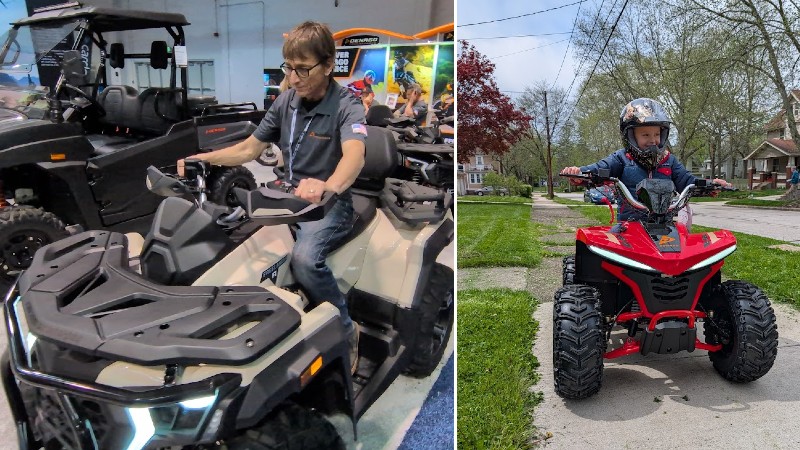
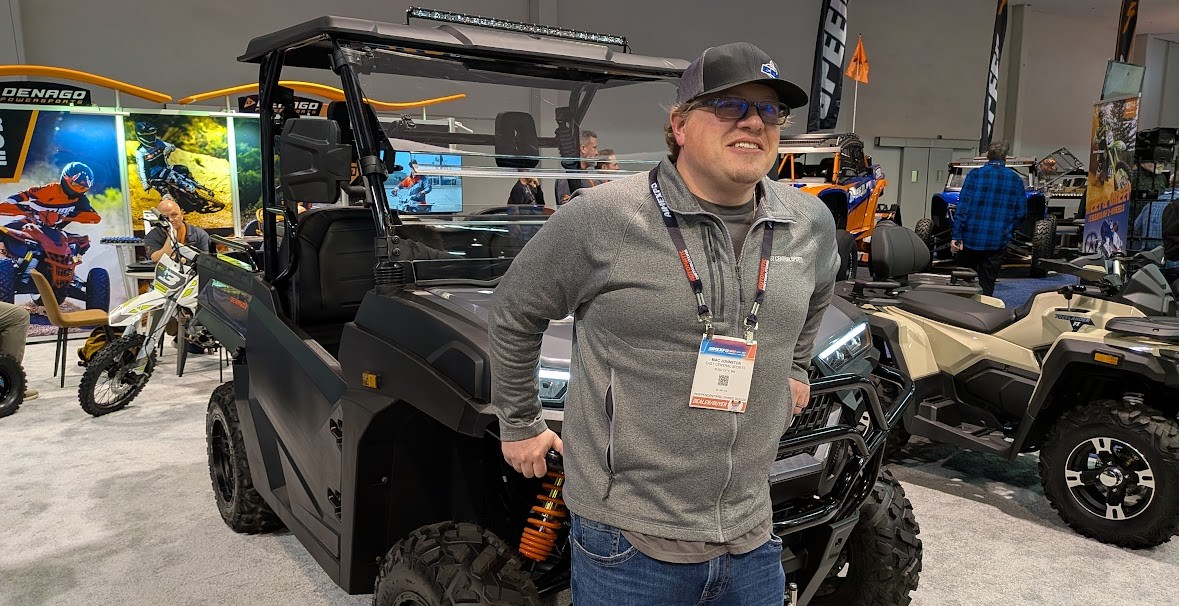
That approach is evident in its newest UTV, the Rancher 650, which made its debut at AIMExpo. With a price point around $10,000, the vehicle is positioned to compete in one of the most price-sensitive segments of the market.
The early response was strong. According to Garibyan, the first allocation of roughly 100 units sold out in about two and a half days during the show.
“That was a big moment for us,” he notes. “It showed that dealers trust what we’re doing and believe in the product.”
The success of the launch also reinforced a broader trend Garibyan sees playing out across the industry: consumers are becoming more practical in their buying decisions.
“You still have those high-end units, and they’re great,” he says. “But most people don’t need that. They want something dependable that fits their budget.”
Meeting the market where it is
Denago’s current lineup reflects that mindset. Its UTVs and ATVs — including the Rancher 650 and the Freelander 300 and 500 — are designed to cover the core utility segment, where demand has remained steady.
“These are workhorse-type machines,” Garibyan says. “They’re built to do a job, and they’re built to last.”
That positioning puts Denago squarely in the middle of a shifting market. While high-performance models continue to draw attention, many buyers are gravitating toward smaller-displacement, more affordable units.
The Motorcycle Industry Council has noted similar trends, with increased interest in entry-level and mid-range products.
Garibyan believes that creates an opportunity.
“There’s a big part of the market that’s being overlooked,” he shares. “Not everybody needs the biggest, fastest, most expensive machine.”
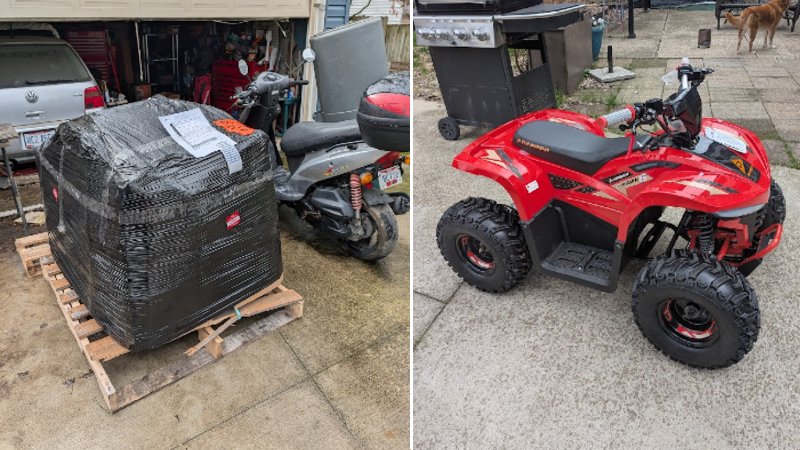
Denago’s lower-priced youth ATVs and dirt bikes also play a role in that strategy. These entry-level products help bring new customers into dealerships, many of whom may not have previously considered powersports.
“Sometimes it starts with a $2,000 purchase,” Garibyan says. “But that customer could come back later for something bigger.”
Improving quality with ‘Gen 2’ products
As Denago grows, it’s also working to improve product quality and durability — particularly as it moves further into full-size machines.
Garibyan described the company’s latest offerings as “generation two” products, reflecting upgrades in engineering, materials and overall build quality.
“We’ve invested a lot into making these better,” he says. “We’ve brought in engineers who have worked for major OEMs, and that experience shows.”
Those improvements are especially important in the utility segment, where customers expect machines to handle real-world workloads over time.
“When someone buys one of these, they’re going to use it,” Garibyan says. “It has to hold up.”
He encouraged dealers and consumers to see the products in person, noting that build quality is something that becomes obvious up close.
“You can tell right away,” he says. “Just by looking at it, by touching it.”
A practical approach to electric
Denago is also exploring electric vehicles, but Garibyan said the company is taking a measured approach.
Rather than jumping into full-size electric UTVs or motorcycles, Denago has focused on youth models, where the benefits of electric power are more immediate.
The E-Hawk 6, for example, has gained traction thanks to its quiet operation and smooth power delivery — qualities that appeal to first-time youth riders.
“For kids, that’s a big deal,” Garibyan says. “The noise and vibration of a gas engine can be intimidating.”
Electric models remove that barrier, making it easier for younger riders to get comfortable.
A larger version, the E-Hawk 10, is currently in development and will offer increased power and capacity for older youth riders.
When it comes to adult-sized electric vehicles, however, Garibyan remains cautious.
“We don’t feel like the demand is there yet,” he adds. “It’s something we’re watching, but it’s not our focus right now.”
Dealer support sets the brand apart
One of the biggest challenges in the value segment is differentiation. Low-priced products are widely available, particularly through online channels, but many lack the infrastructure needed to support customers after the sale.
Garibyan sees that as a key opportunity for Denago.
“You can buy something online for cheap,” he shares. “But then what happens when you need parts or service?”
By building out a nationwide dealer network, Denago is aiming to provide a more complete ownership experience — one that includes parts availability, service support and ongoing customer relationships.
“That’s really important to us,” Garibyan reveals. “We want dealers to feel confident selling our products, and we want customers to know they’re taken care of.”
Increasing visibility in 2026
With its dealer base now established, Denago is planning to increase its visibility through events and consumer engagement in 2026.
The company expects to attend a range of shows, including overland and off-road events, sand sports expos and potentially SEMA.
Garibyan said the timing is deliberate. In the early days, Denago held back on aggressive marketing because it didn’t yet have the dealer coverage to support it.
“We didn’t want to create demand that we couldn’t fulfill,” he says.
Now, with dealers in place across most regions, the company is ready to push harder.
Events also provide an opportunity for hands-on interaction, which Garibyan believes is critical for a newer brand.
“If someone gets on one of our machines and rides it, even for a few minutes, it makes a difference,” he says. “They understand what we’re about.”
A positive outlook for the industry
Looking ahead, Garibyan expressed cautious optimism about the powersports market in 2026.
He believes steady economic conditions and continued interest in outdoor recreation will support demand, particularly in the utility segment.
“I think it’s going to be a good year,” he shared as we spoke in February. “There’s still strong interest in powersports.”
For Denago, the focus remains straightforward: continue expanding the dealer network, introduce new products, and stay aligned with what customers actually want.