
Hawg’s transitions from traditional powersports to electric golf cart sales
This article originally appeared in the July issue of Powersports Business.
It was six years ago when Billy Campbell, owner of Hawg’s Powersports, decided to turn his scooter and ATV shop into a full-fledged electric golf cart dealership. Since then, Campbell has grown his network to include four stores across two states. And although a predominantly all-electric golf cart dealer has helped the business thrive, tariffs and an oversaturated market have also left some frustration.
Campbell got his first taste of the powersports business in college, when he started selling scooters to students while attending the University of South Carolina. He said the scooters he was selling were cheaper than a campus parking pass, and he ended up selling about $500,000 worth of vehicles in that first 18 months.
After college, Campbell was in the industry on and off over the next several years, but eventually repurchased the scooter dealership in Savannah, Georgia, that he previously sold to his brother. The store was struggling financially, and Campbell looked to turn it around.
Then COVID hit, and unit sales got a huge jolt. That first year after buying back the store, the dealership brought in $1 million in sales. The sales spike would eventually open up the door for Campbell to take on a whole new business approach.
“I bought our own property, all that kind of stuff, and just kept rolling that Covid money right back into the business. That led us to buy golf carts.”
Moving towards electric
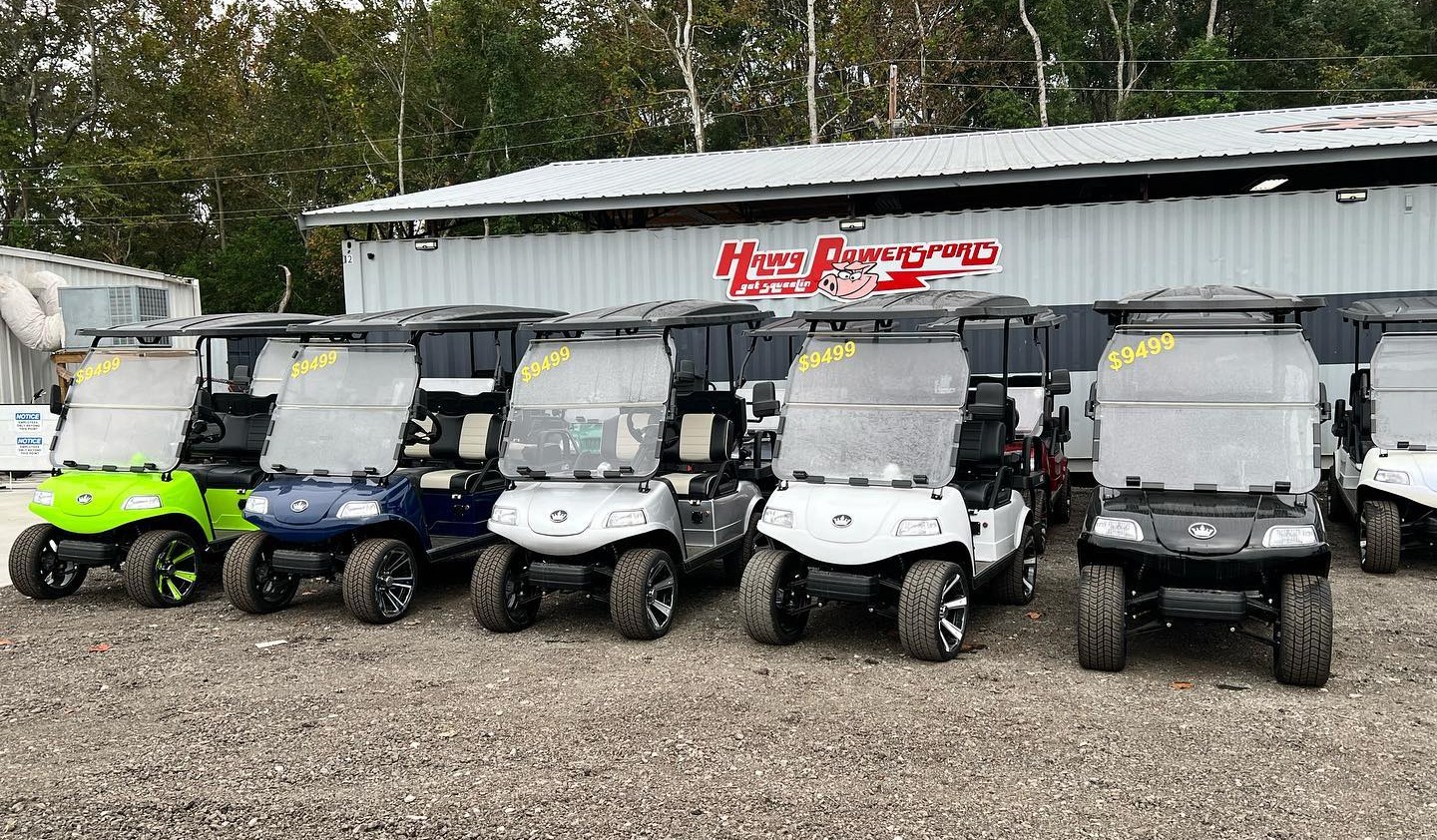
But it wasn’t just a move towards golf carts; it was also a pivot away from internal combustion engines to electric. Hawg’s sold mostly scooters and ATVs before it brought in Evolution Golf Carts, which became the store’s most popular brand. Campbell says he was moving his Evolution inventory so well that it made him question whether selling gas-powered vehicles was worth the pain.




“We started doing well with electric golf carts and realized the four-wheelers and scooters and all that stuff with gas, servicing, people not knowing how to operate chokes … It was just so much we had to do for customers to make every sale work. And then ultimately, you’re selling used ATVs, which come with a lot of liability. We realized that all I have to do is sell one golf cart, and I can make roughly the same money as I would selling two or three four-wheelers. It’s just a lot better game here, and so we just went full golf cart.”
After going all-in on electric golf carts, Campbell had things rolling. Hawg’s was a winner of a Powersports Business Best in Class award in 2022, and the company opened two additional dealerships in South Carolina. Just last year, Campbell said the dealerships were selling about 100 cars a month and had an expected revenue of around $11 million.
Tariff trouble
But that 2025 momentum came to a halt when the U.S. imposed tariffs on imports. Hawg’s was an Evolution superstore, and a significant portion of Campbell’s business was his Evolution Golf Cart line. After the tariffs went into effect, Evolution stopped delivering units due to tariffs and other trade barriers, causing a supply shortage and backorders.
“It all bottlenecked. We didn’t know what to do, because the one thing that wasn’t clear whatsoever was how long we would be waiting on carts,” Campbell says. “Evolution was our bread and butter.”
Things were expected to get better after four- to six-weeks. But that wait has extended into months, Campbell says, and the $11 million in projected revenue ended up being just $6.5 million.
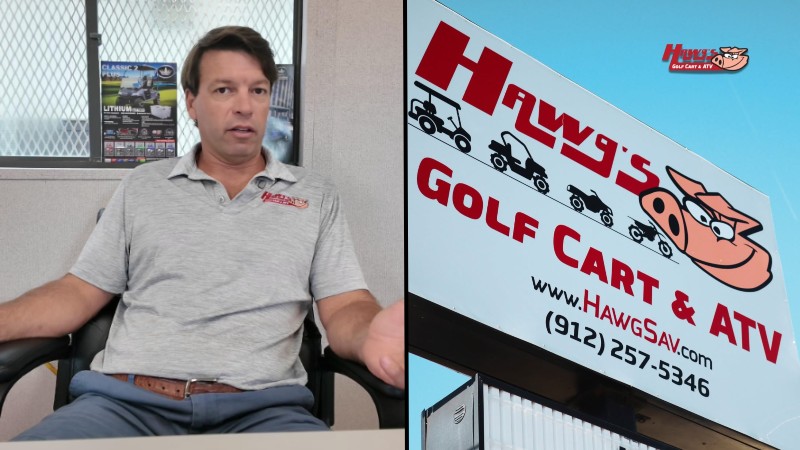
“We went from where we should have probably netted about a million bucks last year to having to put up between a half and three-quarters of a million dollars into business just to keep my employees and the business that I built,” Campbell says. “And we’re just now getting back. Last April was our first profitable month (since Evolution stopped shipping units), so it’s been a long haul.”
Territories & over-saturation
With the Evolution situation still tied up in litigation and units still not being shipped, Campbell considered selling Denago. But doing so would also mean relinquishing his superstore status and effectively reducing available inventory. And the Evolution dealer rep was not on board.
“Evolution wanted nothing to do with me putting Denago on our floor.”
Campbell passed on Denago, and two Club Car dealerships in the same territory eventually picked up the brand. But the Club Car dealers, Campbell says, merely used the lower-priced Denago to attract customers into the dealership, only to disparage the vehicle and push the pricier Club Car — essentially using Denago as a pawn.
“It’s a story as old as time.”
Campbell said he went to Denago and gave them the lowdown on this strategy and how his dealership could sell more units in four months than the competition was selling in a year.
“I went directly to ownership at Denago and said, ‘Look, this is what I want to do with your product. I’m strapped right now, and your cart needs to be in our shop.’”
Despite having other Denago dealers in Hawg’s territory, Campbell got the contract.
“They gave us the opportunity, and we’re splitting a territory. We still need to prove ourselves because they can’t just rip it from the other dealers. But the other dealers aren’t selling enough product to keep the brand.”
Another problem within the golf cart segment, Campbell says, is OEMs oversaturating the market with different brands, but the same machine. Manufacturers produce the same vehicle, just with different branding, so it can be carried across multiple dealerships within a territory and corner the market.
“It’s the same vehicle, just a different name and different branding,” Campbell says. “Maybe a different front end, a couple of different buttons. It’s complete trash. But that’s the name of the game right now. Everybody’s re-saturating their own markets so that they can have a second brand and sell to a second dealer and truly own the market.”
But despite some setbacks, Hawg’s Powersports is still surviving. The Evolution saga will eventually resolve itself; Denago is doing well, and Campbell is on the verge of opening his fourth location.
“It’s been tough in the golf cart world, but we’re fighting our way through it right now. I’m very fortunate to be in business.”