Social trends: How dealers are using social, and what experts are saying
This article originally appeared in the August issue of Powersports Business.
Figuring out the best ways to launch an effective social media campaign that promotes your business, attracts customers, and advertises products and services isn’t a new thing — far from it. But with constant changes in social media trends and platform popularity, how do powersports dealers stay ahead of the curve?
Social media consultant Arik Hanson, along with powersports industry professionals trying to navigate their way towards successful online growth, offers insight into the current social media landscape and the approach they’re using to leverage an ever-evolving business tool.
Dispelling social media myths
Hanson addresses two widespread myths in his article titled “Six social media myths busted” that are pertinent to powersports dealers.
One myth Hanson attacks is whether social media still drives traffic to businesses’ websites. And although social media sites discourage users from leaving via embedded links, there is evidence that some platforms still drive external traffic.
A survey by StateCounter, a web analytics service, shows Facebook has a 75% share of all social web traffic arriving on third-party websites, compared to Instagram’s 8%.
“Facebook continues to be a viable traffic driver. Now, I would argue that number is heavily influenced by paid support that brands and publishers are throwing behind content designed to drive traffic,” Hanson writes. “But brands are trying that on Insta, LinkedIn and Twitter, too, and it’s not working.”




Another question Hanson poses is whether consumers are only researching brands on TikTok and Instagram. The short answer is no. Instagram (62%) and TikTok (56%) do lead all platforms in user brand research, according to a study by Global Consumer Insights, but Facebook (53%) is not far behind.
Curt Grenier, CEO of Nault’s Powersports & Marine — a four-dealership network in New Hampshire — says he still utilizes Facebook, especially since it coincides with selling pre-owned units on Facebook Marketplace.
“I am still a believer in Facebook,” he says. “Facebook Marketplace still seems to be an active, lucrative avenue, and that’s tied in with posting on Facebook.”
What platform and content should your dealership favor?
It can be a challenge to determine which social platform is the most beneficial for your business. A recent study by the PEW Research Center shows 71% of U.S. adults say they still use Facebook, compared to 50% who use Instagram. Despite the chatter, Facebook is still the world’s most popular platform — although its growth is stagnant compared to other socials.
But one thing does seem to be evident, regardless of platform: short-form video is the dominant format, Hanson says. This wasn’t the case 10 years ago. Social media is much more about entertainment now.
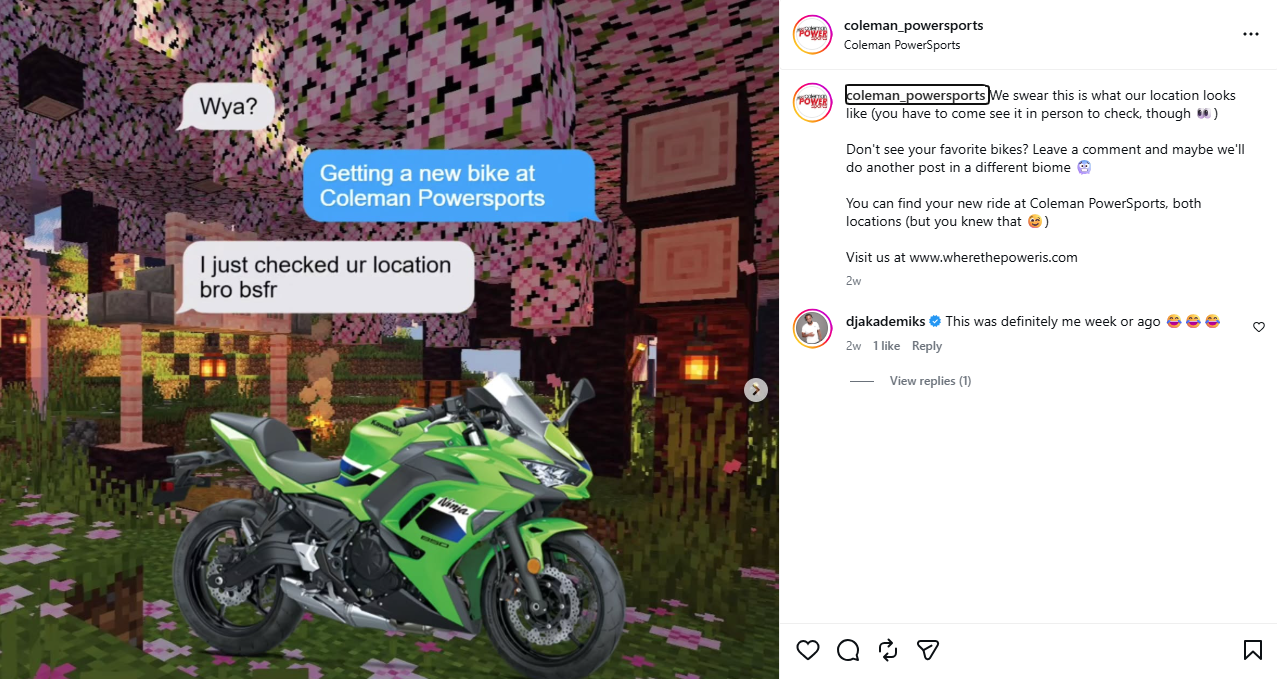
Dominique Robinson, marketing and event coordinator for Coleman PowerSports in Washington, D.C., says she uses short-form video that is geared toward making the process of buying a motorcycle less intimidating and having the dealership seem fun and more approachable
“Overall, we’re really trying to push for that feeling of community, using local influencers, our staff, and just people who can show that our dealership isn’t scary. That we’re still people.”
Fun is important, but Robinson also stresses that it’s central to let people know you’re still a credible powersports dealership. She says the dealership’s aim is lightheartedness, not just a bunch of kids making silly social media videos.
“You have to find a balance. We don’t want to post too many goofy fun videos; otherwise, people won’t take us seriously. And we want people to take our dealership seriously.”
As for the social platforms Coleman PowerSports utilizes the most, Robinson says it’s still primarily Facebook, but its Instagram page has been growing fast. TikTok is the fast-growing platform that’s becoming more popular with younger generations, but it’s not necessarily the most ideal for powersports dealerships, she says.
How often should I post on social media?
“Whatever you think is a high level of being active on social media, you need to double that,” Grenier says. “And then the day will come when you’ll need to triple that.”
And with all the different platforms, and between sharing new unit sales and making fun, short-form content, Grenier’s sentiments seem to be the case. However, Hanson also writes that although businesses need to stay active on social media, they shouldn’t be slaves to a calendar telling them exactly when and how much to post.
“Do we need content calendars to plan our work? Absolutely. But do we need to plan and map out every piece of content months in advance? No, we don’t.” Hanson says.
Daily posts promoting products and services are just advertising, even if the content is fun videos. Hanson says to make sure to diversify your posts, such as employee-driven content that highlights staff, or develop content that speaks to the audience in a far less promotional way.
Creating social media content is also time-consuming, and without a designated social marketing team, producing daily videos and photos to Facebook or Instagram can take employees away from service departments and showroom floors.
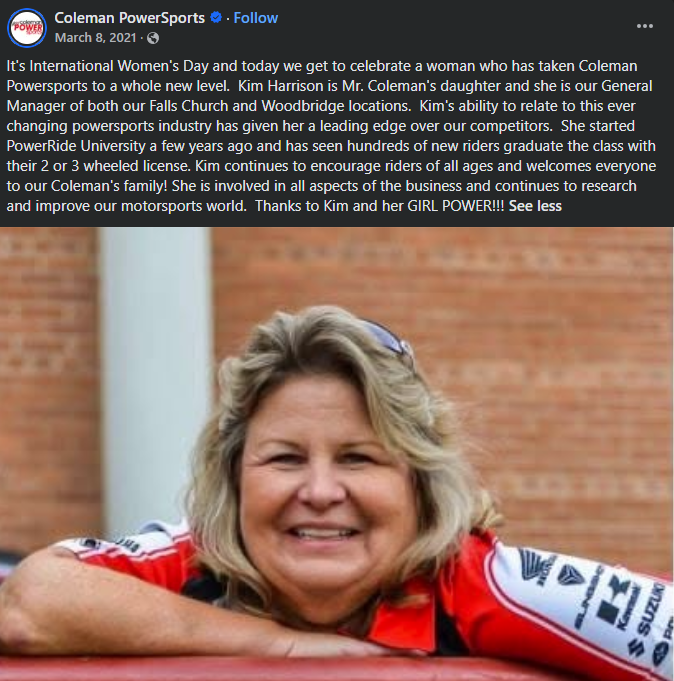
“Posting different videos and photos of the dealership and inventory daily is a commitment,” Robinson says, but also admits that although effort is needed, it’s important to show the customer your dealership’s personality.
“At the end of the day, it’s about creating fun content for everyone. Doesn’t matter the age, just make it all-around fun and relatable.”