Harley-Davidson Q3 retail sales climb 9% in North America as dealer inventory falls
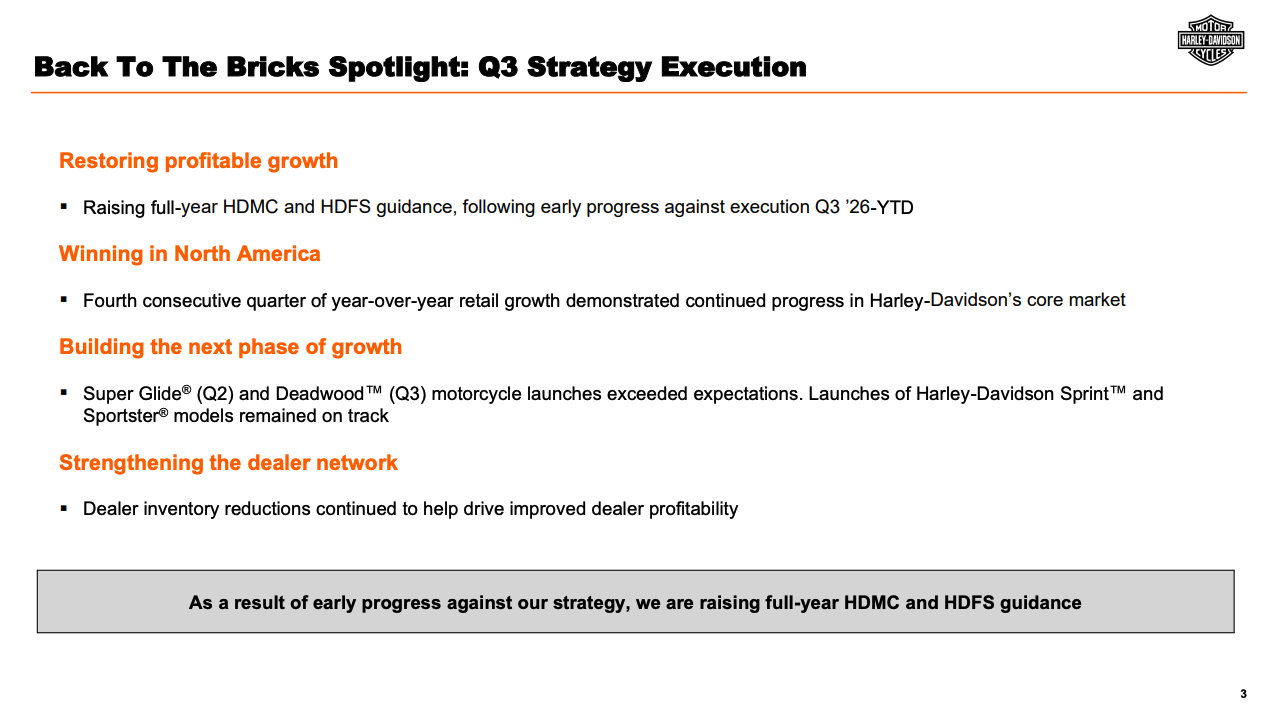
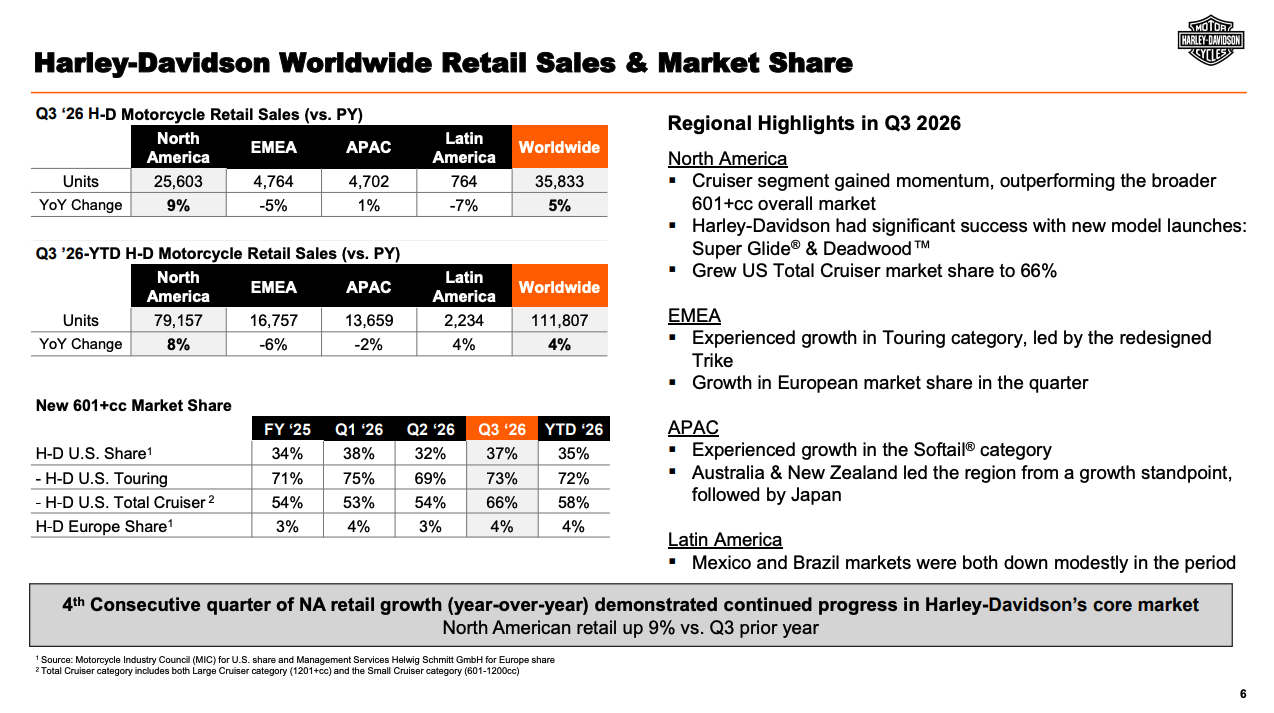
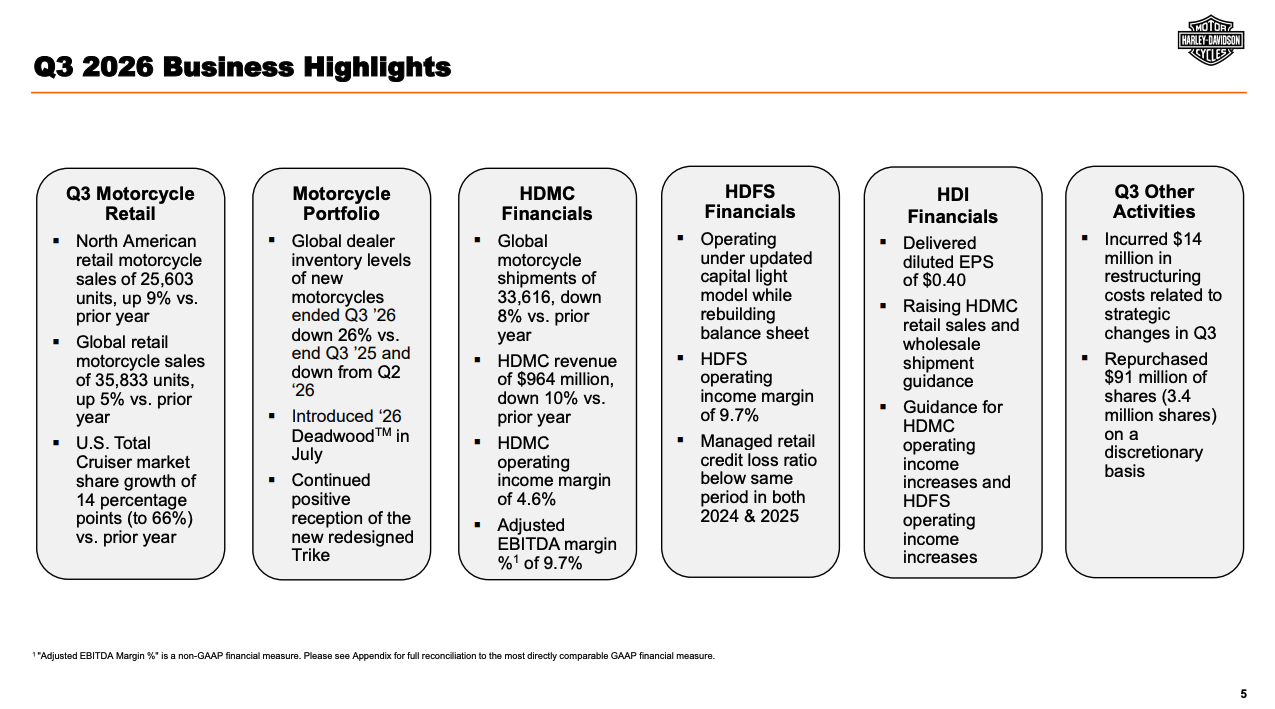
Harley-Davidson’s North American retail motorcycle sales increased 9% in the third quarter of 2026, extending the company’s year-over-year growth streak to four consecutive quarters.
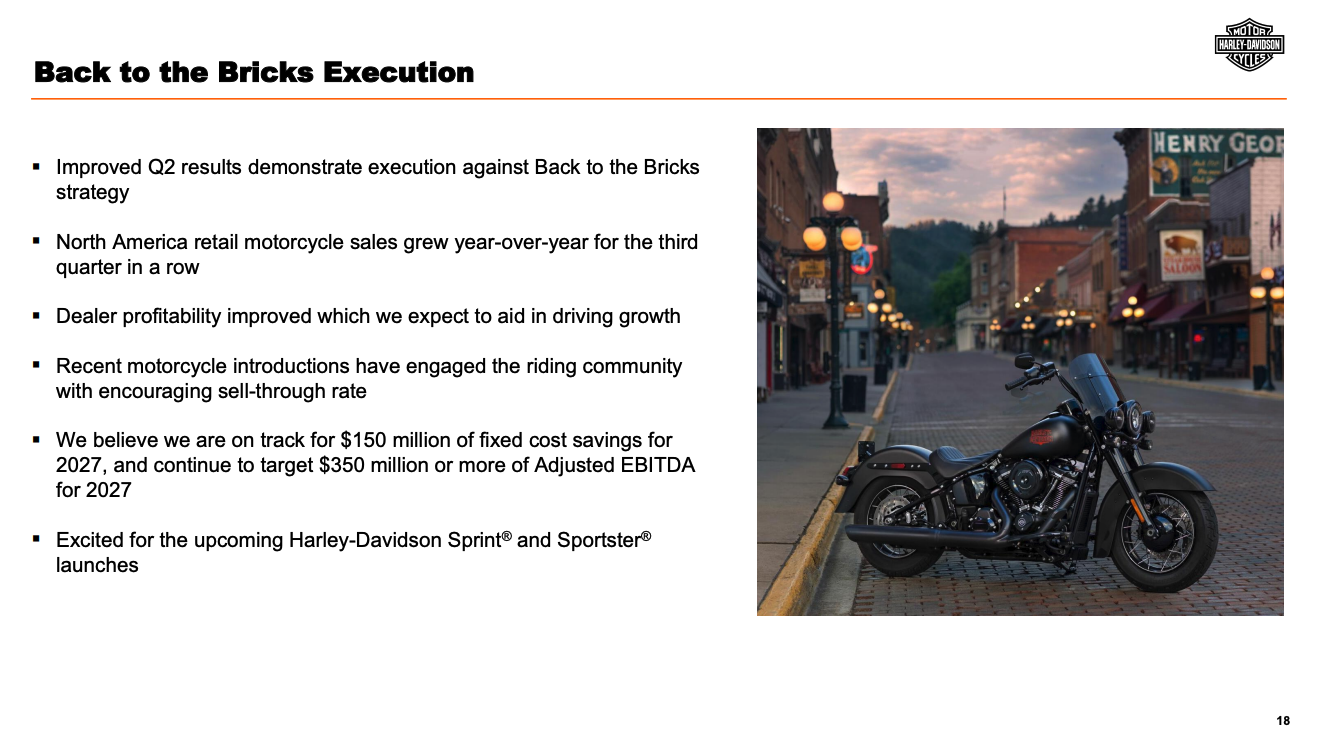
Global retail sales were up 5%, as the Motor Company continued to focus on dealer inventory levels, profitability and its Back to the Bricks strategy. North American strength helped offset declines in several international markets, while new models and improved inventory conditions gave management confidence to raise its full-year sales and operating income guidance.
Harley-Davidson CEO Artie Starrs credited the domestic performance to product launches, dealer engagement and marketing support. “It shows that riders respond when we put the right motorcycles, dealer engagement, and marketing support in the market,” Starrs said during H-D’s Oct. 29 earnings call.
Global dealer inventory was down 26% from the year-ago quarter, marking the seventh consecutive quarter of year-over-year declines. More than 88% of global dealer inventory consisted of model-year 2026 motorcycles, while 91% of North American inventory was current model-year product, compared with 86% a year earlier.
“We remain disciplined in aligning wholesale with retail demand, improving channel quality, and strengthening dealer margins,” Starrs said. “Dealer health is non-negotiable and foundational to Harley-Davidson’s long-term earnings power.”
Starrs said North American dealer profitability is tracking ahead of the company’s earlier plan to double profitability in 2026 compared with 2025. Results vary by region and dealership, but Starrs said most dealers are experiencing improvement. He also described a shift in the conversations he is having with dealers, saying that when he first took the job, most calls were about getting help moving existing inventory.
“That’s completely flipped. Most dealers are asking for more bikes,” Starrs added.



The company still sees opportunities to improve inventory allocation among dealerships, with some locations carrying more product than others. Starrs said the goal is to give dealers the right inventory, timing and margin profile so they can concentrate on serving riders and building their businesses. Harley-Davidson expects dealer inventory at year-end to be broadly flat with 2025.
New models also are contributing to the improved retail picture. Starrs pointed to the Super Glide, launched in the second quarter, and Deadwood, introduced in the third quarter, as important drivers of customer interest and dealer sell-through. “Sell-through is strong, MSRP realization is at a two-year high, and we have gained significant market share, particularly in U.S. Softail,” he said.
Harley-Davidson reported a 3-percentage-point gain in U.S. market share in the 601cc-and-above category, reaching 37%. Cruiser market share increased 12 percentage points, while Touring share gained 4 percentage points. Starrs said the models have benefited from grassroots marketing partnerships with custom bike builders and shop owners, helping put the motorcycles in front of people who are closely connected to the brand and its riding culture.
Parts and accessories revenue totaled $153 million and is tracking ahead of company plans. Harley-Davidson has formed a new P&A leadership team to expand its 2027 portfolio, including accessories to support the upcoming Sprint and Sportster launches. Apparel and licensing revenue reached $60 million, also ahead of the company’s beginning-of-year expectations. Starrs said customization remains an important part of the Harley-Davidson experience, creating opportunities for dealers while helping build a stronger connection between riders and their motorcycles.
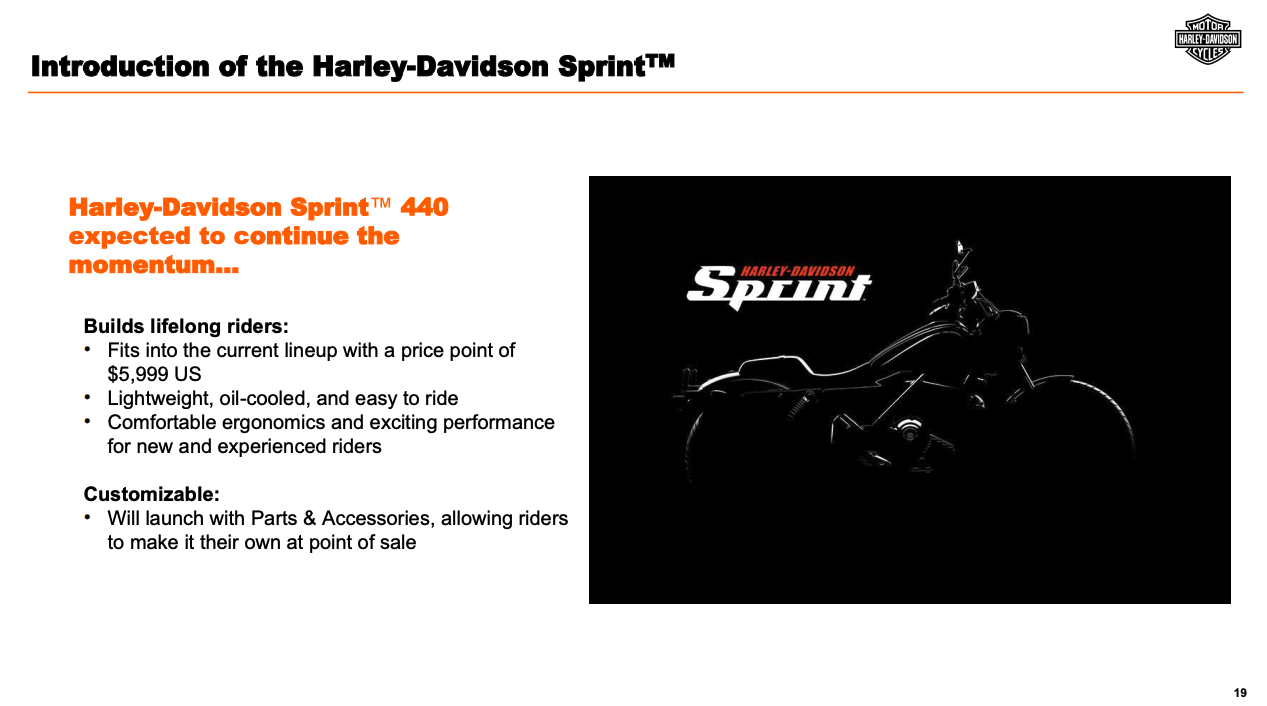
The next phase of the product strategy includes the Harley-Davidson Sprint 440 and the return of the Sportster 883, both expected to help broaden the company’s customer base and give dealers additional price points. Starrs said Harley-Davidson trains approximately 50,000 riders annually through its Riding Academy, but only 8% to 10% of those graduates go on to purchase a new Harley-Davidson motorcycle.
The company sees the upcoming models as an opportunity to bring more of those riders into its customer base. Europe is a particularly important market for the smaller-displacement motorcycles. Starrs said the Sportster previously accounted for 30% to 40% of the mix at some European dealerships, leaving a significant gap after its departure. He said dealers are enthusiastic about the return of the model and the opportunity to improve showroom traffic and profitability. The Sprint and Sportster launches are planned for 2027.
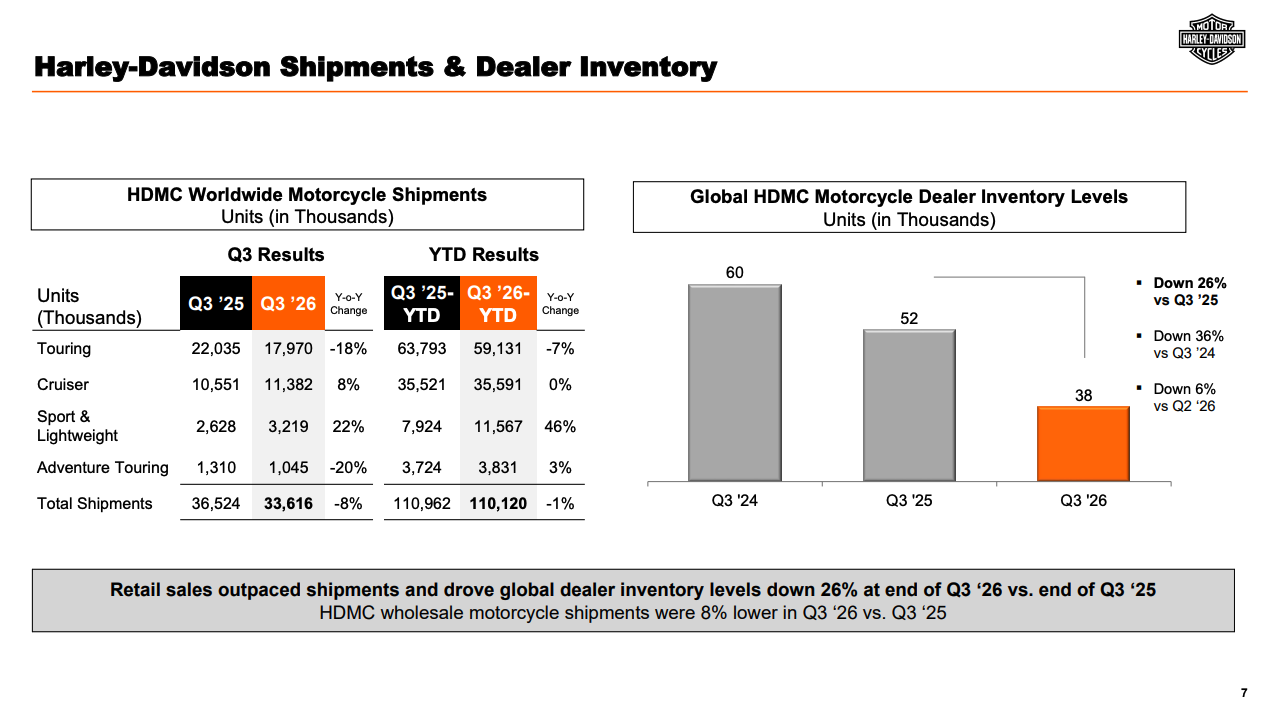
Financially, Harley-Davidson Motor Company revenue was $964 million, down 10% from the prior-year quarter, largely reflecting lower wholesale shipments as the company worked to rebalance dealer inventory. Gross margin improved 173 basis points to 28.1%, while operating income declined 18% to $44 million. Wholesale shipments totaled 33,616 motorcycles, down 8% year over year. The lower shipments reflect the company’s effort to align production with retail demand rather than push additional inventory into the dealer channel.
Tariffs remain a cost pressure. Gross tariff costs through the first nine months totaled $94 million, and the company now expects full-year gross costs of $105 million to $120 million, compared with its previous estimate of $75 million to $90 million. Chief Financial and Commercial Officer Jonathan Root said higher tariff costs were largely offset by higher recoveries, leaving virtually no change to the expected 2026 operating income impact.
Harley-Davidson raised its full-year 2026 guidance for global retail sales and wholesale shipments to a range of 135,500 to 139,000 units for each, up from its previous range of 133,500 to 138,500. The company also raised its HDMC operating income outlook to $25 million to $55 million.
Starrs reaffirmed the company’s longer-term targets of $150 million in fixed-cost savings and $350 million in HDMC EBITDA in 2027, saying the company’s progress in North American retail, dealer inventory and profitability supports its confidence in the plan. “
Back to the Bricks is not a campaign,” Starrs reiterated. “It is a sustained reset of how we operate, support dealers, bring products to market, and connect with riders.”
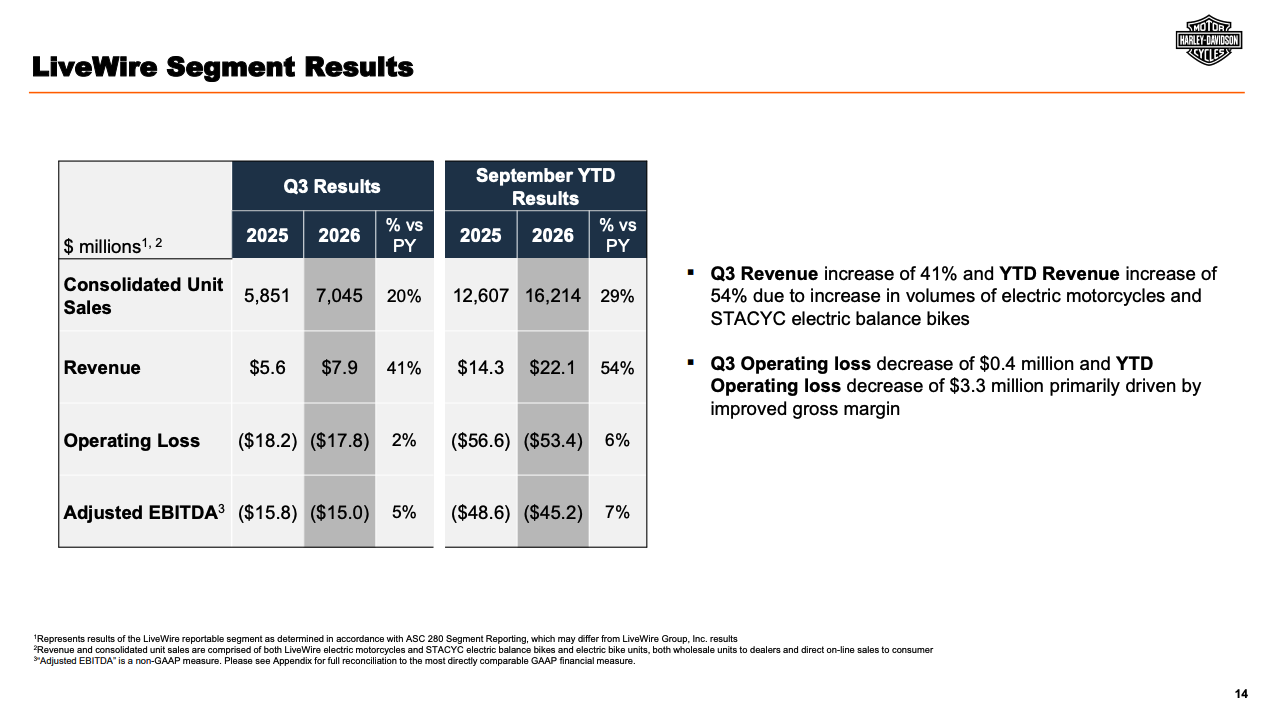
The company also disclosed that LiveWire, in which Harley-Davidson holds a controlling interest, withdrew its full-year guidance after identifying conditions that raise substantial doubt about its ability to continue as a going concern. Starrs confirmed that Harley-Davidson does not intend to fund LiveWire’s operating losses. More on this story in a bit.