Polaris Q3 sales rise 11% as utility demand drives growth
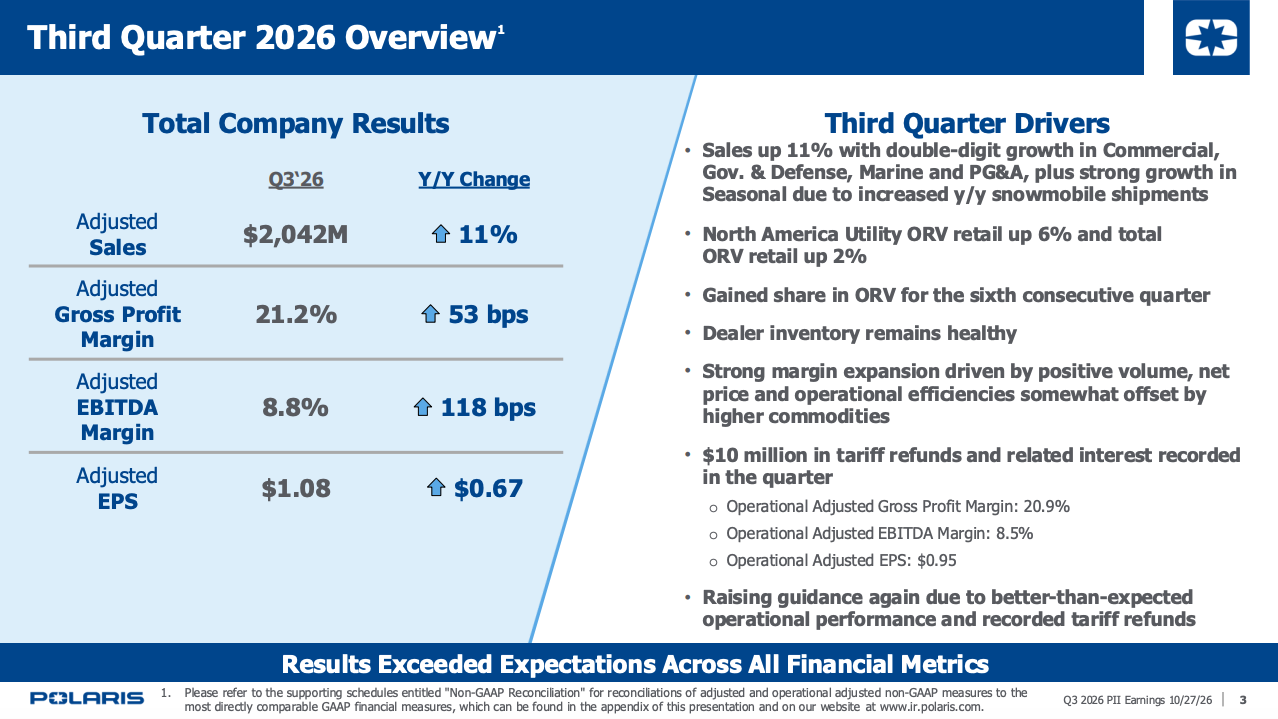
Polaris reported third-quarter sales of $2.04 billion, up 11% from a year earlier, as utility vehicle demand, higher parts and accessories sales, and increased snowmobile shipments offset continued weakness in recreational markets.
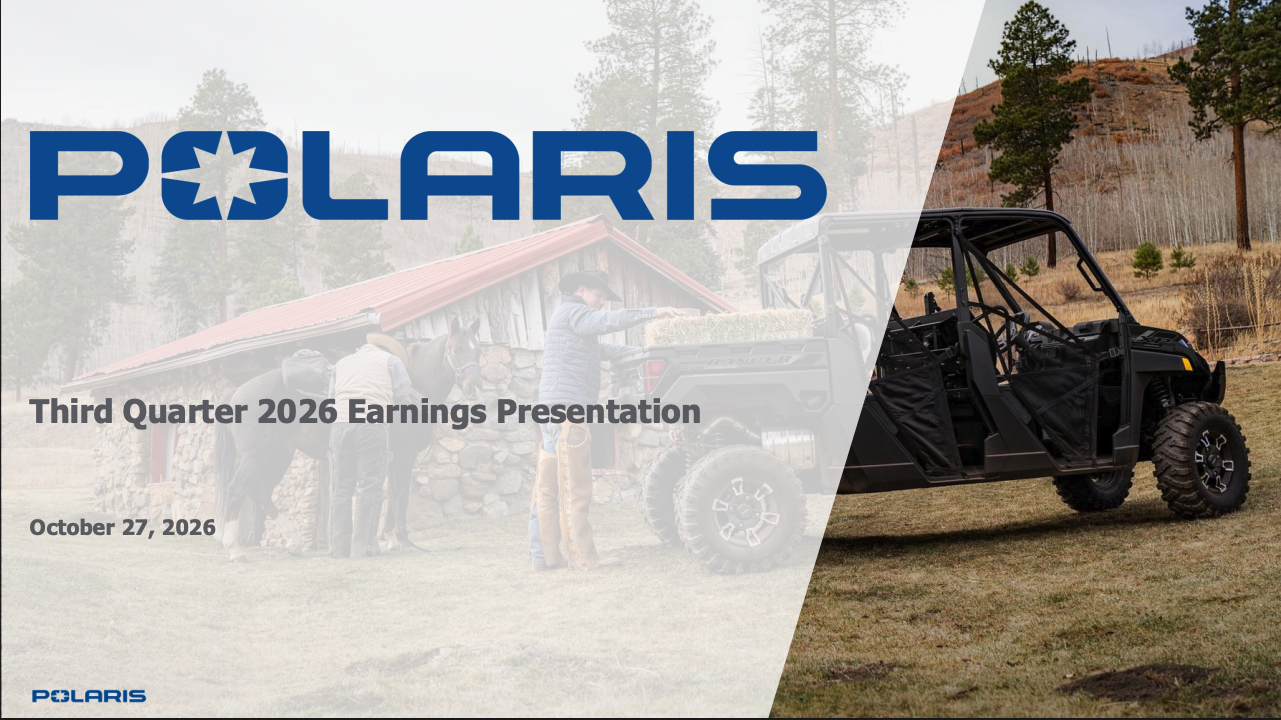
For dealers, the results highlight a continuing divide: Customers buying vehicles for work remain more active than those making discretionary purchases. Polaris’ North American off-road vehicle retail sales increase 2%, excluding youth models, while utility ORV retail rises 6%. The company reports its sixth consecutive quarter of ORV market share gains against an estimated flat North American industry.
“Because we serve customers who use our vehicles for work as well as for fun, utility growth more than offset softness in more discretionary recreational markets, resulting in ORV retail growth,” CEO Mike Speetzen says during the company’s Oct. 27 earnings call.
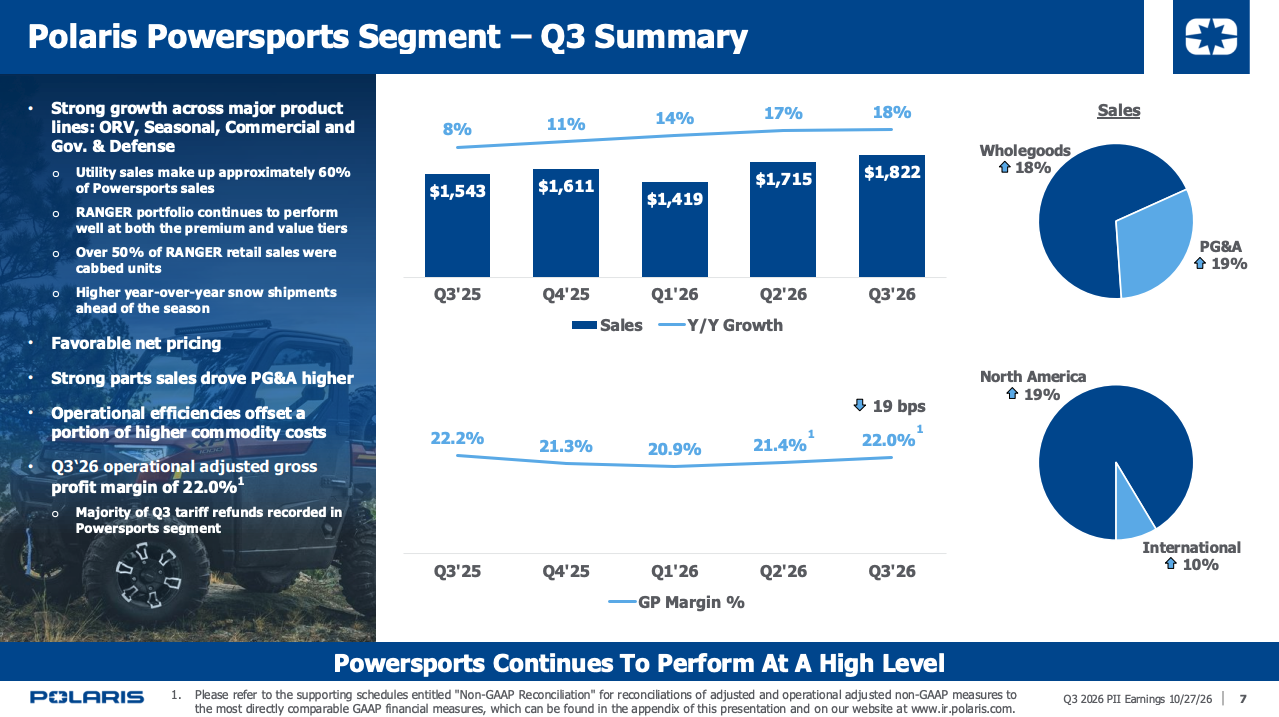
Polaris returned to a quarterly net profit of $38.4 million, compared with a $16 million loss a year earlier. Gross profit margin improves to 21.2%, supported by pricing and operating efficiencies, despite the company’s higher commodity and logistics costs.
Utility leads the sales mix
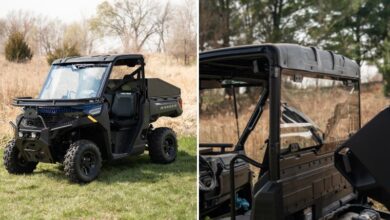
Utility ORVs accounted for more than 60% of Polaris’ powersports sales, according to Speetzen. Across the broader company, more than half of sales come from customers purchasing vehicles for work, including agriculture, construction, government and military applications. And enclosed-cab vehicles remain a significant driver. Cab units represent more than half of Ranger sales, and Polaris reports more than 70% growth in utility cab units since 2023.
“Cab units with comfort features such as AC and heat continue to grow faster than the broader industry,” Speetzen says.
At the entry end of the lineup, Speetzen credits the Ranger 500 with helping Polaris’ midsize Ranger portfolio gain more than 10 percentage points of segment share during the quarter.



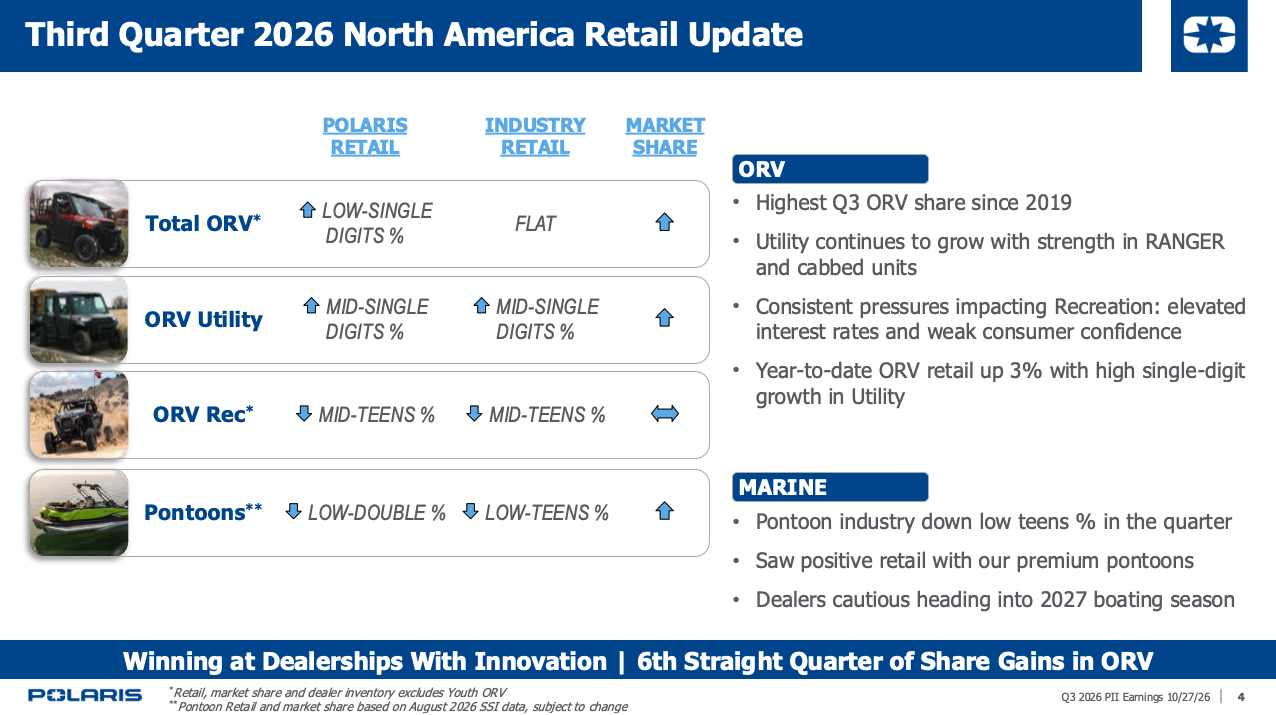
The Polaris Powersports segment generated $1.82 billion in sales, up 18%, supported by higher shipment volumes for ORVs, commercial, and snowmobiles. Parts, garments and accessories sales increase 19%. Commercial demand also supports parts consumption. Speetzen says vehicles deployed on construction projects (i.e., data center sites) accumulate substantial mileage and operating hours, leading to more frequent replacement needs for certain components.
“These customers buy on government budgets and project schedules rather than on consumer confidence,” Speetzen says of government and defense buyers. “That gives these businesses a different profile through the cycle than recreation.”
Dealer inventory remains a focus
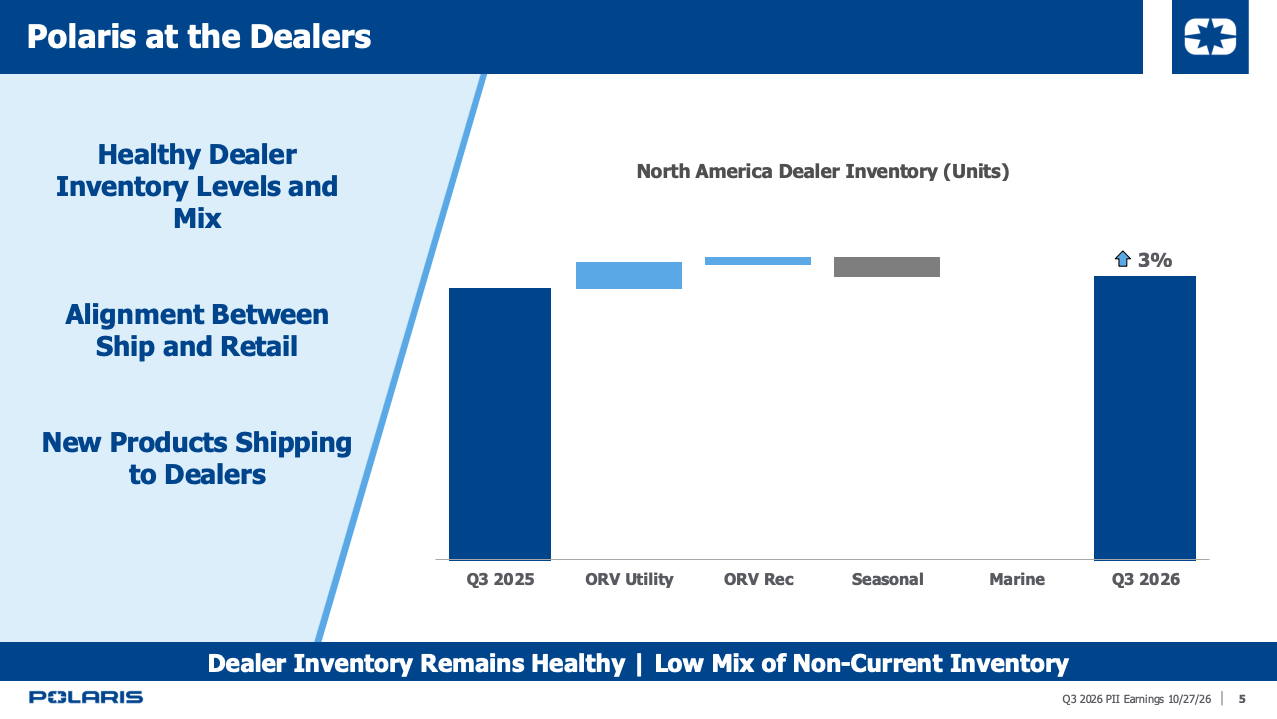
Polaris reported aggregate dealer inventory up 3% year over year, with days’ supply slightly above 100 days — a level management says remains well below historical norms. The company increased utility inventory to support demand. Recreational ORV inventory also edged higher with the timing of the new Polaris Xpedition launch, but management expects that inventory to normalize by year-end.
Snowmobile inventory entered the season in what Speetzen describes as its best position in years. That allows Polaris to move some shipments originally expected in the fourth quarter into the third quarter to support early-season availability.
The shipment timing contributed to quarterly sales growth and will temper fourth-quarter comparisons. Excluding Indian Motorcycle from the prior-year period, company sales increase 17%, substantially faster than overall retail, which is flat for the quarter.
“We continue to build and ship products at the same pace as retail and expect this strategy to hold for the foreseeable future,” Speetzen says.
Management also reported less aggressive discounting across the industry than several years ago, although some promotional activity continues. Polaris aims to limit promotional pressure through inventory control, product mix and new introductions.
New products target recreational buyers
Polaris is shipping three new products to dealers in the fourth quarter: the RZR Pro R Boost, Polaris Xpedition with Numатix and Sportsman 500. Management expects the RZR and Xpedition introductions to help stimulate recreational demand, while the Sportsman 500 adds a value-focused ATV option.
Still, Speetzen says household expenses and hesitation about taking on another payment continue to weigh on recreational buyers.
“Things are just expensive,” he says. “So taking on a new higher payment right now, which tends to be the predominant rec customer, it’s just not something that they’re leaning in hard to.”
Higher outlook, continued cost pressure
Polaris raised its full-year adjusted sales outlook to $7.55 billion to $7.60 billion, compared with its previous range of $7.30 billion to $7.50 billion. The increase primarily reflects stronger utility demand. Management now expects the full-year retail environment to grow in the low single digits, improving from its earlier expectation for roughly flat results.
Cost pressure remains substantial. Polaris expects commodity and logistics expenses to increase approximately $70 million this year and anticipates paying about $215 million in tariffs. Third-quarter results include approximately $10 million in tariff refunds and related interest.
The company continues shifting sourcing toward North America to reduce tariff exposure, targeting less than 5% of material costs originating in China by year-end 2027. CFO Bob Mack cautions that changing suppliers carries its own costs.
“You don’t get as much of an immediate benefit from the tariff relief as you would expect because some of it’s offset with higher cost,” Mack says. “It just takes some time to work those costs down.”
Polaris generated approximately $382 million in third-quarter operating cash flow and reduced total debt by more than $320 million. Management plans to provide formal 2027 guidance in January, with utility demand and manufacturing improvements supporting its outlook as recreational spending remains under pressure.