Why 20 Groups remain a dealer’s best competitive advantage
This article originally appeared in the July issue of Powersports Business.
As powersports dealers continue navigating a post-pandemic market, one thing has become increasingly clear: success is no longer about simply having inventory on the showroom floor. Dealers today face mounting pressure from aging inventory, shrinking margins, technician shortages, rising customer expectations and rapidly evolving technology.

In this environment, some dealers are thriving while others are struggling to maintain profitability. According to industry leaders Mark Sheffield, advisor for Woods Cycle Country and board member of NPDA; Gart Sutton, founder of the Best Operators Club; and Donavon Facey, moderator and consultant at NCM Associates, one of the biggest differentiators is participation in a 20 Group.
While 20 Groups have been part of the powersports industry for decades, their value may be greater today than ever before. Through financial benchmarking, peer accountability and the sharing of best practices, these groups help dealers identify opportunities, solve problems and improve profitability in ways that are difficult to achieve alone.
Seeing numbers that matter
One of the greatest advantages of a 20 Group is access to performance benchmarks. Many dealers know whether sales are up or down, but fewer understand how their financial performance compares to similar dealerships across the country. A 20 Group provides that perspective.
“Twenty percent of dealers lose money every year,” Sheffield says. “A lot of owners simply don’t know what good looks like until they see the numbers.”
Sutton agrees, arguing that understanding dealership financials remains one of the most important skills an owner can develop.

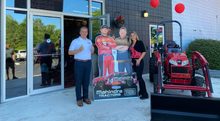


“Dealers who are fluent in their own financials make better decisions in every area of the business,” Sutton says. “Measure yourself against benchmarks and hold managers accountable to specific metrics.”
Facey says the highest-performing dealers focus on key measurements such as gross profit per employee, return on average inventory (ROAI), combined front- and back-end margins, and fixed operations sales as a percentage of unit sales.
Those metrics often reveal opportunities that aren’t visible when owners focus solely on sales volume.
In fact, data from NCM Associates shows top-performing dealerships are keeping nearly 9.8% net profit compared to an industry average of 5.4%. Surprisingly, the difference isn’t driven by dramatically higher vehicle margins.
“When we compare our top 20% dealers to the industry average, new-unit margin is only about one point different,” Facey says. “The bigger difference is inventory productivity and operational execution.”
That kind of insight is why benchmarking matters. It helps dealers understand where profit is truly being created — and where it is being lost.
Inventory discipline
Inventory remains one of the most discussed topics in 20 Group meetings across the country. Following the pandemic-era boom, many dealerships became accustomed to receiving limited inventory and selling nearly everything they had. Today’s environment is far different.
“Inventory normalization is still the dominant conversation,” Sutton says. “Dealers got comfortable during the pandemic boom and are now sitting on aged units while carrying floorplan costs that are eating into margins.”
The most successful dealers have responded by becoming more disciplined. Facey says top-performing dealerships operate from data-driven budgets and inventory plans. They understand how much inventory they can afford and focus on stocking the right products at the right time.
“They aren’t afraid to negotiate with manufacturers to keep inventory levels healthy and prevent floorplan costs and aging inventory pressure from eroding margins,” Facey says.
Sheffield believes many dealers make the mistake of allowing OEM programs to drive inventory decisions.
“Getting on the OEM program hamster wheel is one of the biggest mistakes dealers make,” he says. “Dealers end up chasing bonuses while selling units at lower and lower margins.”
The common lesson from all three experts is simple: inventory should serve the dealership’s profitability goals, not the other way around.
The hidden profit center
While inventory often grabs headlines, many 20 Group leaders believe the industry’s greatest opportunity continues to be service.
“Service, without question,” Sutton says when asked which department is most underappreciated.
Sheffield agrees. “Service is one of the highest-margin products a dealer can sell, yet very few dealers focus on customer-pay business,” he says.
Strong service departments generate recurring revenue regardless of new-unit sales cycles. They improve customer retention, support F&I product sales, and often lead to repeat vehicle purchases.
Facey says service will become even more important as vehicles become increasingly sophisticated and customer expectations continue to rise.
“[Powersports] vehicles are becoming more complex, customer expectations are rising, and dealers who provide a better ownership experience throughout the life cycle of the product will be well positioned for future growth,” he says.
Many top-performing dealers are treating service as a business unit rather than simply a support department. They actively market service, monitor service absorption, and invest in technician development.
The same philosophy applies to parts and accessories. Facey believes dealerships often miss opportunities by failing to maximize accessory sales during the vehicle purchase process.
“The biggest opportunity for accessory sales is at the time of purchase,” he says. “Dealers need strong salespeople who can help customers make those machines their own.”
Investing in people
Another recurring topic at virtually every 20 Group meeting is staffing. Finding and retaining technicians remains one of the industry’s biggest challenges, but dealers are also focused on reducing turnover and building stronger cultures throughout the dealership.
Facey says the most progressive operators are developing talent internally.
“Our most progressive dealers are building programs to grow technicians in-house and are working on company culture to retain them,” he says.
Sutton notes that recruitment and retention challenges extend well beyond powersports, making employee development even more critical.
For Sheffield, strong service departments often become a competitive advantage because they create positive experiences for both customers and employees.
“When you see a truly great service department, it’s a magical experience in how it drives additional sales and improves margins throughout the dealership,” he says.
Accountability drives results
Perhaps the biggest reason dealers continue to invest in 20 Groups is accountability. Financial composites and benchmarking data are valuable, but they only matter if dealers take action.
The best 20 Groups create an environment where owners share challenges, learn from one another and commit to making improvements before the next meeting. That accountability often becomes the difference between knowing what to do and actually doing it.
As dealers look ahead to 2027, challenges will remain. Inventory management, affordability concerns, staffing shortages and emerging technologies such as artificial intelligence will continue shaping the industry.
Yet all three experts share a similar outlook. Dealers who know their numbers, manage inventory carefully, invest in fixed operations and focus on continuous improvement will be positioned to succeed.
And for many of those dealers, a 20 Group remains one of the most effective tools available.
Facey’s advice is straightforward.
“Join a 20 Group so you have benchmarks to see how you’re doing and where your opportunities are.”
While Sutton says to scout your 20 Group carefully, because not every group is a fit, he says that a good group is like a family where the members pull for each other and pitch in to lend a hand if necessary.
In a business where small operational improvements can generate significant profit, that outside perspective may be one of the best investments a dealer can make.