Déjà Vu, Part 2: Winning the e-moto generation
By Jan Plessner
This article originally appeared in the September issue of Powersports Business.
When I wrote about the e-moto craze in the July issue, I explained why this moment felt familiar.
We had the three-wheeled ATV crisis in the ‘80s, followed by widespread restrictions on personal watercraft in the late ‘80s and ‘90s. In 1985, most North American ski resorts had banned snowboarding. But only five years later, roughly 476 ski areas were open to these knuckle-dragging lunch-tray riders.
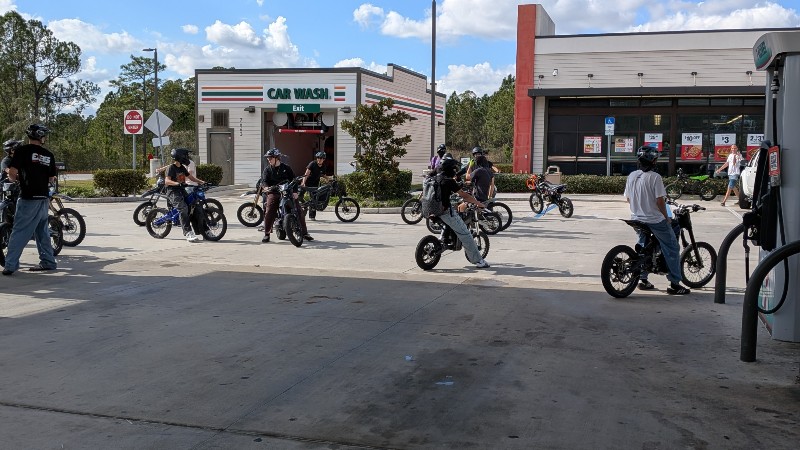
In each case, an industry faced a wave of untrained users, alarmed regulators, and headlines threatening to shut the fun down. In each case, the industry survived and came out stronger.
Bicycle back story
For decades, the bicycle and motorcycle industries took divergent approaches to safety. Motorcyclists were encouraged to take rider education and training courses that gave them the skills and confidence to use the roadway system.
The bicycle industry, by and large, skipped education and instead lobbied the government for separate infrastructure, such as bike lanes and paths. That strategy worked to a point, but it came with a cost.
To justify building separate bicycling infrastructure, advocates argued that riding in traffic is dangerous, often exaggerating the risk. The message stuck. It didn’t just win bike lanes; it convinced many “would-be riders” that the street is unsafe.


That’s a trap we don’t want the e-bike generation to fall into. These kids are already riding what are, in effect, pretend motorcycles. Let’s not push them backward into cordoned-off bike paths when the natural next step is forward, into full-fledged, legal motorcycling.
That’s the opportunity buried in this mess. I believe these future motorcyclists are ours to lose.
Two cohorts, two problems

Not every e-bike rider causing trouble is doing so for the same reason, and we need to stop treating them as a single group.
The first cohort is simply uneducated. These are kids who never learned the rules of the road and parents who do not understand the distinction between legal e-bikes and illegal e-motos. They don’t know what they don’t know. This group responds to real education, delivered clearly, before a citation or a crash forces the issue.
Check out the Ebike Training for Teens online course here.
The second cohort includes mostly riders of e-motos and modified e-bikes, who chase viral content and follow influencers who treat breaking the law as the whole point. One account alone can put daily reels of outlaw riding culture in front of millions of young eyeballs.
Education won’t fix a business model built on defiance. I don’t have a clean answer for this one, and I’m not going to pretend I do. But treating it as the same problem guarantees two things: we solve neither, and it puts the whole enterprise and future of this pathway to motorcycling at risk.
Currently, the only legal places to ride an e-moto are private property or legal dirt bike trails.
Today’s resources
The Bellemont Project is a social enterprise founded by Beth Black, a former e-bike shop owner and safety advocate. She is working with families, schools, dealerships, and first responders on e-bike and e-moto safety. Her programs are grounded in adolescent behavior research rather than scare tactics.
Beth’s book, “The Caring Parent’s E-Bike Survival Guide,” has been an Amazon best-seller in its category. It offers parents a plain-language resource for a much-needed conversation. It’s the kind of thing a dealership could stock at the parts counter and hand to a nervous parent on day one — a low-cost, high-trust move.
Lee Parks is a former motorcycle racer, author, trainer, and gear manufacturer. He wrote the best-selling book Total Control and founded the Total Control Training program for motorcyclists. Lee and his team are launching a scalable in-person e-bike safety and education program designed to help stakeholders respond constructively to the e-bike crisis.
RideReady will equip riders with the knowledge and skills to avoid becoming an enforcement issue or a statistic. Like the founder’s street motorcycle courses, this program is also built on proven strategies to prevent crashes.
Neither program replaces what the ATV and PWC turnarounds ultimately needed: an organized industry response. In the meantime, dealerships can help by directing uneducated riders and their parents in the right direction.
The clock is ticking
Whatever the industry decides to do, it needs to move quickly because legislation isn’t waiting.
Local crackdowns on illegal e-moto riding are spreading, and some parents are being held responsible. One Southern California county has reportedly compiled a list of more than two dozen parents under scrutiny. One parent now faces an involuntary manslaughter charge after their child, while doing a wheelie, struck and killed an 81-year-old pedestrian.
Another parent faces child endangerment charges after a modified e-moto crash left their 12-year-old son with serious injuries. The parent and child had already reportedly completed a court-ordered diversion class after their child was riding illegally.
These are not hypothetical consequences anymore. Legislatively, it’s getting messier, not clearer.
New Jersey recently passed one of the country’s most restrictive e-bike laws. Several states have floated bans on Class 3 e-bikes, which, notably, don’t even have throttles. Some lawmakers are legislating against a threat they don’t understand, combining legal riders along with the illegal e-moto crowd.
Industry boom or casualty
If your store sells e-bikes or e-motos, now is the time to be proactive. Become a resource.
Are you directing customers to legal riding locations or providing reliable resources? Are you teaching riders and parents the difference between street-legal and illegal motorized vehicles? Education should be the “go-to.”
The ATV industry survived because a handful of accountable players organized before the government decimated the recreational all-terrain vehicle industry. PWC survived the same way. This time, the players are not just a handful of OEMs.
We have a real shot at transitioning this generation of e-riders into legal, licensed two-wheel customers, and that should be the goal.
But the window of opportunity won’t stay open forever.