The new digital dealership
This article originally appeared in the August issue of Powersports Business.
If the last few years have taught powersports dealers anything, it’s that the customer buying journey has changed for good. Shoppers no longer begin their search by walking into a dealership or waiting for the weekend to browse inventory. Instead, they’re researching vehicles from their couches after dinner, comparing prices across multiple websites, watching walkaround videos on social media, and narrowing their choices long before they ever speak with a salesperson.

That evolution has fundamentally changed the role of the dealership website. It’s no longer just a digital brochure. It’s often the customer’s first impression of the dealership, the primary source of product information and, increasingly, the deciding factor in whether that customer ever visits the showroom. According to LeadVenture’s new State of the Dealer report, dealerships that recognize this shift and execute the fundamentals consistently are separating themselves from the competition. Ironically, while artificial intelligence dominates industry conversations, the report suggests that the biggest opportunities for dealers still come from getting the basics right.
Drawing on data from more than 6,800 dealership websites, along with feedback from dealer advisory councils, 20 groups, and retail partners, the report examines how today’s consumers discover, evaluate, and purchase powersports vehicles. Hayley Holland, head of brand and client marketing management for LeadVenture, said during a recent Power Hour podcast that the goal wasn’t to overwhelm dealers with marketing jargon or complicated analytics. Instead, the company wanted to translate the data into practical strategies dealers could implement immediately.
“The fundamentals still matter. What has changed is where customers experience those fundamentals. They’re making decisions online long before they ever walk into your dealership.” — Hayley Holland
That insight serves as the foundation for nearly every recommendation in the report. While technology continues to evolve rapidly, successful dealerships aren’t necessarily the ones adopting every new digital tool. They’re the ones making it easier for customers to find inventory, trust the information they’re seeing, and receive prompt, personal service throughout the buying process.
Your dealership never closes
One of the report’s most striking findings illustrates just how dramatically shopping behaviors has shifted. LeadVenture found that 54% of dealership website traffic now occurs after 5 p.m., when most dealers have already locked their doors for the evening. Customers are spending those hours researching inventory, comparing models, checking financing options, and submitting lead forms while relaxing at home after work.



For dealers, that means the website has effectively become an overnight salesperson. Every inventory listing, every photograph, every pricing detail, and every contact form is working long after employees have gone home.
The implication is significant. A customer who submits an inquiry at 9 p.m. isn’t simply waiting until the next business day; they’re often continuing to shop that same evening. If another dealership responds more quickly or presents more complete information online, the opportunity may disappear before the original dealer even opens the following morning.
That changing behavior also reinforces another major conclusion from the report: today’s buying journey isn’t linear. Consumers bounce between Google searches, dealership websites, Facebook Marketplace, YouTube videos and social media before making a purchase decision. Rather than moving neatly through a traditional sales funnel, buyers repeatedly compare products, revisit pricing, research financing, and evaluate dealerships throughout the process. Dealers don’t necessarily need to dominate every platform, Holland says, but they do need to ensure they’re visible wherever their customers are shopping. More importantly, they need to create a consistent experience across every digital touchpoint.
The speed of response matters
If there’s one takeaway Holland believes every dealership can implement immediately, it’s improving response times.
LeadVenture’s research found that dealerships responding to leads within 24 hours generated nearly 48% more — and higher-quality — leads than slower responders. Even more compelling, the company’s recommendation is to aim for an initial response within five to fifteen minutes whenever possible. In today’s marketplace, consumers frequently contact multiple dealerships simultaneously. The first dealership to respond with helpful, personalized communication often earns the opportunity to make the sale.
Holland shared the example of one customer shopping for a new powersports vehicle who contacted six dealerships in her region. Five either failed to respond promptly or eventually sent generic replies days later. The sixth dealership, located roughly 50 miles farther away than the others, responded within minutes with a personal message inviting the customer to visit the store. Distance ultimately became irrelevant; the customer purchased from the dealership that acknowledged her first.
The lesson isn’t simply about speed. It’s about demonstrating attentiveness and respect for the customer’s time. Dealers don’t need scripted sales pitches or aggressive follow-up campaigns. They simply need to acknowledge inquiries quickly and begin building a relationship while the customer is still actively engaged in the buying process. As Holland notes, responding faster doesn’t cost dealerships additional money, yet it can dramatically improve lead quality and conversion rates.
Inventory presentation
The report also challenges dealers to rethink how inventory is presented online. Too often, listings rely exclusively on OEM stock photography, incomplete descriptions, or inconsistent pricing. Yet the dealerships with the strongest inventory performance are doing just the opposite.
Among the high-performing dealers LeadVenture analyzed, 83% displayed pricing on their inventory listings, while nearly three-quarters included at least one photo. Those dealers also tended to maintain healthier inventory turns, with roughly 80% of inventory moving within 90 days. Rather than allowing units to age online with stale information, successful dealers continually refreshed listings and ensured inventory accurately reflected what was available on the showroom floor.
Holland encourages dealers to go beyond stock photography by taking their own photos and short walkaround videos using nothing more than a smartphone. Those images not only build greater trust with shoppers by showing the actual unit for sale, but they can also be repurposed across Instagram, Facebook, TikTok and digital advertising campaigns. A single piece of original content can support multiple marketing efforts while reinforcing authenticity.
Consistency also plays an increasingly important role in online visibility. Pricing discrepancies between inventory platforms, outdated listings or inaccurate availability can confuse search engines and AI-powered search tools, ultimately making dealerships harder for consumers to find. Dealers should regularly audit inventory listings to ensure pricing, photos, availability and business information remain synchronized across every digital platform.
AI doesn’t change fundamentals
Although artificial intelligence has quickly become one of the industry’s hottest topics, Holland cautions dealers against viewing it as either a silver bullet or an existential threat.
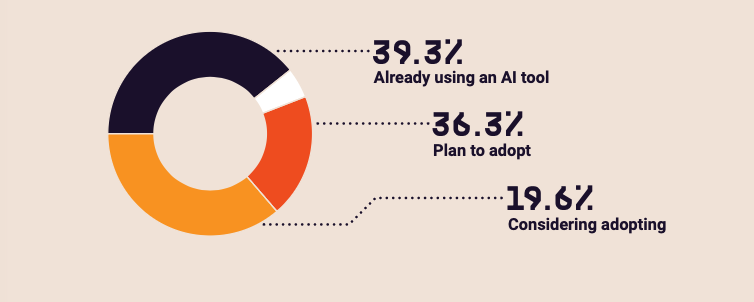
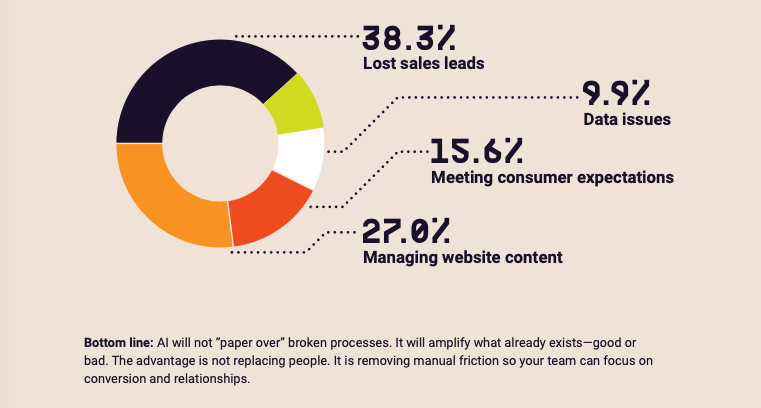
Customers are increasingly using AI-assisted search tools to research products and compare dealerships before visiting websites. At the same time, dealerships can leverage AI to improve marketing efficiency, organize information and streamline customer communications. However, none of those capabilities replace the elements customers value most.
The report repeatedly returns to what Holland calls “the basics.” Keep your website current. Maintain accurate hours, phone numbers and contact information. Feature real employees on staff pages, so customers know who they’ll be working with. Make inventory easy to search and navigate. Remove sold units promptly. Respond quickly. Most importantly, treat customers like people rather than transactions.
“I love when I see a dealership that has its staff pictured,” Holland says. “I know exactly who I’m going to ask for when I walk in.”
That emphasis on authenticity extends to social media as well. Holland believes platforms like Instagram and TikTok aren’t necessarily retail channels; they’re opportunities to showcase dealership personality, culture and community involvement. Customers increasingly want to know who they’re buying from, not just what they’re buying.
Back to the basics
Perhaps the biggest surprise from LeadVenture’s research is that a report focused on digital retailing ultimately reads like a reminder of timeless business principles.
The dealers succeeding today aren’t winning because they’ve discovered a revolutionary technology. They’re winning because they’re executing consistently. They respond to customers quickly, present inventory accurately, invest in their communities, maintain an active online presence, and make the buying process easy.
Artificial intelligence will undoubtedly continue reshaping how consumers search for information and discover dealerships. But as Holland emphasizes throughout the report, technology should enhance, not replace, the customer experience.
“The basics are working. There’s no need to reinvent the wheel.”
For powersports dealers navigating today’s increasingly competitive marketplace, that may be the report’s most encouraging conclusion. The future of retail isn’t about abandoning proven sales practices. It’s about delivering those same fundamentals — speed, transparency, authenticity and great customer service — through every digital touchpoint long before the customer ever walks through the front door.