
RideNow Q3 sales fall 11% amid pricing shift, weak demand
RideNow Group reported lower third-quarter revenue and vehicle sales as the dealership group navigated weaker consumer spending, inventory pressures and the rollout of a new transparent pricing strategy across its 46 dealerships.
The Chandler, Arizona-based dealership group reported third-quarter revenue of $244.3 million, down 13.1% from $281 million a year earlier. Same-store powersports revenue declined 7.9% to $241.4 million, while adjusted EBITDA fell to $5.3 million from $12.3 million in the year-ago quarter. Same-store retail unit sales dropped 10.9% to 12,182 vehicles, including 8,127 new units and 4,055 pre-owned units.
During the company’s Nov. 10 earnings call, Chairman, CEO and President Michael Quartieri said the company’s August implementation of its RideNow Clear Price strategy accounted for approximately half of the unit sales decline and about $4 million of the $7 million reduction in adjusted EBITDA.
The strategy was introduced to align advertised vehicle pricing with Federal Trade Commission guidance and enforcement priorities. Under the approach, advertised prices include mandatory fees but exclude tax, title and license costs.
Quartieri said the change initially put RideNow at a disadvantage compared with competitors that continue to advertise prices that exclude charges such as freight, setup, and documentation fees. The company does not use a no-haggle pricing model, he said, describing Clear Price as a starting point for negotiations.
RideNow reported that August results were materially weaker than the prior year, but management said July, September and October reflected a more normalized operating environment, with year-over-year unit sales declines in the low- to mid-single digits.
Quartieri also cited higher interest rates, fuel prices and inflation as factors affecting discretionary consumer spending.




Inventory and margins
RideNow’s third-quarter results also reflected pressure on vehicle margins as the company worked through 2026 model-year inventory and promotional activity ahead of 2027 model arrivals. New-vehicle gross margin declined to 13.1% from 13.8% a year earlier, while pre-owned vehicle margin slipped to 15.4% from 15.7%.
Chief Financial Officer Josh Barsetti said new-vehicle inventory stood at slightly more than five months of supply at the end of the quarter. The August sales decline contributed to the elevated inventory position, and management expects supply to return to its preferred level by the end of the first quarter of 2027.
Quartieri said promotional activity and competitors’ advertised pricing also contributed to margin pressure. The company reported a 10% decline in same-store pre-owned retail sales to 4,055 units. Barsetti said RideNow was comfortable with its current used inventory but wants to increase its supply ahead of the spring selling season. He added that finding quality pre-owned powersports vehicles remains difficult across the industry.
Parts, service and accessories revenue totaled $47.1 million, down 7.3% from $50.8 million a year earlier. Finance and insurance revenue declined 12.9% to $21.7 million.
Costs and dealership operations
RideNow said it reduced costs by an annualized $4.6 million during the third quarter and is continuing operational changes, including expanded use of artificial intelligence tools in back-office functions. Management expects an additional $10 million in permanent annualized cost savings as the company exits 2027.
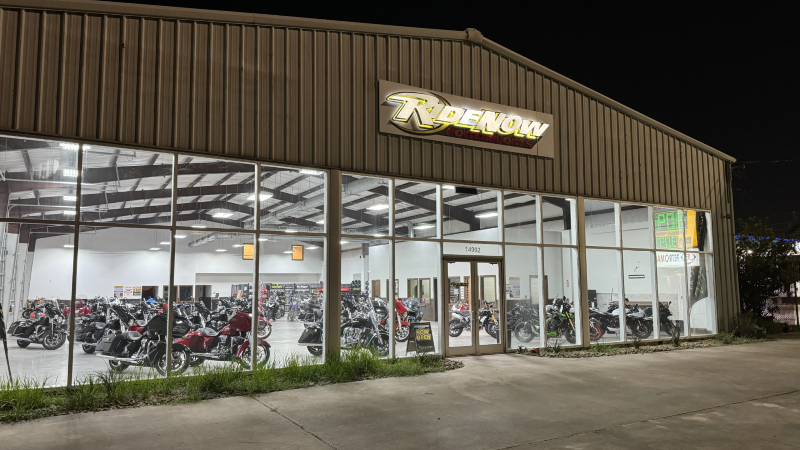
The company also completed a refinancing of its existing term loan in September, replacing it with a $220 million facility that matures in September 2031. RideNow said it is in advanced discussions regarding a potential $50 million asset-backed revolving credit facility, although an agreement has not been finalized.
Despite the third-quarter slowdown, Quartieri said RideNow has seen an improvement in business during the fourth quarter and expects adjusted EBITDA to exceed the third-quarter result.
RideNow’s results highlight several ongoing industry challenges: consumers remain cautious about discretionary purchases, elevated new-model inventory is creating promotional pressure, and transparent advertised pricing can affect competitive positioning when dealerships in the same markets use different pricing practices.
The company’s experience also provides another indication of the importance of managing new-model inventory ahead of the spring selling season while maintaining a sufficient supply of quality pre-owned vehicles.